Israeli Landscapes and Cityscapes Art
Capturing the Beauty of Israel: Landscapes, Cityscapes and the Extraordinary Geography That Inspires Fine Art
Explore Ednah Schwartz’s Complete Collection of Israeli Landscape & Cityscape Paintings
📍 Why Israeli Landscapes Fascinate Artists Around the World
- Exceptional Geographic Diversity:
Snow-covered mountains, Mediterranean coastline, fertile valleys, volcanic plateaus, dense forests, wetlands and one of the world’s great deserts exist within a remarkably compact country. - Unique Quality of Light:
Israel’s changing atmosphere produces dramatically different color palettes between the misty Upper Galilee, the brilliant Mediterranean coast, the Judean Hills and the Negev Desert. - Three Continents Meet:
Situated at the junction of Africa, Asia and Europe, Israel contains an extraordinary mixture of geological formations, wildlife habitats and ecosystems rarely found together elsewhere. - Thousands of Years of Human History:
Ancient archaeological sites, biblical landscapes, Crusader fortresses, Ottoman villages, pioneering kibbutzim and vibrant modern cities coexist within the same visual landscape. - One of the World’s Great Bird Migration Corridors:
Millions of migratory birds travel through the Hula Valley and Jordan Rift each year, creating constantly changing scenes that have inspired generations of wildlife and landscape artists.
Few countries offer artists the extraordinary diversity found within Israel. Although geographically small, the country contains an astonishing range of landscapes, ecosystems and climatic zones that continually transform with the seasons. Within only a few hours of travel it is possible to journey from the snow-covered slopes of Mount Hermon to the coral reefs of the Red Sea, from fertile agricultural valleys to dramatic desert canyons, from ancient stone cities to vibrant Mediterranean coastlines.
This remarkable variety has inspired generations of painters, photographers, sculptors and printmakers. Every region possesses its own visual identity shaped by geology, climate, vegetation, history and light. The lush wetlands of the Hula Valley evoke a completely different emotional response than the rugged cliffs overlooking the Dead Sea or the rolling vineyards of the Upper Galilee. Each landscape presents artists with unique colors, textures, atmospheres and perspectives.
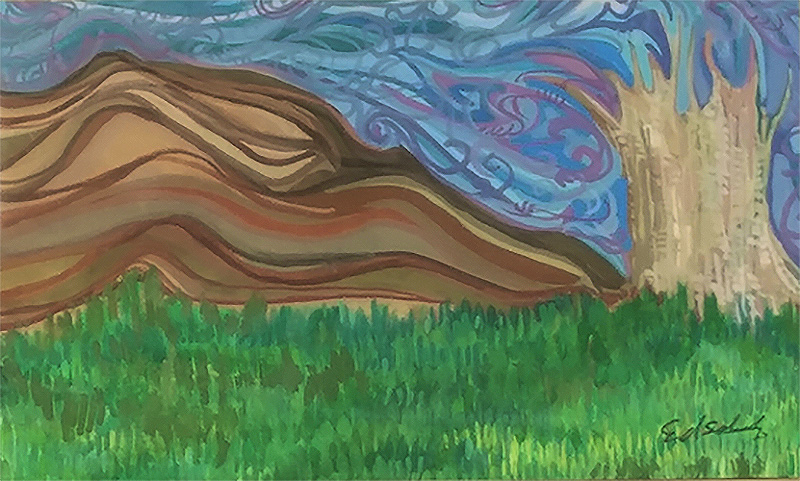
For Israeli artist Ednah Sarah Schwartz, these landscapes are far more than beautiful scenery. They represent memories, communities, changing seasons and places deeply connected to family history and everyday life. Her paintings capture not only the physical beauty of northern Israel, Jerusalem, the Golan Heights and the Mediterranean coast, but also the emotional relationship many Israelis share with the land itself.
Israel: One of the World’s Most Geographically Diverse Landscapes
Despite covering less than 23,000 square kilometers (approximately 8,600 square miles), Israel contains an extraordinary concentration of geological formations rarely found together within such a limited area. The country stretches from the snow-fed mountains bordering Lebanon and Syria through fertile valleys, Mediterranean plains, limestone hills, volcanic plateaus, deep rift valleys, mineral-rich inland seas and vast desert expanses reaching the Gulf of Aqaba.
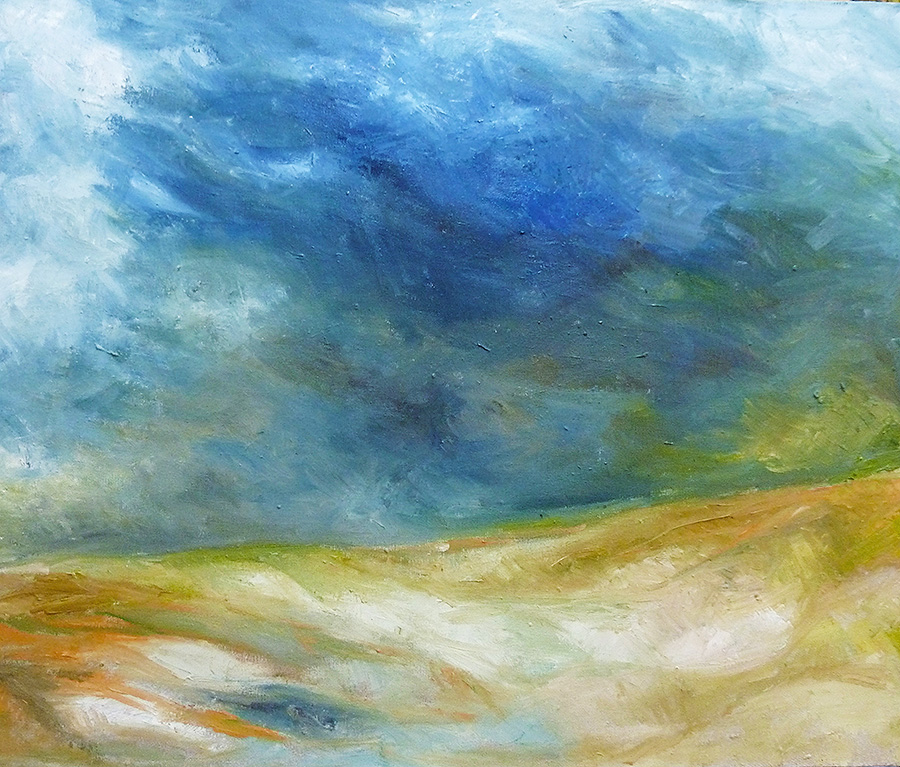
This diversity exists because Israel lies along the Great Rift Valley, one of Earth’s most significant geological fault systems. Over millions of years, tectonic activity, volcanic eruptions, erosion, river systems and climatic variation have sculpted a landscape unlike almost anywhere else. These geological forces continue to influence everything from soil composition and agriculture to biodiversity and the distinctive colors that artists encounter across different regions.
Elevation changes contribute even further to this visual richness. Mount Hermon rises more than 2,200 meters (7,300 feet) above sea level, while the shoreline of the Dead Sea lies more than 430 meters (1,400 feet) below sea level, making it the lowest exposed point on Earth’s surface. Few countries offer artists such dramatic shifts in terrain, atmosphere and perspective within a single day’s journey.
Israel’s Major Landscape Regions
- The Upper Galilee
- The Lower Galilee
- The Golan Heights
- The Hula Valley
- The Jordan River Valley
- The Mediterranean Coastal Plain
- The Carmel Mountain Range
- The Judean Hills
- Jerusalem Mountains
- The Negev Desert
- The Arava Valley
- The Dead Sea Basin
- Makhtesh Ramon and the Central Negev Highlands
- The Gulf of Aqaba (Eilat)
The Four Seasons of Israel: A Landscape That Constantly Changes
One reason artists never tire of painting Israel is that the landscape rarely appears the same twice. Seasonal weather patterns dramatically alter colors, vegetation, rivers, agricultural fields and even the quality of natural light. Locations revisited throughout the year often become entirely new compositions.
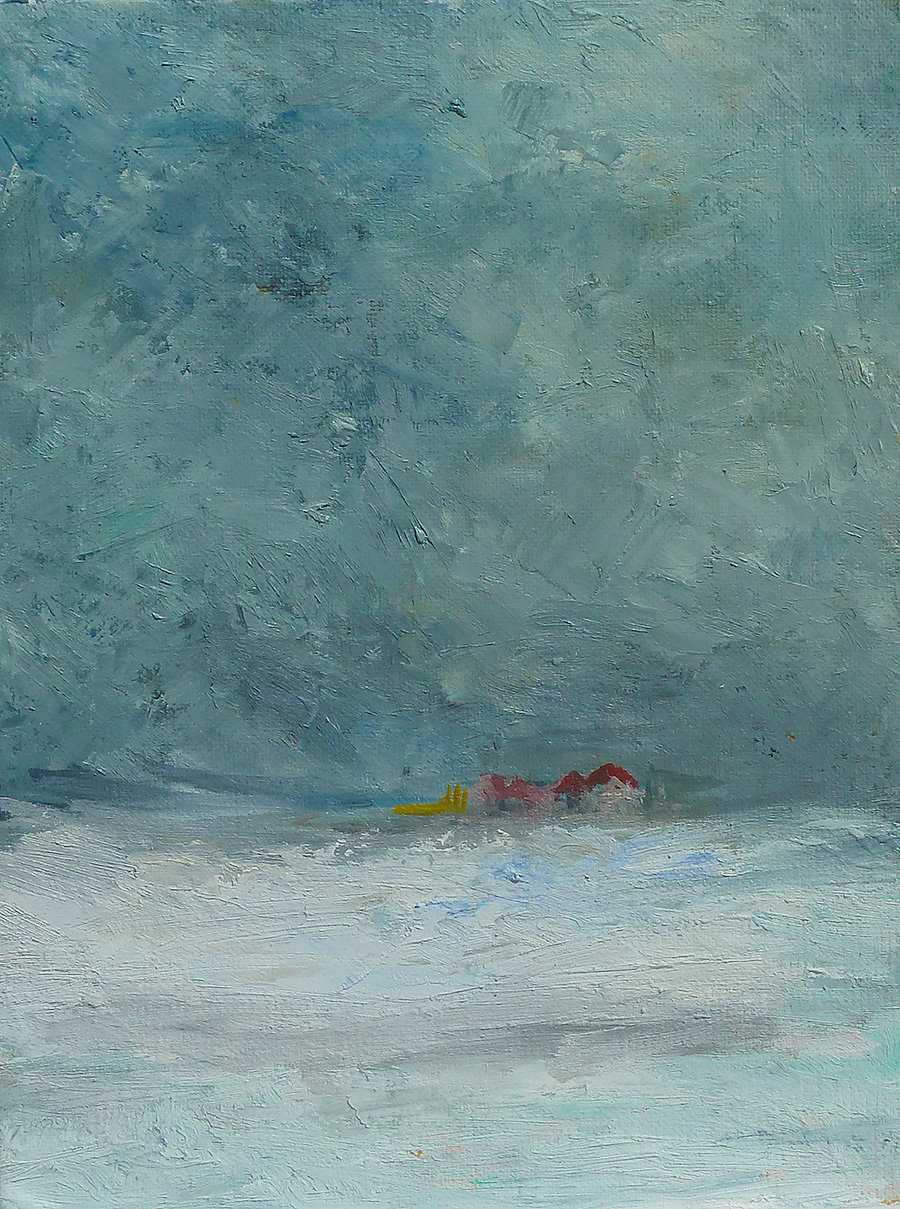
Spring fills the countryside with carpets of wildflowers, blooming almond trees and vibrant green hillsides. Summer transforms many regions into brilliant shades of gold beneath intense Mediterranean sunshine. Autumn introduces softer colors, vineyard harvests and cooler mountain evenings, while winter brings snow to Mount Hermon, flowing waterfalls throughout the north and dramatic storm clouds sweeping inland from the Mediterranean Sea.
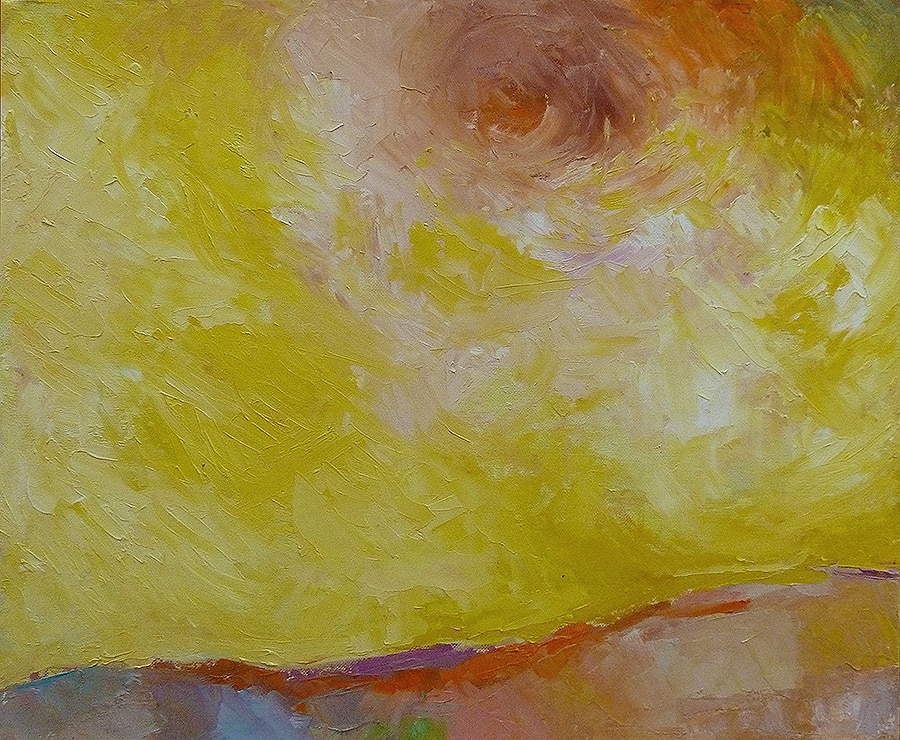
For landscape painters, these seasonal transformations create an endless source of inspiration. Rather than documenting static scenery, artists record a living environment that continually evolves through weather, agriculture and changing natural light.

“Every season reveals another Israel. The mountains, valleys, forests and deserts remain, yet each month paints them with an entirely new palette.”
The Breathtaking Nature and Ecosystems of Israel
Israel’s extraordinary biodiversity is one of the defining characteristics of its landscapes. Although smaller than many individual states or provinces around the world, the country contains ecosystems that range from alpine mountain environments to Mediterranean woodlands, fertile river valleys, volcanic plateaus, freshwater wetlands, semi-arid grasslands, and expansive deserts. This remarkable ecological diversity provides artists with an almost limitless variety of subjects throughout every season.
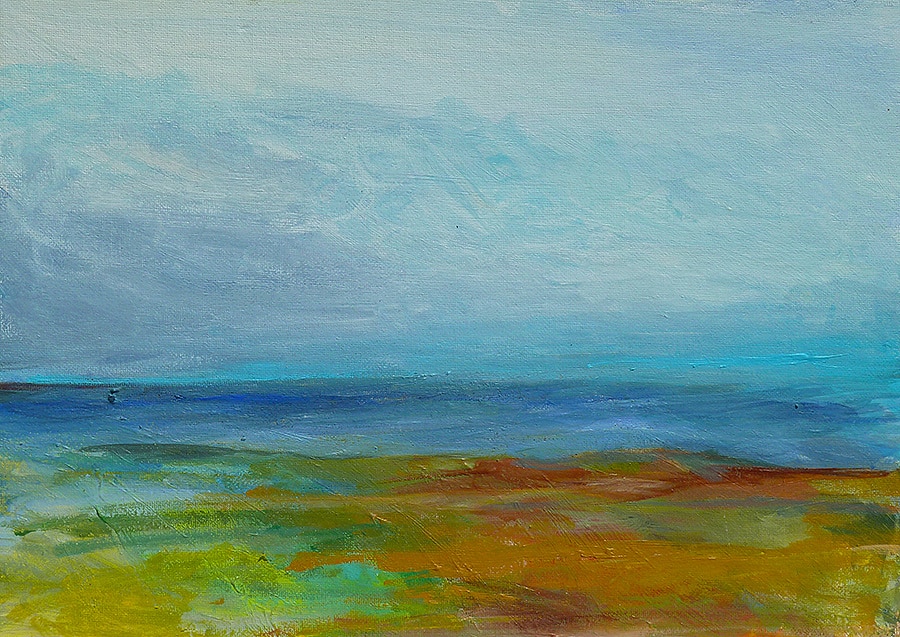
The country’s position at the meeting point of Europe, Asia and Africa has created an exceptional natural crossroads where plants, birds and wildlife from three continents coexist. Seasonal migrations, changing weather patterns and dramatic shifts in elevation continually transform the landscape, allowing painters to revisit familiar locations while discovering entirely new colors, textures and atmospheres.
The Upper Galilee: Israel’s Green Mountain Landscape
The Upper Galilee is widely regarded as one of Israel’s most picturesque regions. Rolling hills, fertile valleys, orchards, vineyards, forests and flowing streams combine to create scenery unlike anywhere else in the country. Higher annual rainfall supports oak woodlands, wildflowers, grazing pastures and productive agricultural communities that have inspired generations of painters.
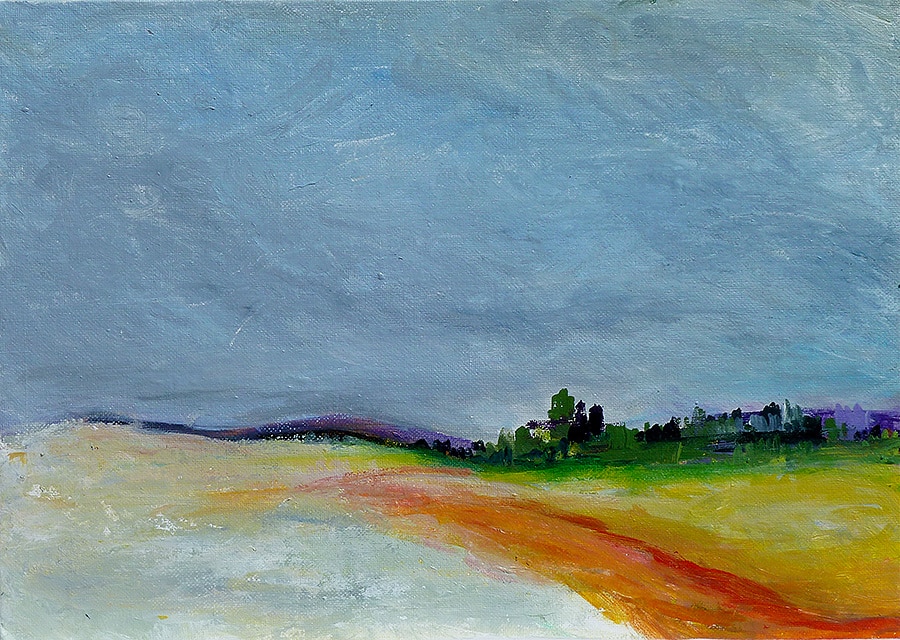
Throughout the year the landscape continually evolves. Spring fills hillsides with brilliant displays of red anemones, cyclamen, poppies and countless native wildflowers. Summer introduces golden wheat fields and rich green vineyards, while autumn softens the colors before winter rains restore the region’s lush appearance once again.
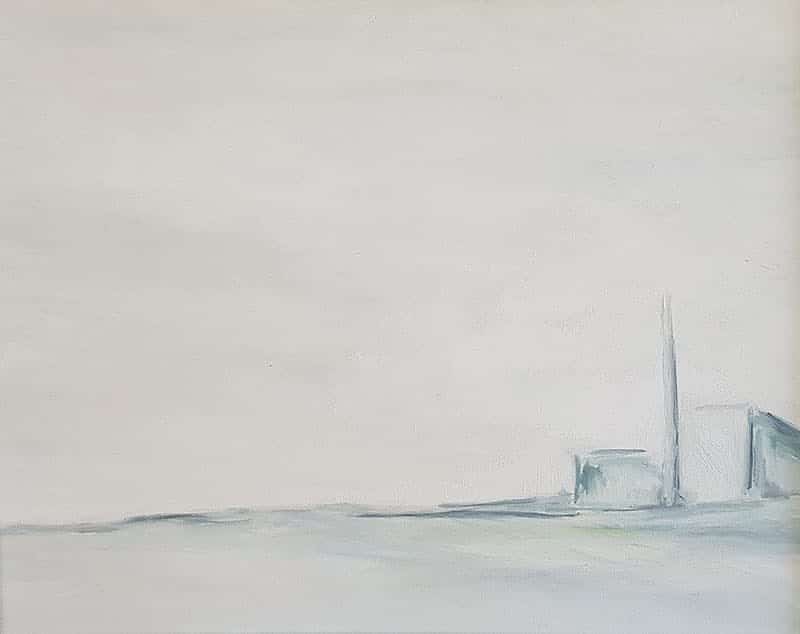
Many of Ednah Schwartz’s most recognizable landscapes originate in this region. Rather than simply recording geographic locations, her paintings capture changing weather, shifting light, seasonal color and the peaceful rhythm of agricultural life that defines much of the Upper Galilee.
The Upper Galilee is Known For
- Rolling mountain landscapes
- Apple, pear and cherry orchards
- Mediterranean oak forests
- Vineyards and wineries
- Natural springs and rivers
- Traditional kibbutzim and moshavim
- Exceptional birdlife and wildlife
- Changing seasonal colors throughout the year
The Golan Heights: Volcanic Landscapes and Dramatic Vistas
To the east of the Upper Galilee rise the volcanic plateaus of the Golan Heights. Formed by ancient volcanic activity, the region is characterized by dark basalt rock, open grasslands, extinct volcanic cones and sweeping panoramic views stretching across northern Israel, Lebanon, Syria and the Jordan Valley. This rugged terrain provides artists with striking contrasts between broad open skies, dramatic cloud formations and richly textured earth.
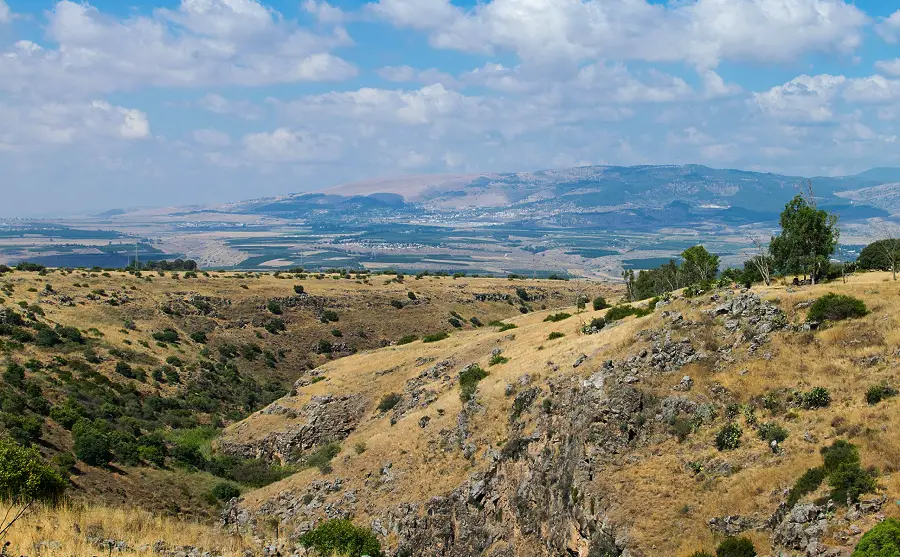
Winter transforms the Golan into one of Israel’s most visually distinctive regions. Heavy rainfall restores vivid green fields while nearby Mount Hermon often receives snowfall, creating dramatic alpine scenery seldom associated with the Middle East. Spring follows with carpets of wildflowers covering volcanic hillsides, offering an ever-changing palette that has inspired landscape painters for decades.
Ancient basalt villages, archaeological remains, vineyards and grazing cattle further enrich the visual character of the Golan Heights. These elements create a landscape where geology, agriculture and history intersect in ways rarely encountered elsewhere.
The Hula Valley: One of the World’s Great Wildlife Landscapes
Among Israel’s most celebrated natural environments is the Hula Valley, an internationally recognized wetland ecosystem situated within the Great Rift Valley. Every year millions of migrating birds travel through this corridor while journeying between Europe, Asia and Africa, making it one of the world’s most important migration routes.
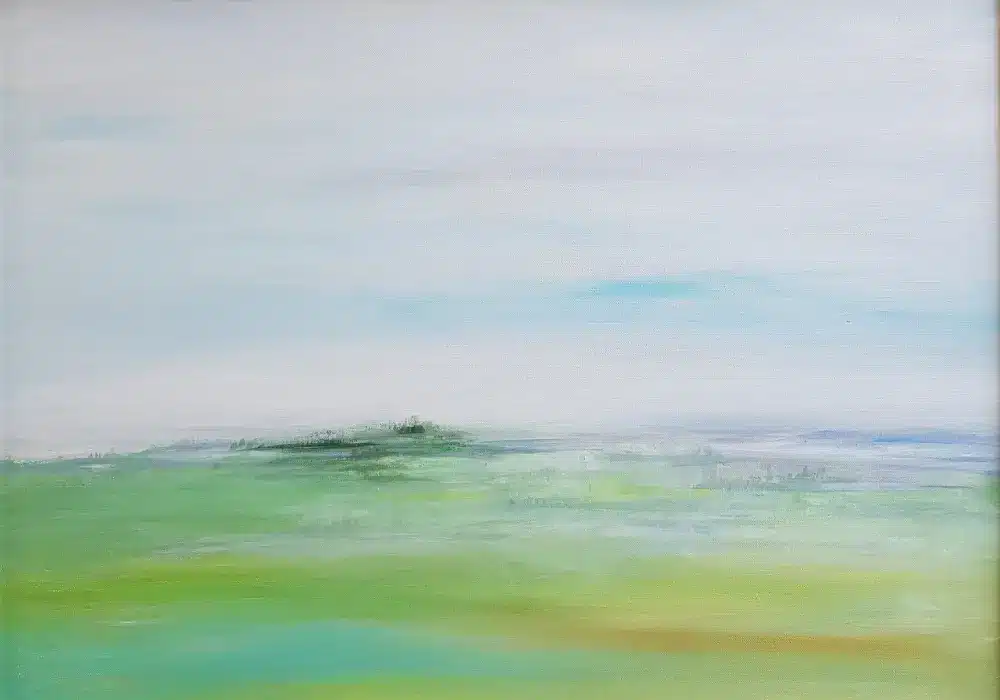
Seasonal wetlands, shallow lakes, reed beds and agricultural fields combine to create a constantly changing environment rich in color, movement and life. Cranes, pelicans, storks, herons, egrets, raptors and countless smaller species transform the skies throughout the migration seasons, offering extraordinary opportunities for artists interested in wildlife and landscape painting.
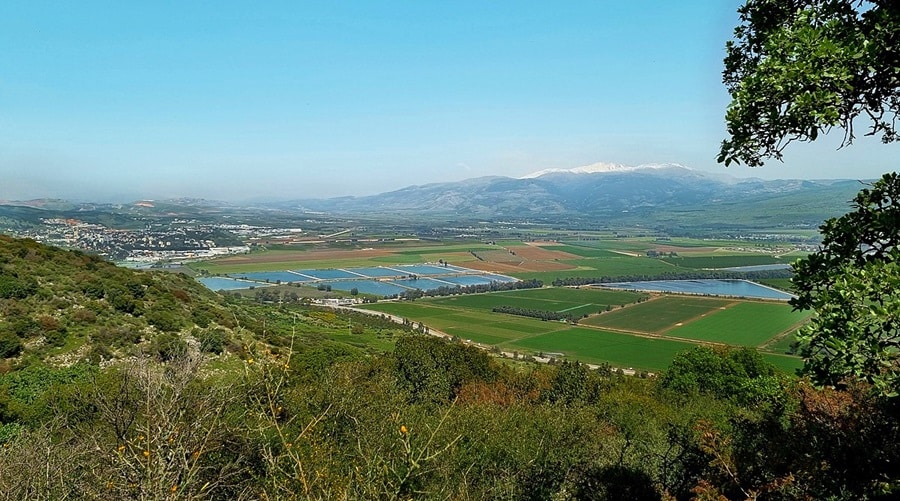
For Ednah Schwartz, the Hula Valley has remained a recurring source of inspiration. Her paintings capture not only the valley’s remarkable scenery but also its constantly changing atmosphere—from mist rising across wetlands at sunrise to golden evening light reflecting across calm waters beneath migrating birds.
“Few places demonstrate the harmony between landscape, wildlife and changing seasons as beautifully as Israel’s Upper Galilee and Hula Valley.”
While northern Israel is renowned for its forests, rivers and fertile valleys, travelling south reveals an entirely different visual experience. Mediterranean coastlines, limestone hills, historic cities and ancient agricultural terraces introduce new colors, textures and architectural forms that have inspired artists for centuries.
The Radiant Mediterranean Coast and Historic Maritime Gateways
To move from the volcanic plateaus of the north to the Mediterranean Coastal Plain is to experience one of Israel’s most dramatic microclimatic shifts. Stretching along a narrow ribbon of sun-drenched shoreline, this region has served as the literal and metaphorical gateway to the land for millennia. For landscape and cityscape painters, the coast offers an entirely different visual vocabulary dominated by brilliant azure waters, shifting sand dunes, white limestone cliffs, and ancient stone architecture that bears the weathering of salt and time.
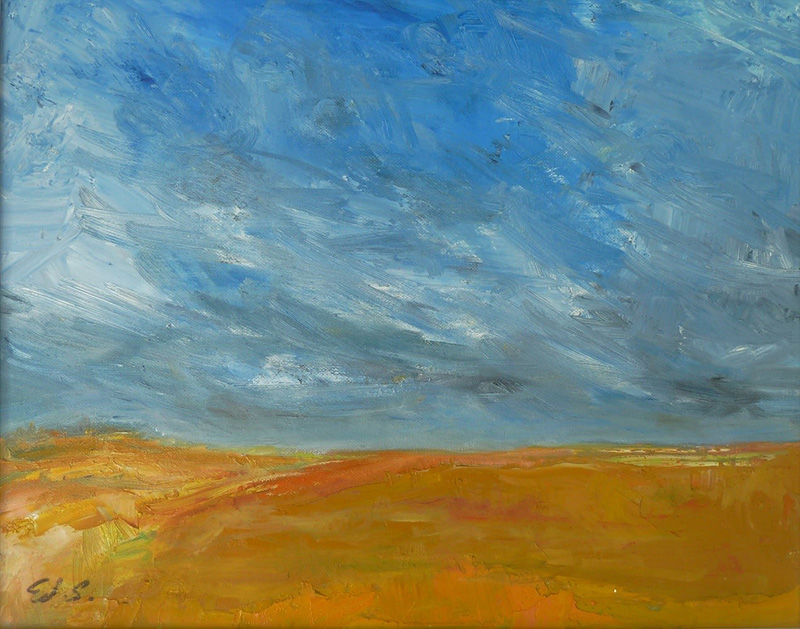
The quality of light here is fundamentally distinct from the misty atmospheres of the Upper Galilee. The Mediterranean acts as a massive natural mirror, intensifying the sun’s rays and bathing coastal cities in a bright, high-contrast light that challenges artists to master the delicate interplay of deep shadows and luminous highlights. This vivid environment has heavily influenced Israeli Impressionism, forcing painters to abandon muted European palettes in favor of ochres, stark whites, vibrant turquoises, and deep ultramarines.
🌍 The Highway of Empires: The Via Maris
The Mediterranean Coastal Plain is defined historically by the Via Maris (the Way of the Sea), one of the most important ancient trade routes in human history. Connecting Egypt with Syria, Anatolia, and Mesopotamia, this corridor dictated the placement of Israel’s coastal fortresses and ports. When painting these landscapes, artists are recording a topography shaped directly by centuries of trade, military conquests, and the physical remnants of Crusader, Roman, and Ottoman civilizations.
Mount Carmel and Haifa: Where the Mountain Meets the Sea
Rising dramatically from the shoreline, the Mount Carmel range breaks the flat monotony of the coastal plain. This limestone ridge functions as a biological barrier, creating a lush, green microclimate that supports dense Mediterranean pine forests and oak maquis. Nestled on its slopes is the tiered city of Haifa, offering artists one of the most spectacular urban cityscapes in the Middle East.
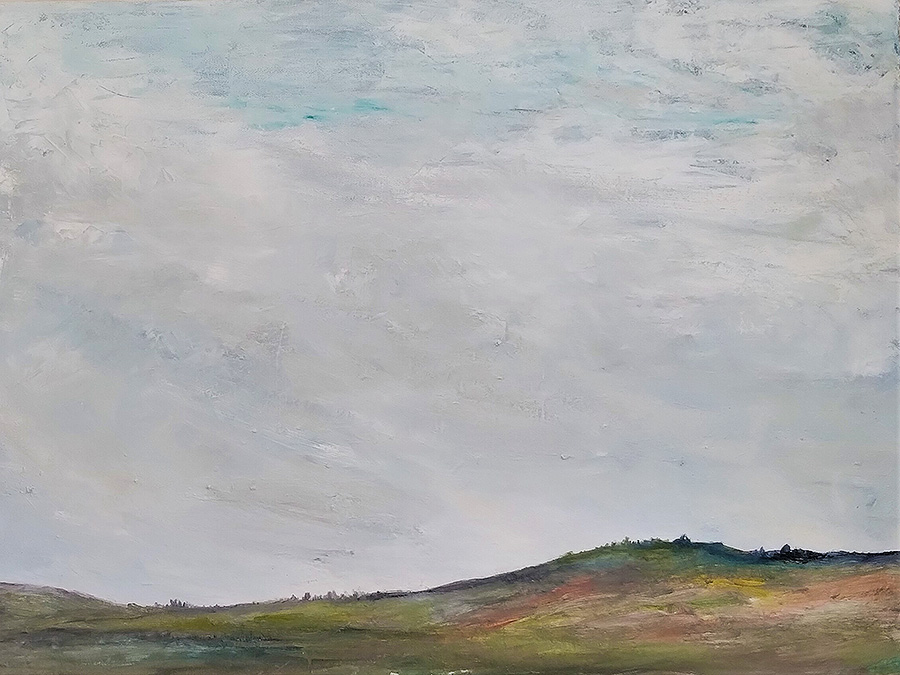
Haifa’s unique topography allows for vertical compositions rarely found in coastal cities. From the crest of Mount Carmel, painters can capture the geometric symmetry of the UNESCO-designated Bahá’í Gardens cascading down the hillside, contrasted against the industrial grit of the bustling port below and the soft, sweeping curve of the Haifa Bay fading into the distant horizon. It is a landscape where natural topography and human design meet in perfect, tiered harmony.
“The coastal light demands immediacy. It bounces off the sea and strips away illusions, forcing an artist to paint the heat, the salt, and the sharp geometry of ancient stone against an endless blue.”
Caesarea Maritima: Roman Grandeur Weathered by the Waves
Further south down the coast lies Caesarea Maritima, a masterwork of ancient Roman engineering built by Herod the Great. Here, the landscape is defined by the stark juxtaposition of monumental, golden-hued Roman ruins against the wild, crashing surf of the Mediterranean. The remains of the ancient aqueduct, stretching along the sandy beach, create a powerful linear perspective that landscape photographers and painters have drawn upon for generations.
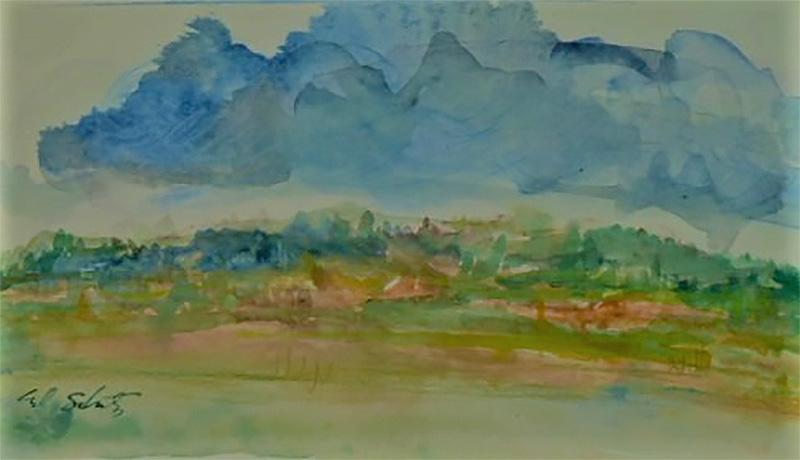
Painting Caesarea requires capturing the unique textures of ancient, salt-encrusted masonry. The interplay of Roman arches, Crusader fortifications, and the turquoise waters filtering through sunken ancient harbors provides a rich tapestry of historical depth and natural beauty, capturing the bittersweet aesthetic of empires reclaimed by the sea.
Coastal Artistic Inspiration at a Glance
- Acre (Akko): A fortified UNESCO World Heritage site defined by massive sea walls, subterranean Crusader halls, and a vibrant Ottoman skyline of domes and minarets.
- Jaffa (Yaffo): One of the world’s oldest ports, celebrated for its sun-bleached alleyways, artists’ quarters, and its iconic view looking north toward the modern Tel Aviv skyline.
- The Sharon Plain: The central section of the coastal plain, historically a swampy marshland transformed into a fertile agricultural belt famous for citrus groves and rolling dunes.
Acre and Jaffa: The Living Palimpsest of Ancient Ports
The historic port cities of Acre in the north and Jaffa in the south serve as the cultural bookends of the Israeli coastline. Acre is a living medieval fortress, its thick Ottoman stone walls plunging directly into the churning sea. For artists, Acre offers an incredible study in mood and contrast: the dark, claustrophobic limestone alleyways of the Old City suddenly opening up to the brilliant, blinding light of the open harbor filled with colorful fishing boats.
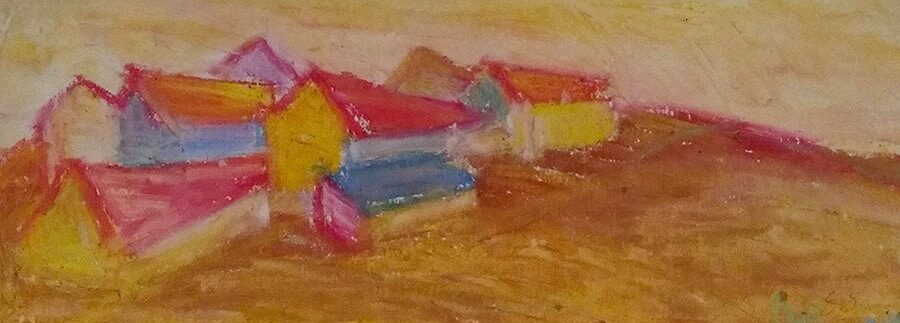
Jaffa offers an entirely different energy. Perched on a high cliff overlooking the sea, its ancient stone buildings glow with a warm, amber light at sunset. The views from Jaffa looking north provide cityscape artists with a stunning juxtaposition: the timeless, weathered stones of an ancient port in the foreground, framing the glass-and-steel, modernist sprawl of Tel Aviv in the background. It is a visual representation of Israel’s complex identity—where thousands of years of history sit side-by-side with an ultra-modern future.
Jerusalem and the Judean Topography: From Sacred Hills to Rain Shadow Desert
Moving inland from the coastal plains, the elevation climbs steadily into the Judean Mountains, establishing a geographical and atmospheric world completely distinct from the sea-level shores. This region is home to Jerusalem, a city perched on a historic plateau 754 meters (2,474 feet) above sea level, surrounded by rolling hills, deep ravines, and ancient valley beds.
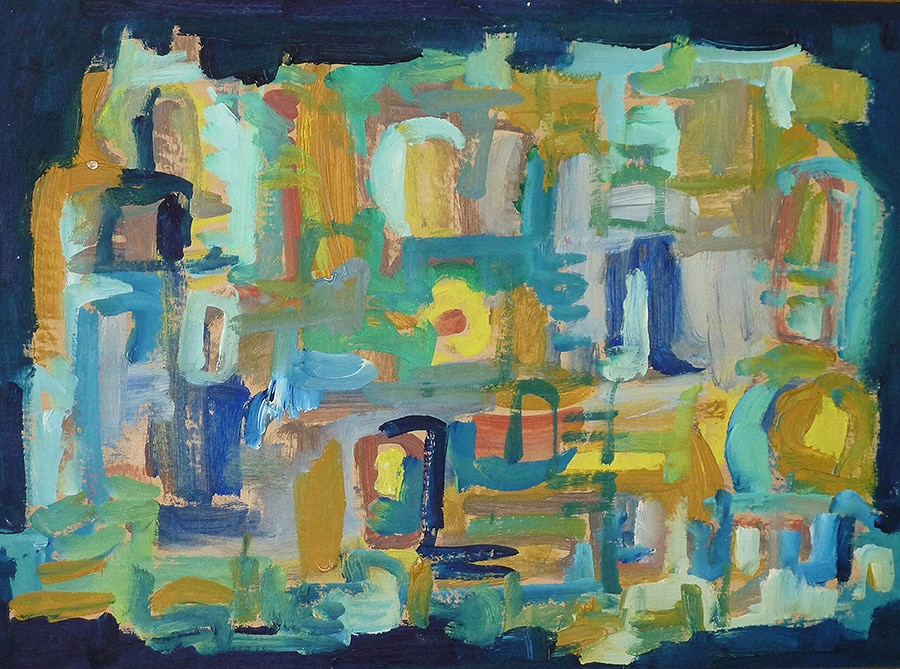
For landscape and urban painters, Judea offers a profound dialogue between timeless nature and millennia of human construction, characterized by its signature golden limestone architecture, rugged agricultural terraces, and stark, dramatic light shifts.
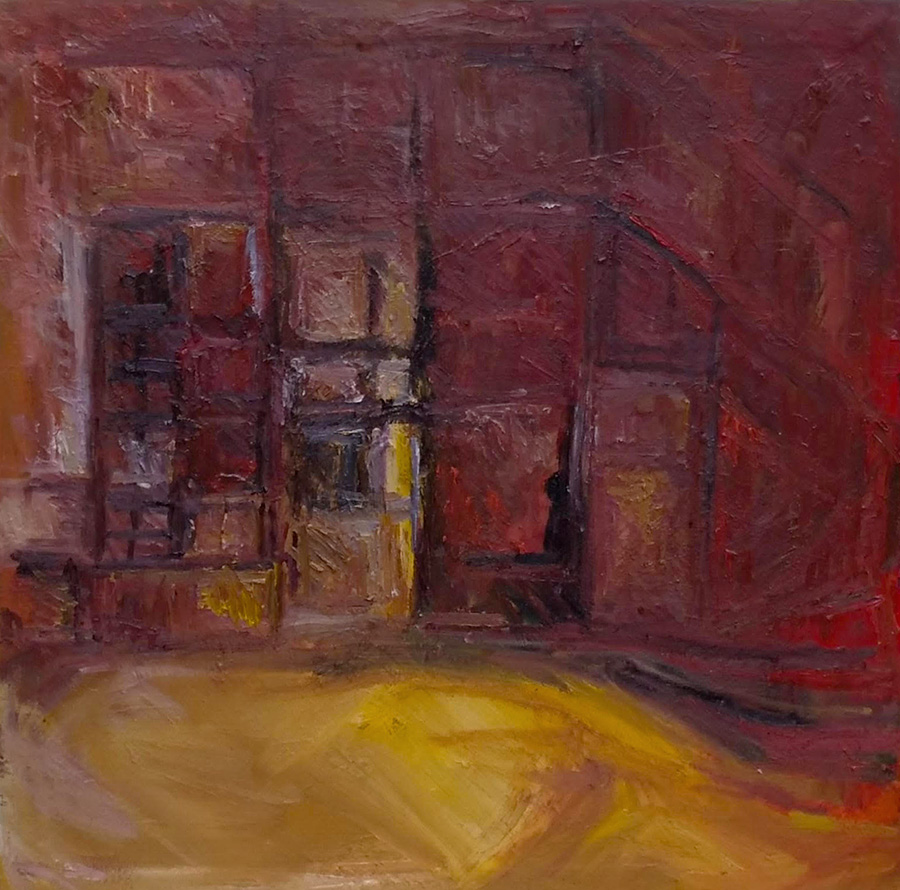
The light over Jerusalem and the Judean Hills carries a unique atmospheric weight. Free from the humid, reflective haze of the Mediterranean coast, the mountain air is crisp and clear, creating sharp, well-defined shadows during the day. As the sun sets, the local cream-colored limestone—legally mandated for all buildings in the city—absorbs and re-radiates the fading rays, causing the entire urban landscape to glow with a warm, metallic amber hue. This phenomenon, famously termed “Jerusalem of Gold,” has fascinated generations of artists who seek to translate this mystical, luminescent atmosphere onto canvas.
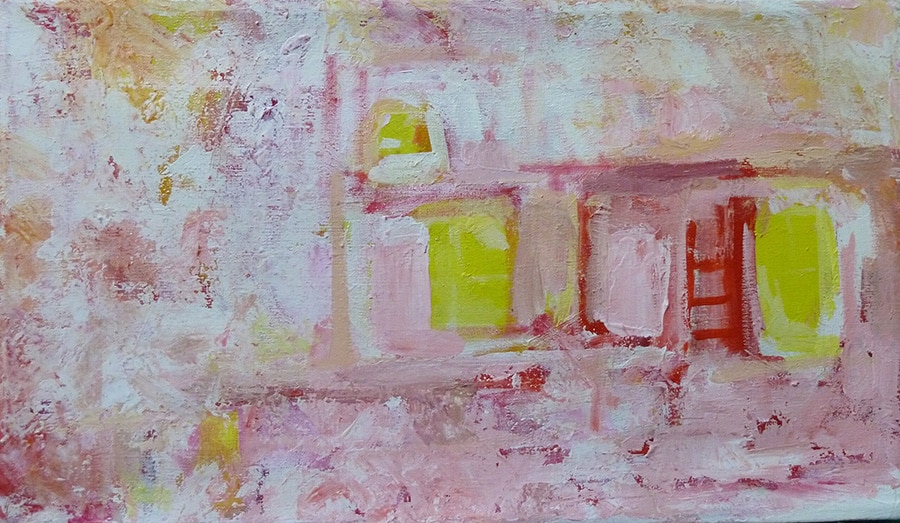
climatic Anomalies: The Mechanics of the Rain Shadow
The Judean range provides one of the world’s most dramatic examples of a rain shadow effect. As moist air masses move eastward from the Mediterranean Sea, they are forced upward by the Judean Hills. The air cools and condenses, dropping most of its precipitation on the western slopes, fueling lush pine forests, olive groves, and vineyards. However, once the air crosses the mountain crest line where Jerusalem sits, it plunges down toward the Dead Sea drop-off.
As the air drops rapidly into the deep rift valley, it compresses and warms up, drying out completely. Consequently, within a span of just a few kilometers east of Jerusalem, the landscape undergoes a sudden and absolute transformation: vibrant, fertile Mediterranean green dissolves rapidly into the stark, hyper-arid, sunbaked expanses of the Judean Desert. This immediate transition allows an artist to capture two completely opposing ecological realities within a single day’s journey.
Timeless Agrarian Rhythms: Olive Groves and Terraced Vineyards
The western slopes of the Judean Hills are heavily shaped by thousands of years of agricultural history. Ancient stone terraces, built during the biblical era to prevent soil erosion on the steep hillsides, slice across the topography in sweeping horizontal curves. These man-made stone retaining walls create an underlying linear structure across the landscape, giving painters an organic grid system that anchors their landscape compositions.

Nestled within these ancient terraces are old-growth olive groves and sprawling vineyards. Olive trees, with their gnarled, twisting trunks and dual-toned leaves—deep green on top, silvery-white underneath—create a flickering, shimmering effect when stirred by the mountain breeze. Capturing the soft, muted silver-green palette of an ancient olive grove against the rich, reddish-brown terra rossa soil of Judea presents a classic color harmony that contrasts beautifully with the sharp, blue mountain skies.
“Painting the Judean landscape requires looking past the surface rock. The ancient stone terraces, the silver sheen of the olive leaves, and the abrupt plunge into the desert are all parts of a living historical canvas where geography and human heritage are completely fused.”
The Judean Desert: Monolithic Silence and Monastic Canyons
East of the mountain ridge, the landscape drops away into the Judean Desert, a compact wilderness filled with deep chalk canyons, high limestone cliffs, and sharp plateaus. Unlike vast, sandy deserts, Judea is a barren, rock-strewn landscape characterized by its raw, exposed geological strata. This severe topography has served as a place of spiritual refuge and isolation for millennia, housing ancient biblical figures, nomadic Bedouin communities, and early Byzantine monks who carved spectacular monasteries directly into the sheer canyon walls.
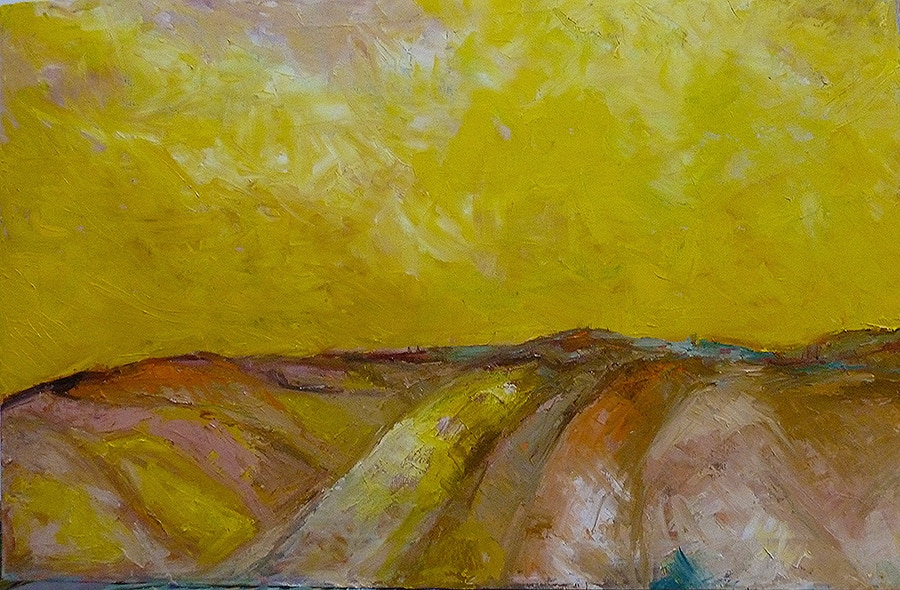
For the visual artist, the Judean Desert is a pure exercise in form, texture, and light. The absence of dense vegetation exposes the raw, skeletal framework of the earth. Under the blinding midday sun, the desert can appear flat and monochrome, bleached out in pale creams and tan ochres. However, during the early morning and late afternoon hours, the low sun hits the edges of the deep wadis (dry riverbeds), casting immense, graphic shadows and bathing the rock faces in brilliant shades of pink, gold, slate-gray, and deep violet.
Key Landscape Features of the Judean Plateau
- The Kidron and Hinnom Valleys: Deep, historical ravines surrounding the Old City of Jerusalem, providing dramatic vertical drop-offs that frame the ancient city walls.
- Wadi Qelt: A deep, dramatic desert canyon containing natural freshwater springs and the ancient St. George Monastery built precariously into the rock cliff face.
- Mount of Olives: A historic limestone ridge looking west over the Temple Mount, offering painters the definitive, classic panoramic viewpoint of Jerusalem’s tiered cityscape.
The Jordan Valley and the Sea of Galilee: Tectonic Fractures and Aquatic Sanctuaries
To drop down into the Jordan Valley is to descend into one of the most geologically significant depressions on earth. This striking valley cuts a deep north-south scar through the landscape, creating an aquatic and agricultural oasis fed by northern mountain snows and subterranean springs. For fine art painters, this below-sea-level ecosystem offers an extraordinary palette defined by heavy, moisture-laden air, shimmering lakes, rushing streams, and lush riparian vegetation framed by the stark, arid walls of the rift slopes.
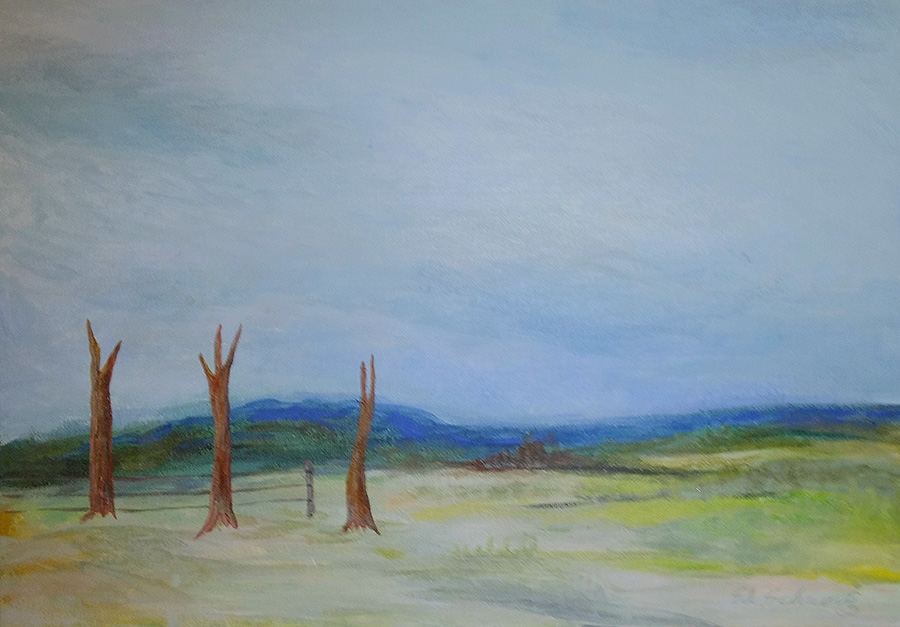
The atmosphere down within the rift valley completely alters the behavior of light. Because the region sits hundreds of meters below global sea level, painters are looking through a thicker, denser column of air. This layer filters out harsh ultraviolet rays and creates a soft, luminous blue-violet haze that hangs constantly over the water. Midday glares transform into a silvery sheen across the water surfaces, while sunrises over the eastern mountains cast long, golden-pink reflections that bleed directly into the emerald and turquoise tones of the lakes and rivers.
🌋 Geological Foundations: The Great Rift Valley
The entire geography of eastern Israel is dictated by the Dead Sea Transform, a major fault line forming part of the Syrian-African Great Rift Valley system. Initiated millions of years ago by the tectonic separation of the Arabian and African plates, this massive geological pulling-apart dropped the valley floor down dramatically relative to the mountains on either side.
This tectonic fracture did more than just create a dramatic valley; it created an essential natural channel for water collection. Rushing mountain runoffs from the northern Hermon range flow directly down into this trench, pooling first into the historic Hula basin, passing through the Sea of Galilee, and tracking down the meandering Jordan River. Capturing this landscape requires an understanding of this raw structural framework—the sheer, stepped cliff escarpments that bound the valley act as dark, imposing backdrops to the fluid, brilliant freshwater systems below.
The Sea of Galilee (Lake Kinneret): A Shifting Mirror of Blue
Sitting at roughly 210 meters below sea level, the Sea of Galilee (Lake Kinneret) is the lowest freshwater lake on earth. Ringed by the basalt slopes of the Golan Heights to the east and the limestone hills of the Lower Galilee to the west, the Kinneret acts as a massive natural mirror. Because it is cradled within this deep basin, its visual character changes wildly depending on the hour and weather, shifting from a calm, glassy expanse of pale sapphire to a turbulent, slate-gray canvas swept by sudden afternoon winds.
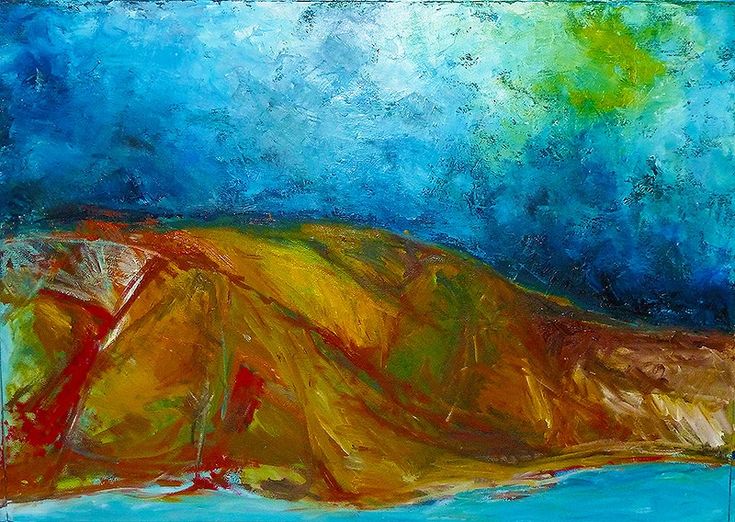
Artists have long been drawn to the lakeside towns and surrounding hillsides, where banana plantations and citrus orchards run directly down to the water’s edge. Painting the Kinneret involves managing subtle gradients of tone; the far eastern shore frequently dissolves into a soft, chalky violet silhouette under the afternoon sun, providing a beautiful tonal contrast to the vibrant, hyper-saturated greens of the western agricultural flats.
“The light within the Rift Valley feels almost liquid. Sitting below sea level changes the density of the air, softening the distant mountain ranges into layers of pure pastel tone that hover above the water.”
The Jordan River and Northern Freshwaters: Cascades of Life
Feeding into the lake from the north is the upper stretch of the Jordan River, supplemented by powerful karstic springs like Tel Dan, Banias, and Snir. In these northern sections, the landscape breaks away from open vistas to offer intimate, highly detailed aquatic environments. Rushing white-water rapids plunge through shaded volcanic basalt ravines, surrounded by dense canopies of Syrian ash, oriental plane trees, and thick walls of river reeds and wild oleanders.
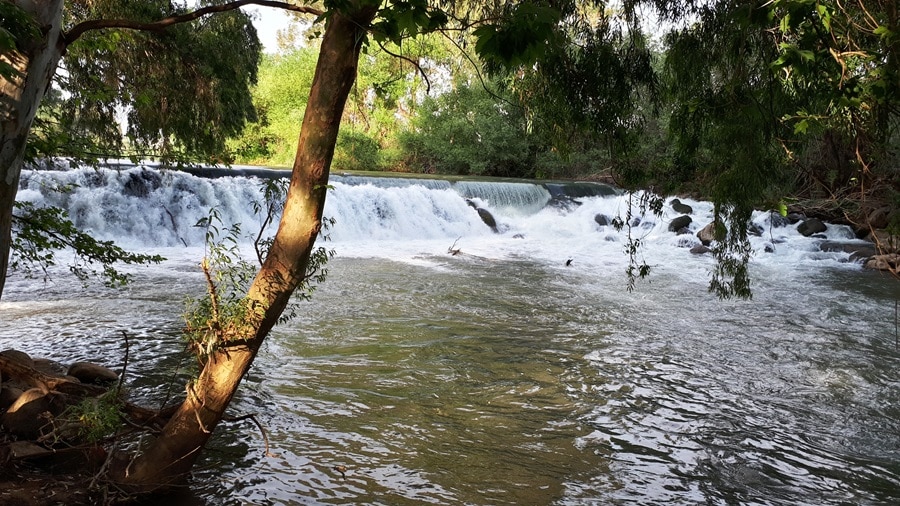
As the Jordan River exits the southern tip of the Sea of Galilee, its character shifts entirely. It transforms into a slow, heavily meandering river slicing through the arid Jordan Valley bed. Here, the landscape painter faces a masterclass in ecological juxtaposition: a narrow, winding ribbon of intense willow-green and jungle-like river vegetation cutting directly through a parched, sun-bleached valley floor of white marl hills and dry desert clay.
Key Freshwater Painting Grounds
- Mount Arbel: A sheer, towering cliff face looking directly down onto the Sea of Galilee, providing a dramatic vertical orientation for landscape painters.
- The Jordan River Delta: The northern entry point where the river drops sediment into the lake, creating a network of marshy lagoons and seasonal wetlands.
- Beit She’an Valley Springs: A network of warm, crystal-clear natural pools and streams that stay constant year-round, cutting through the southern valley floor.
The Negev Desert and the Deep South: Mineral Canvases and Structural Craters
Occupying over half of Israel’s total landmass, the Negev Desert represents an absolute shift in scale, geology, and atmospheric quality. Moving south from the Judean hills, the Mediterranean flora completely drops away, replaced by an expansive, raw wilderness of exposed bedrock, hyper-arid plains, and monumental structural depressions. For the fine artist, the Negev is a masterclass in minimalism and geology—a landscape where the earth’s skeletal framework is laid bare under an intense, unyielding desert sun.
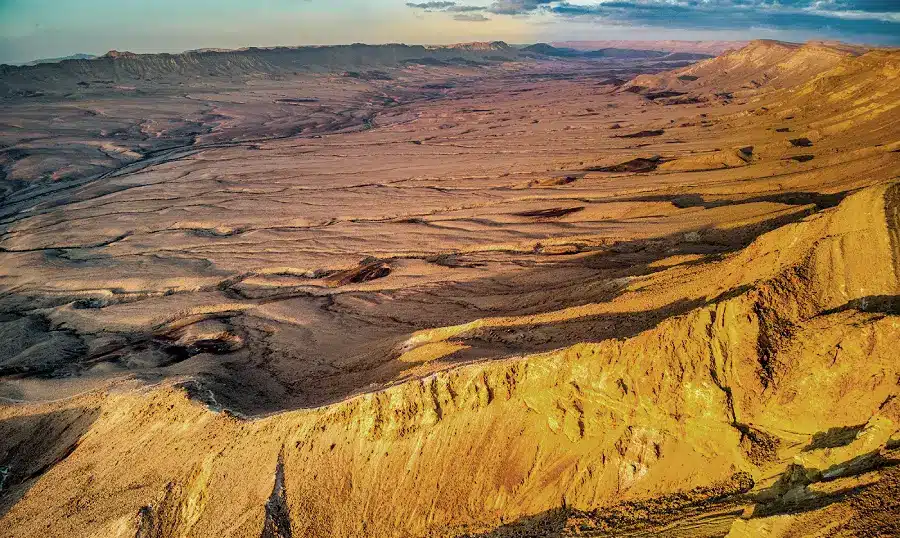
The quality of light in the deep south is incredibly sharp and crystalline, owing to the ultra-low humidity of the desert air. Without moisture to scatter the light, distant horizons and mountain ridges thirty miles away remain sharply defined rather than dissolving into atmospheric blue. This lack of moisture creates a high-contrast environment where highlights are brilliant and shadows are hard, clean, and graphically architectural. It forces a painter to think structurally, mapping out the stark geometry of canyons and plateaus using bold, decisive brushstrokes.
🌋 Geological Wonders: The Mechanics of a Makhtesh
The crown jewel of Negev geology is the Ramon Crater (Makhtesh Ramon), the world’s largest erosion crater. Unlike craters formed by meteor impacts or volcanic eruptions, a *makhtesh* is a unique geological phenomenon found almost exclusively in Israel and Egypt’s Sinai. Its formation began hundreds of millions of years ago when an ancient ocean covered the region, depositing layers of hard limestone and chalk over softer sandstone.
When the ocean receded, tectonic forces pushed the land upward, creating an elongated mountain ridge. Rivers then breached the hard outer limestone layer, rapidly washing away the soft interior sandstone underneath. The mountain literally hollowed itself out from within until the heavy limestone roof collapsed inward, leaving a massive, open amphitheater of rock. For an artist, this exposes an incredible mineral palette: layers of deep red and yellow ochre sandstones, black volcanic basalt dikes, and green-tinted copper ores that shift in hue as the sun crosses the sky.
The Dead Sea and Arava Valley: The Absolute Lowest Point
Slicing along the eastern edge of the Negev is the Arava Valley, a hyper-arid strip that leads up to the shores of the Dead Sea. Perched at roughly 430 meters (1,411 feet) below global sea level, the Dead Sea is the lowest body of water on earth. The landscape here feels otherworldly; the water contains such an extreme concentration of minerals and salt that it looks thick and oily, acting as a strange, hyper-reflective turquoise mirror framed by the deep, rust-red limestone cliffs of the Moab Mountains to the east.
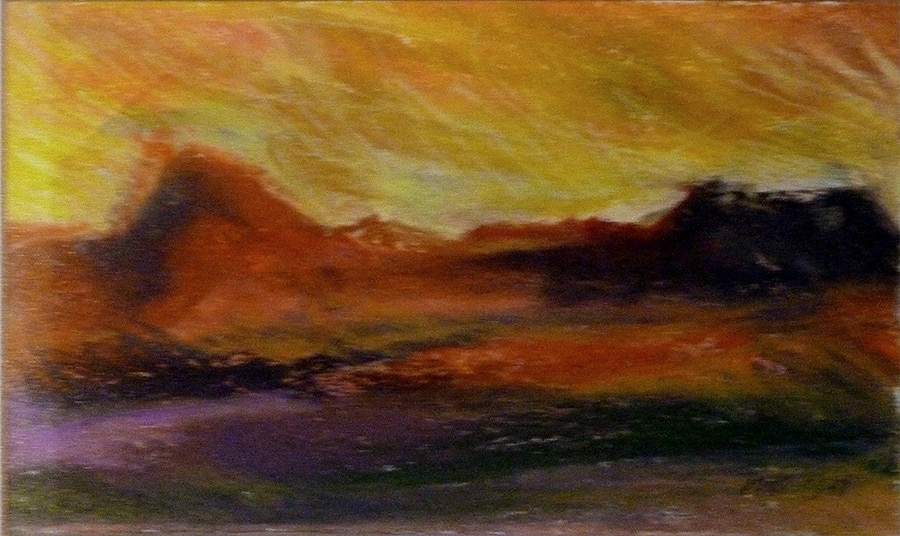
Painting the Dead Sea presents an extraordinary atmospheric challenge. The intense evaporation of water under the desert heat creates a dense, permanent blanket of mineral-rich aerosol vapor that hangs directly over the lake. This vapor filters the sunlight, softening the harsh desert glare into a dreamy, surreal, milk-white and lavender haze. White crystalline salt formations crust the shoreline like frozen ice, providing a bright, sculptural contrast to the deep aquamarine and emerald tones of the heavy water.
“The Negev strips away everything that is temporary. Down at the Dead Sea or deep within the Ramon Crater, you are painting the primordial bones of the earth, rendered in salt, iron, sulfur, and absolute stillness.”
Ancient Trade Routes: Tracing the Footsteps of the Nabataeans
The seemingly impassable terrain of the Negev was once a bustling commercial corridor. It is traversed by the UNESCO-designated Incense Route, a vast ancient trade network developed by the Nabataeans over two thousand years ago to transport precious frankincense and myrrh from Southern Arabia to the Mediterranean ports. Fortresses, water cisterns, and stone waystations (like Avdat and Mamshit) still sit perched along the desert plateaus.
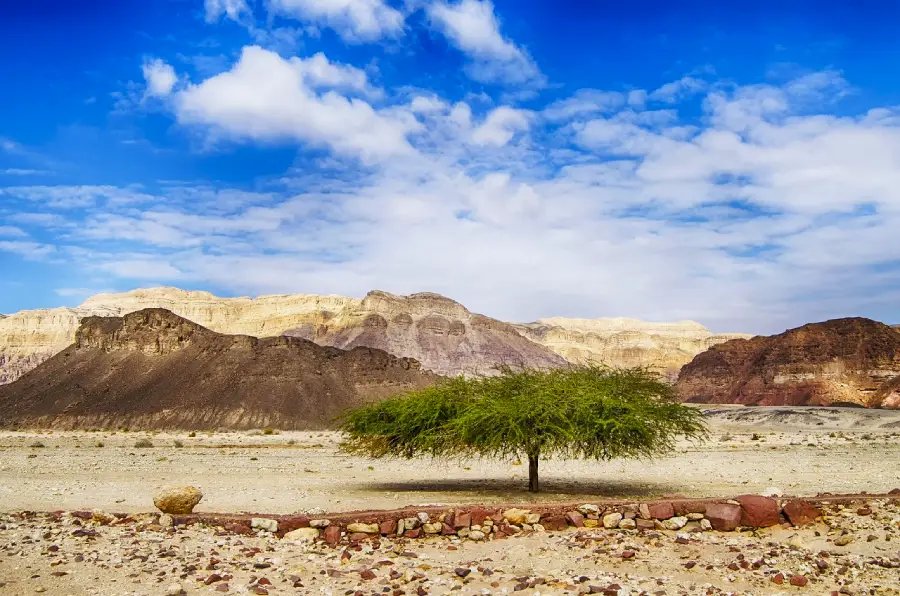
These archaeological structures give landscape artists a striking sense of human scale within the vast wilderness. The weathered, pale limestone ruins of Nabataean temples and watchtowers rise naturally from the surrounding desert stone, echoing the horizontal strata of the landscape. They provide excellent geometric focal points that break up the long, sweeping horizons of the desert plains.
Eilat and the Granite Gates of the Red Sea
At the absolute southern tip of the country lies Eilat, where the desert abruptly meets the crystal-clear waters of the Red Sea. The geology here undergoes one final, radical transformation. The pale limestones and colorful sandstones of the central Negev give way to dark, jagged, monolithic mountains composed of ancient Precambrian granite and metamorphic rocks.
These dark granite walls rise steeply from the coastline, turning a deep, dramatic purple-black at sunset. They frame a marine ecosystem of vibrant coral reefs and intense, cobalt-blue waters. For the cityscape and maritime painter, Eilat offers a striking, high-saturation composition: the raw, dark power of ancient volcanic rock plunging directly into a brilliant tropical sea.
The Mineral Palette of the Deep South
- Iron Oxide Sandstones: Found deep within the Ramon and Hatira craters, supplying natural pigments ranging from blood red to canary yellow.
- Crystalline Salt Halite: Evaporated salt crusts along the Dead Sea that create brilliant, stark white geometric shelves along the waterline.
- Precambrian Granite: The jagged, dark plutonic rock formations surrounding Eilat that absorb light, casting deep, solid, slate-purple silhouettes against the evening sky.
The Living Landscape: Wildlife, Native Flora, and the Hula Restoration Project
An Israeli landscape page is incomplete without acknowledging that the countryside is a dynamic crossroads of biological life. Because of its unique position connecting three continents—Europe, Asia, and Africa—and its incredible variety of microclimates, Israel boasts an astonishing level of biodiversity. Fine art painters and naturalists alike find a landscape populated by ancient trees, transient wildlife, and seasonal wildflower explosions that introduce transient pulses of intense color and motion into the permanent geological topography.

For the landscape painter, this living layer provides narrative movement. A static painting of a Judean chalk valley comes alive with the inclusion of a leaping mountain gazelle; a canvas depicting the basalt cliffs of the Golan Heights gains dramatic perspective when framed by the wide, soaring silhouette of an endangered Griffon vulture. Capturing the native flora and fauna requires a sensitive understanding of seasonal rhythms, where the color and energy of the land shift dramatically from week to week.
🌾 Environmental Triumphs: The Restoration of the Hula Wetlands
The relationship between Israeli landscape art and conservation is nowhere more evident than in the Hula Valley. Situated along the Great Rift Valley migratory corridor, the Hula was historically a vast, ancient wetland and shallow lake ecosystem. In the 1950s, a monumental national engineering campaign drained the swamps to eradicate malaria and create agricultural farmland. However, this historic intervention stripped away a critical ecological sanctuary and caused severe peat soil degradation.
Recognizing the ecological toll, Israel undertook an ambitious ecosystem restoration project in the 1990s, re-flooding parts of the valley floor to recreate the historic marshlands. Today, the Agmon Hula serves as one of the world’s premier wildlife sanctuaries. Twice a year, over 500 million migrating birds journey through this choke point. For painters, the re-flooded basin offers an extraordinary landscape of shallow reed beds, rising morning mists, and skies completely packed with tens of thousands of overwintering common cranes, white pelicans, and storks reflecting across calm, glassy waters.
Native Flora: Painting with the Mediterranean and Desert Palettes
The native trees and wildflowers of Israel define the tactile texture of its landscapes. In the Mediterranean zones of the Galilee and Mount Carmel, the hillsides are clad in ancient tabor oaks, dark green terebinth shrubs, and historic carob trees. These species feature dense, irregular silhouettes and matte, deep green foliage that contrasts cleanly with the brilliant white limestone outcrops beneath them.
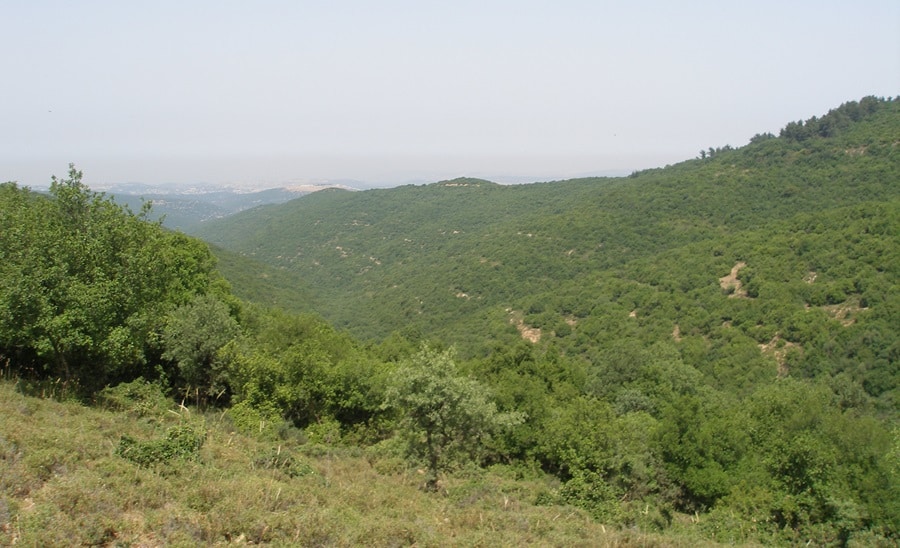
This landscape undergoes short-lived, vibrant transformations during the winter and early spring rain cycles. Fields that were sun-baked and golden-yellow all summer suddenly burst into carpets of brilliant scarlet crown anemones (the national flower), deep violet lupines, and golden mustard blossoms. Capturing these sweeping fields of saturated crimson and blue nestled within muted gray-green hillsides requires a bold, impressionistic handling of pure pigment that mirrors the brief, intense vitality of the Israeli spring.
“Painting wildlife means capturing the movement of wind and time. The slow, sweeping flight of a raptor over a deep canyon or the sudden shimmer of an anemone field changes the landscape from a geological artifact into a living, breathing entity.”
Fauna of the Crags and Cliffs: Mountain Gazelles and Ibex
As the terrain transitions into the dry canyons of the Judean Desert and the Negev, the wildlife adjusts accordingly. Here, the definitive wildlife subject is the Nubian ibex. With their immense, backward-curving horns and tan, rock-colored coats, ibex are evolutionary masterpieces of agility, moving effortlessly across vertical limestone precipices that drop straight down into deep desert wadis.
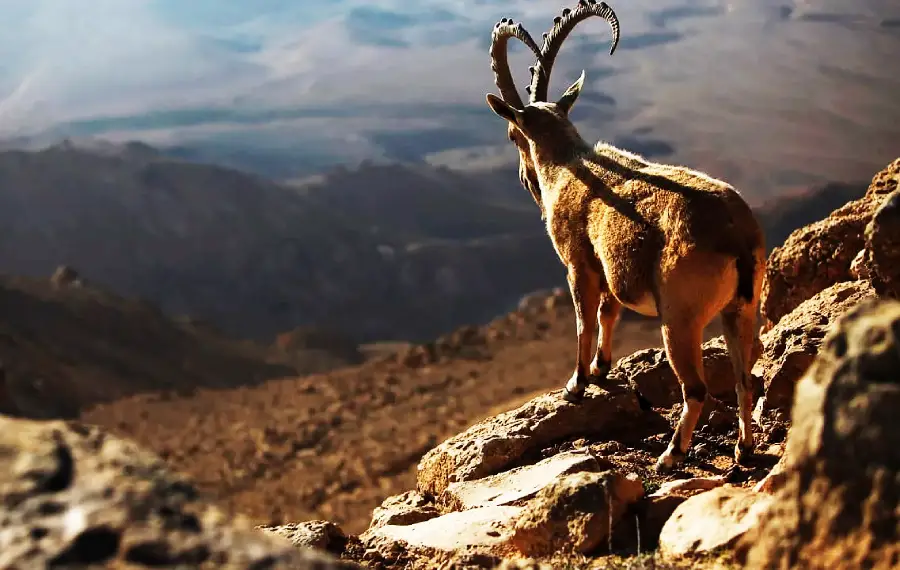
In the open valley plains and rolling hillsides, the elegant Nubian ibex is mirrored by the endangered Israeli mountain gazelle. For fine artists, these animals offer a dynamic anatomical study in tension and camouflage. Their light ochre and cream coats blend flawlessly with the sunbaked desert sandstones, challenging the painter to define their physical forms through the subtle use of cast shadows and rim lighting rather than harsh, heavy outlines.

A Master Class in Biodiversity Composition
- The Migratory Skyway: The Jordan Rift Valley serves as a primary international flyway, funneling massive raptors, storks, and pelicans into dense, dynamic aerial formations ideal for wide horizontal landscape compositions.
- Ancient Old-Growth Trees: Twisted, centuries-old olive and oak trees provide deep structural anchors, their rough bark giving painters excellent textual opportunities for heavy palette-knife impasto work.
- Desert Adaptations: The soft, neutral grays, tans, and creams of desert fauna provide an elegant, minimalistic color harmony when set against the dramatic shadows of erosion craters and deep canyons.
The Chronicles of Light and Stone: History of Israeli Landscape Painting and the Rise of Art Colonies
The history of Israeli landscape painting is a rich tapestry showing how artists transitioned from romanticized, biblical imaginations of the Holy Land to an authentic, gritty dialogue with its physical, local reality. In the early 20th century, European-trained pioneers arriving at the Bezalel Academy faced a radical optical shock. The soft, diffuse tones of northern Europe were instantly shattered by the uncompromising, bleaching quality of the Middle Eastern sun. Over decades, generations of artists learned to strip away foreign techniques to forge a distinct painterly style suited to the stark lines, ancient ruins, and shifting sands of this complex geographical canvas.

As these movements matured, specific geographical locations transformed into thriving art colonies—magnets for creative communities seeking refuge, spiritual depth, and raw natural inspiration. From the cobblestone alleyways of Safed to the historic stone houses of Rosh Pina, and down into the pioneering communal spaces of kibbutzim like kibbutz Kfar Blum, artists integrated themselves into the local scenery. This deep geographic grounding allowed painters to explore not only the natural landscape but also the vibrant multicultural fabric of neighboring Druze villages, embedding a profound human scale into their wilderness canvases.
🎨 Art History Focus: From Orientalism to New Horizons
The pioneering era of Israeli art began with early 20th-century masters like Reuven Rubin, Nachum Gutman, and Anna Ticho. These artists broke away from the rigid academicism of Europe, adopting bright, modernist, and slightly naive styles to capture the olive groves of Jerusalem, the rolling sand dunes of early Tel Aviv, and the limestone steps of the Galilee. They saw the landscape as a symbol of cultural rebirth, emphasizing the soft curves of the earth and the vibrant, untamed local light.
By the late 1940s, a dramatic shift occurred with the formation of the “New Horizons” (Ofakim Hadashim) movement, led by Joseph Zaritsky and Marcel Janco. Rejecting literal representation, these artists pulled the Israeli landscape into the realm of lyrical abstraction. They reduced the mountains of Galilee and the harsh glare of the desert to blocks of pure color, light patches, and geometric force lines. For modern collectors, this evolution demonstrates how the country’s landscape has served as an endless playground for both intimate, descriptive storytelling and radical, avant-garde experimentation.
Safed and Rosh Pina: Stone, Mysticism, and the Mountain Vistas
Perched high in the Upper Galilee mountains, Safed (Tzfat) became the legendary epicenter of Israeli landscape art in the mid-20th century. Its historic Artist’ Quarter, situated within a maze of Ottoman-era stone buildings and narrow blue-painted alleyways, drew artists who were mesmerized by the town’s dual identities of artistic freedom and Kabbalistic mysticism. Painting in Safed requires capturing the heavy texture of ancient, weathered stone surfaces set against sudden, soaring views of Mount Meron across the valley, often blanketed in dramatic rolling winter mists.
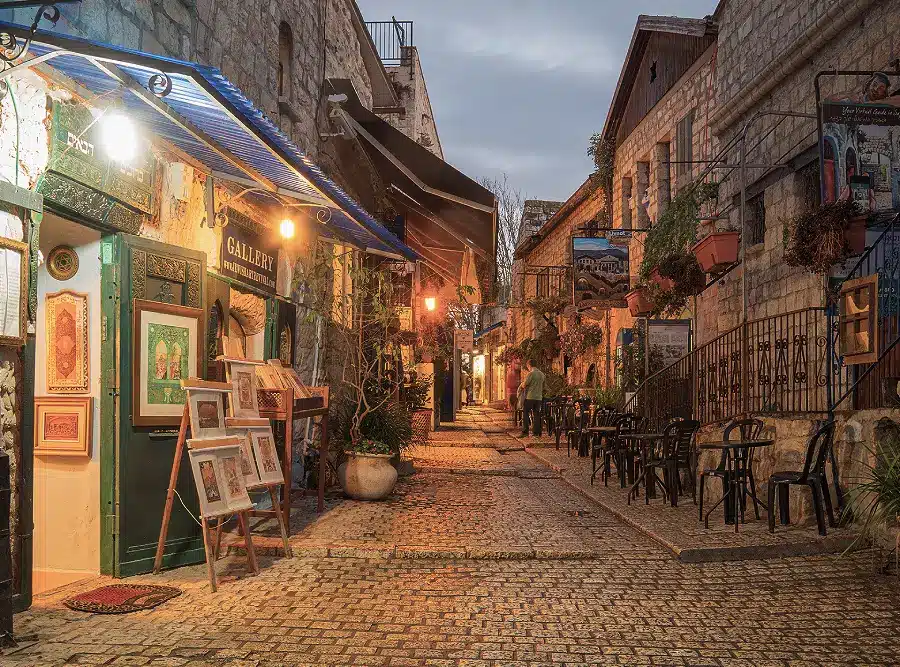
Just down the eastern slopes of the mountain lies Rosh Pina, one of the oldest modern agricultural colonies in the region. With its black basalt cobblestone streets, historic 19th-century orchards, and preserved stone homesteads, Rosh Pina offers a softer, more pastoral landscape study. Artists here are drawn to the rich interplay between human-cultivated nature—old almond blossoms, twisting vines, and terraced gardens—and the wide, sweeping backdrop of the Hula Valley stretching out far below.
“The old art colonies teach us that a landscape is never just rock and sky—it is the memory of hands that laid the cobblestones, the spiritual aura of ancient rooms, and the quiet endurance of stone houses built on mountain edges.”
The Kibbutz Art Movement and the Pastoral Peace of Kfar Blum
A truly unique chapter in local art history is the Kibbutz Movement’s profound impact on landscape painting. Communal settlements actively fostered creative expression, providing artists with working studios embedded directly within the agricultural and natural landscape. Painters living on these collective farms were uniquely positioned to capture the raw, daily realities of rural life: the shimmering reflections of local fishponds, fields of green wheat meeting blue horizons, and the dense, dark canopies of cultivated windbreaks.
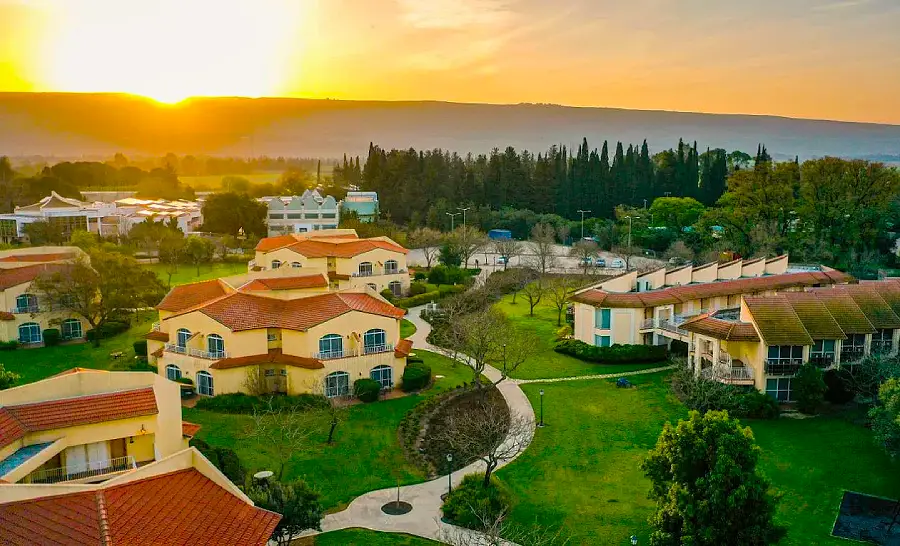
At Kibbutz Kfar Blum, nestled right beside the rushing waters of the Jordan River, this pastoral aesthetic comes alive. The landscape here is characterized by the constant sound of moving water, the shifting silvery leaves of old willow trees arching over the riverbanks, and the sudden, monumental presence of snow-capped Mount Hermon rising in the distance. This immersive, firsthand experience allows kibbutz-based artists to bypass idealized cliches, creating authentic, deeply felt, and observationally rigorous art that honors the working relationship between community and land.
The Architectural Horizon: Druze Villages of the High Ridges
The human geography of northern landscape art extends beautifully into the historic Druze villages that sit along the high ridges of Mount Carmel and the Golan Heights, such as Daliat el-Karmel, Isfiya, and Majdal Shams. For architectural and landscape painters, these villages present an exceptional geometric and cultural study. The cubic stone houses cascade steeply down mountain terraces, creating complex arrangements of shape and form that blend directly into the bedrock beneath them.
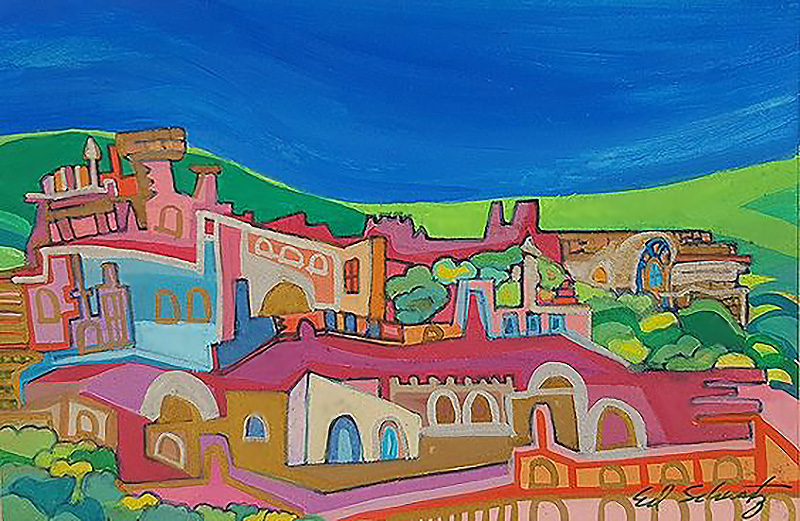
Surrounding these villages are centuries-old agricultural landscapes: ancient, terraced olive groves, stone-walled cherry orchards, and hidden vineyards tucked into high valleys. The integration of these villages into landscape paintings brings a rich sense of cultural continuity and human history. They anchor horizontal mountain ranges with solid, vertical domestic architecture, providing excellent focal points where warm limestone and cool cast shadows map out the steep slopes of the high ridges.
Artistic Archetypes of the Colonies
- The Safed Palette: Dominated by cool limestone grays, deep mystical blues, and lavender shadows designed to echo the spiritual atmosphere of its narrow alleys.
- The Kibbutz Pastoral Style: Characterized by rich, saturated earthy ochres, vibrant agricultural crop greens, and wide, sweeping horizontal skyways.
- The Basalt Cubism of the Ridges: Found when painting high-altitude Druze villages, using dark basalt stones and stark, blocky house geometries to create high-contrast compositional rhythm.
Part 9: The Luminescent Canvas – Israeli Light, Impressionism, and the Artistic Spirit
To paint the Israeli landscape is to wage a creative war with light. Unlike the soft, moisture-filtered atmosphere of Europe where Impressionism was born, the Middle Eastern sky offers a fierce, unforgiving brilliance. It is a blinding, direct Mediterranean glare that flattens perspective, strips away traditional tonal gradients, and forces an entirely new relationship with color and atmosphere.
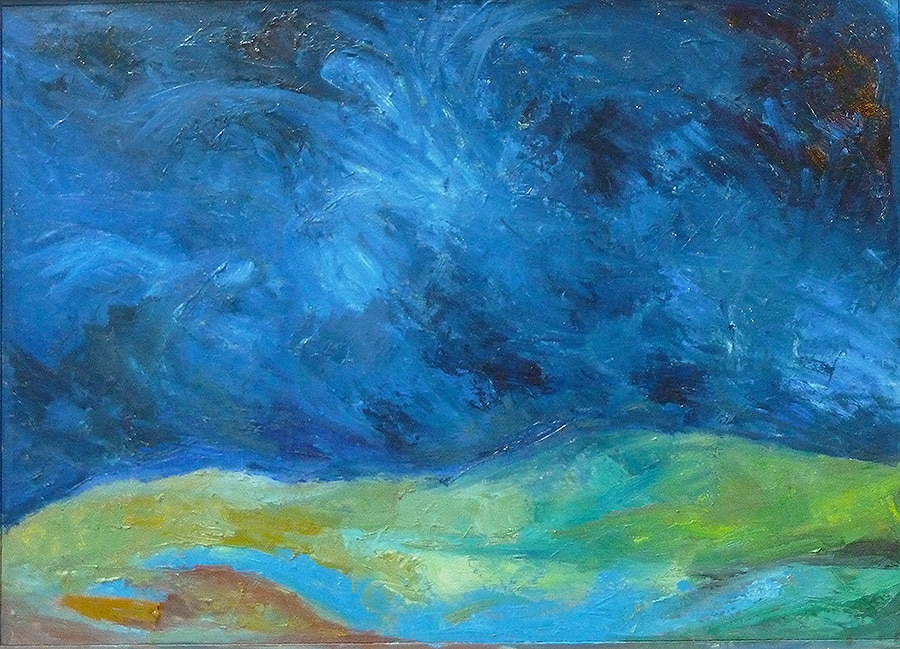
The Alchemy of Mediterranean Light
European painters relied on a gradual transition from light to shadow to create a sense of three-dimensional form. In Israel, the sheer intensity of the sun obliterates these subtle shifts. The light behaves like a physical force, bouncing off limestone ridges, bleaching coastal dunes, and throwing deep, razor-sharp, ultra-marine shadows.
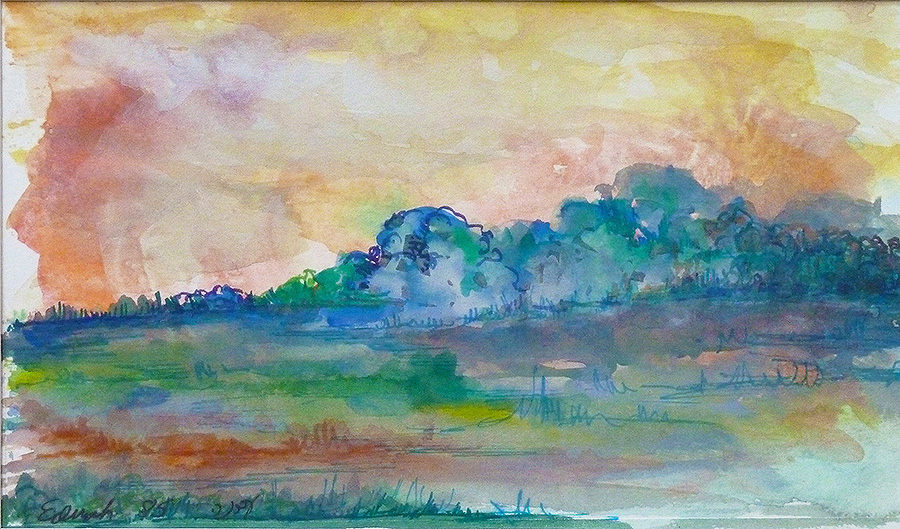
Early pre-state and Israeli Impressionists quickly realized that copying European palettes resulted in muddy, artificial representations. To capture this atmosphere, they had to heighten their keys—embracing high-contrast whites, searing ochres, cobalt blues, and brilliant local purples. The air itself changes color depending on the region: the coastal plain is wrapped in a humid, silver-blue haze; the Negev features a dry, dust-particled golden glow; and the Jordan Valley, sitting far below sea level, filters light through a dense, heavy atmospheric column that lends a strange, surreal weightlessness to the horizon.
The Kibbutz and the Cradle of Israeli Landscape Art
The early collective agricultural settlements—the Kibbutzim—did not just transform the physical geography of the country; they deeply reshaped its art history. Painters working within the kibbutz movement were uniquely positioned. They were intimately tied to the soil, spending their mornings tilling the earth and their afternoons translating that raw physical encounter onto canvas. The landscape was not an idealized, distant vista to them; it was a living workspace, a collective home, and an ideological mission. This daily intimacy bred a raw, tactile style of landscape painting that prioritized the physical textures of fields, citrus groves, and functional architecture over romanticized orientalist tropes.
Why the Upper Galilee Inspires the Artist’s Eye
For generations, Israeli artists have gravitated toward the Upper Galilee. It is an environment of profound geographical contrast. Here, the sharp basalt cliffs of volcanic history collide with ancient olive groves, rushing freshwater springs, and sudden, dramatic elevation changes.
The region acts as a massive natural amphitheater of light. The moisture rising from the Sea of Galilee and the Hula Valley mixes with the cooler mountain air, creating a soft, shifting mist that catches the early morning rays, scattering them into a spectrum of ethereal pastels. The Upper Galilee provides artists with an escape from the flattening glare of the coastal plain, offering instead depth, layered topography, and an atmospheric mystery that feels both ancient and continuously renewed.
The Artistic Approach of Ednah Schwartz
In my own practice, approaching the Israeli landscape requires a balancing act between physical topography and emotional resonance. My brushwork seeks to mimic the urgent, direct nature of the light itself. I do not aim for sterile realism; instead, I look for the underlying rhythm of the terrain.
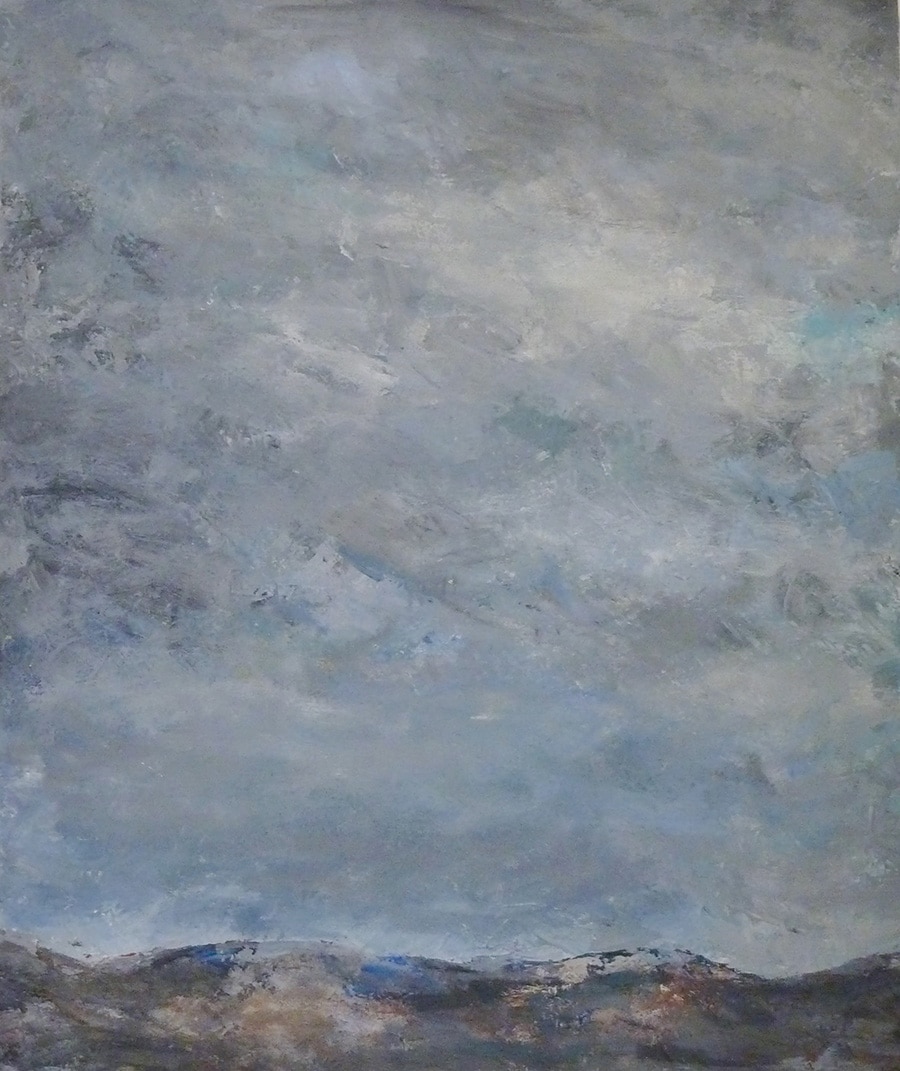
When painting the Judean hills or the valleys of the north, I apply paint texturally, allowing the layers of pigment to catch the ambient room light much like the rocks and fields catch the Mediterranean sun. It is an exploration of color as temperature—juxtaposing burning, warm tones against shockingly cool, vibrant shadows to recreate that sudden, breathtaking shift from midday heat to evening chill. Every stroke is an attempt to capture not just what the land looks like, but how it feels to stand exposed beneath its vast, evocative sky.
Part 10: Deep Context – Timeline, Academic FAQ, and Synthesis
To fully appreciate the intersection of geography, history, and art on this narrow strip of land, we must examine the hidden mechanisms that shape its physical reality. Below is an analytical breakdown of the complex systems that make the Israeli landscape globally unique.
Frequently Asked Questions
Why does Israel have so many distinct microclimates over such a small area?
Israel’s incredible climatic diversity is driven by three intersecting factors: its unique latitudinal positioning between the Mediterranean Sea and the Sahara-Arabian deserts, its extreme altitudinal variations (ranging from alpine mountain peaks to the lowest point on earth), and the sudden, dramatic presence of mountain ranges running north to south. These ridges create severe “rain shadows,” causing lush, green Mediterranean ecosystems to drop off into stark, arid desertscapes within a driving distance of mere minutes.
What is the impact of the Great Rift Valley on the local terrain?
The Dead Sea Transform—a branch of the Great Rift Valley system—is the tectonic engine of Israel’s eastern border. Millions of years of continental shifting have pulled the earth apart here, creating a massive, deep depression. This tectonic tear formed the Jordan Valley, carved out the basin for the Sea of Galilee, created the otherworldly, hyper-saline cauldron of the Dead Sea, and produced steep, sheer escarpments that act as dramatic focal points for landscape artists.
How does the volcanic geology of the Golan Heights differ from the rest of the country?
While much of Israel’s foundational bedrock consists of marine sedimentary limestone and chalk, the Golan Heights is a vast, ancient basaltic plateau. Formed by prehistoric volcanic eruptions, the region features dark, mineral-rich volcanic soil, cinder cones, and deep gorges carved out by rushing winter streams. This dark stone and rich, dark soil create a completely different color profile and structural geometry than the pale, reflective limestone of the Judean Hills.
What role do ancient trade routes play in how we view the landscape today?
Because Israel sits as a land bridge connecting Asia, Africa, and Europe, it was crisscrossed by monumental ancient trade superhighways like the Via Maris (Way of the Sea) and the Incense Route. The paths worn by Nabataean spice caravans, Roman legions, and ancient merchants dictated where fortresses, towns, agricultural terraces, and wayside inns were built. Today, these ancient routes anchor the historical ruins that give the natural landscape its distinct sense of deep, human-layered history.
How do seasonal migrations alter the natural environment?
Twice every year, over 500 million birds funnel through the narrow corridor of the Israeli sky as they travel between their breeding grounds in Europe and Asia and their wintering grounds in Africa. This massive avian migration dynamically transforms regions like the Hula Valley into churning, living ecosystems. For an artist, this adds an element of ephemeral movement to an otherwise static geological backdrop, filling the sky and wetlands with shifting clouds of cranes, pelicans, and birds of prey.
Chronological Timeline of Landscape & Geography
| Epoch / Period | Geological & Cultural Milestones |
|---|---|
| Miocene Epoch (~20M Years Ago) | Tectonic forces break open the Great Rift Valley, forging the initial topography of the Jordan Rift and the Dead Sea basin. |
| Pleistocene Epoch (~2M Years Ago) | Widespread volcanic activity occurs in the north, laying down the massive basalt fields of the Golan Heights and Upper Galilee. |
| Chalcolithic to Bronze Age | Early agricultural societies invent terracing on the steep hillsides, cultivating native flora like olives, grapes, and figs, permanently altering soil conservation. |
| Classical Antiquity | The height of the Nabataean Incense Route across the Negev Desert; construction of monumental water engineering systems and port cities like Caesarea. |
| Early 20th Century | Establishment of the Kibbutzim and art colonies like Safed. Pioneers begin grappling with the stark Mediterranean light, birthing Israeli Impressionism. |
| 1950s vs. Modern Era | The dramatic draining of the Hula wetlands for agriculture in the 1950s, followed by the groundbreaking modern ecological restoration project to bring back the biodiversity of the freshwater ecosystem. |
Conclusion: The Masterpiece of Time and Space
The landscape of Israel is an active conversation between deep earth physics, ancient history, and the human search for meaning. From the deep basalt cuts of the northern mountains down to the pristine mineral architecture of the southern deserts, this land packs an entire world’s worth of ecosystems into an incredibly compact frame. For historians, scientists, and artists alike, it remains an inexhaustible source of wonder—a land shaped by extreme forces, painted in unforgettable light, and preserved through dedicated conservation.