The Kibbutz Movement, Art and Artists
The Kibbutz Movement: Communal Ideals and the Soul of Israeli Fine Art
Explore Ednah’s Complete Fine Art Portfolio & Landscapes
📌 Collective Blueprint: The Kibbutz as a Creative Incubator
- The Social Experiment: An unprecedented socio-economic movement built upon complete egalitarianism, shared communal resources, and an unyielding commitment to working the historic land.
- Frontier Statebuilding: Positioned along strategic border frontiers, early kibbutzim directly integrated agricultural cultivation with civic defense infrastructure.
- Artistic Heritage: By balancing structured manual shifts with creative freedom, kibbutzim became highly effective incubators for legendary modern Israeli painters, poets, and musicians.
The kibbutz movement represents one of the most unique and influential communal experiments in modern history. Derived from the Hebrew word for “gathering” or “collective,” the kibbutz began as a pioneering endeavor to forge a new society rooted in egalitarian values, shared labor, and deep connection to the land. For artists living and creating within these rural enclaves, like Israeli painter Ednah Sarah Schwartz at Kibbutz Kfar Blum in the Upper Galilee, this immersive collective way of life provides a profound lens through which to explore identity, historical memory, and the raw beauty of the northern frontier.
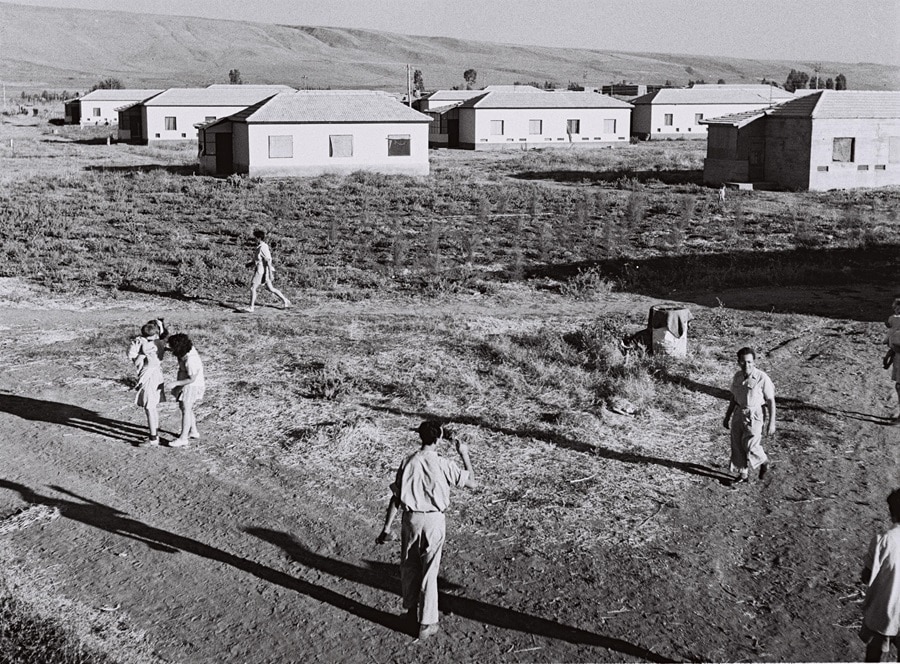
Pioneers Establishing Kibbutz Kfar Blum in the Hula Valley Terrain
What Is a Kibbutz?
The Kibbutz: Labor, Community, and the Soul of the Frontier
For many international art collectors and cultural observers, the term kibbutz (plural: kibbutzim) evokes images of collective farms and tight-knit agricultural communities dotting the Israeli landscape. However, to truly understand the artwork born from this environment, one must realize that the kibbutz is not simply a location—it is a revolutionary socio-economic model, a deeply felt philosophy of life, and a living sanctuary for the preservation of community ideals.
To look at a landscape painting of a plowed frontier or a quiet communal path is to engage directly with one of the world’s most unique experiments in communal living.
Origins and Definitive Vision
The word kibbutz derives from the Hebrew word for “gathering” or “collective.” The movement began in the early 20th century (with the founding of Degania in 1910) by young, idealistic pioneers who sought to return to the land. Their objective was twofold: to reclaim and cultivate barren frontier regions through grueling physical labor, and to build a utopian society completely unburdened by industrial inequalities. They envisioned a lifestyle where human relationships were defined by cooperation rather than competition.
Core Values, Ethics, and Morals
At the heart of traditional kibbutz life is a profound commitment to absolute social and economic equality.
The ethical framework of the community is built upon several foundational pillars:
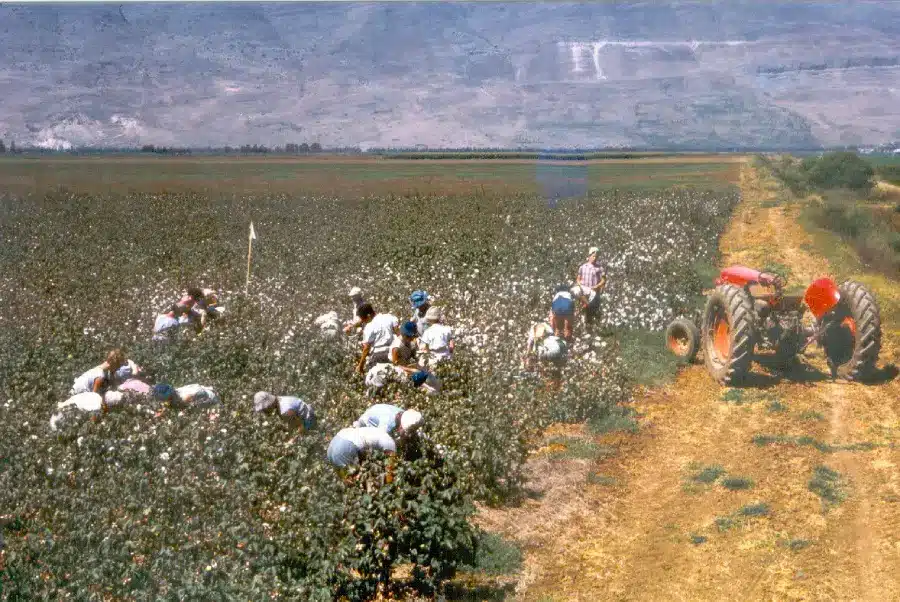
- Radical Equality and Collective Ownership: Historically, all property, land, and economic assets belonged entirely to the community. There was no private wealth. The guiding moral maxim was borrowed from classic cooperative philosophy: “From each according to their ability, to each according to their needs.” * The Dignity of Labor: Physical labor—particularly agriculture and working directly with the earth—was elevated to a sacred moral duty. Cultivating the soil was viewed not just as economic sustenance, but as a path toward personal rehabilitation and spiritual reconnection to the land.
- Mutual Responsibility (Arvut Hadadit): The community operated as an extended family. The kibbutz provided comprehensive security for every individual, taking full responsibility for healthcare, clothing, advanced education, and lifelong elder care. This absolute social safety net fostered a deep sense of psychological peace and shared destiny.
A New Form of Jewish Expression
By untethering these milestones from institutional religion, the kibbutz movement did not diminish their Jewishness; rather, they intensified it. They proved that Jewish identity could be fully realized through culture, a shared language, historical consciousness, a mutual commitment to a utopian society and deep rooted connection to the ancestral land of the Jewish people – Israel.
The holidays became the ultimate expression of the collective spirit—proving that a community could look to the past for its values while building an entirely new, secular way of life for the future.
The Kibbutz Holidays: Cultural Renewal Over Religious Ritual
The early architects of the kibbutz movement sought to redefine what it meant to live a Jewish life in a modern, socialist framework. In doing so, they completely transformed the celebration of Jewish holidays. On a traditional kibbutz, holidays were distinctly stripped of their traditional, religious orthodoxy—yet they remained deeply, authentically Jewish and still rooted in the biblical stories and narratives.
Rather than centering celebrations around a synagogue or divine commandments, the kibbutz movement recast Jewish holidays through the lenses of a shared communal experience unique to each Kibbutz. while the outline remained the same, the specific rituals may change from kibbutz to kibbutz.
The Intersection of Land and Legacy
For the pioneering halutzim (pioneers), returning to the land meant returning to the original, biblical roots of the festivals before thousands of years of exile transformed them into purely theological rituals. By aligning Hebrew calendar biblical milestones / holidays with the actual seasonal realities of working the soil, the kibbutz created a vibrant, secular and very Jewish culture.
4 examples of holiday celebrations on a kibbutz:
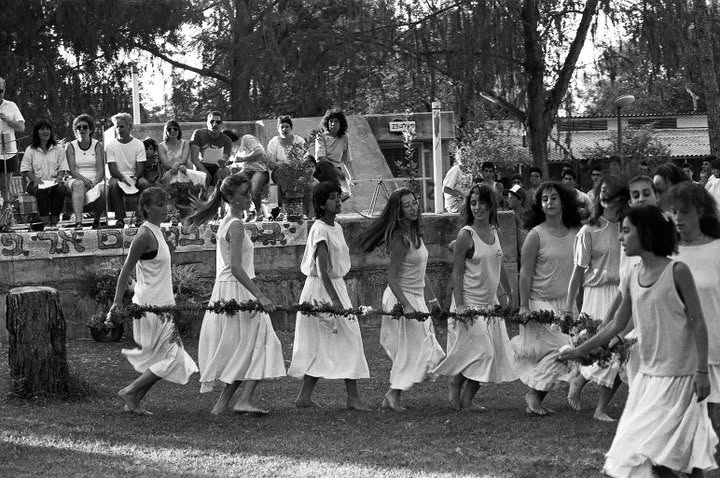
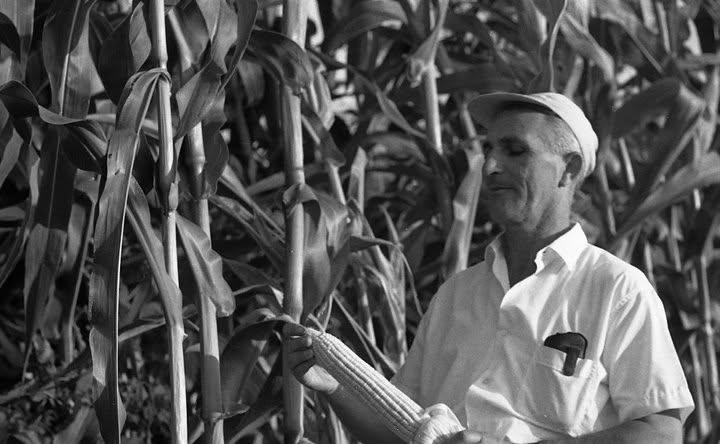
- Shavuot (שבועות / The Feast of First Fruits): On a kibbutz, Shavuot was transformed from a purely religious celebration of the giving of the Torah into a monumental community pageant honoring the Bikkurim (the first fruits). The entire collective gathered to parade the year’s agricultural yields—wheat, grapes, citrus, and even the newborn livestock and babies born on the kibbutz over the past year. It was a joyful celebration of labor, growth, and fertility.
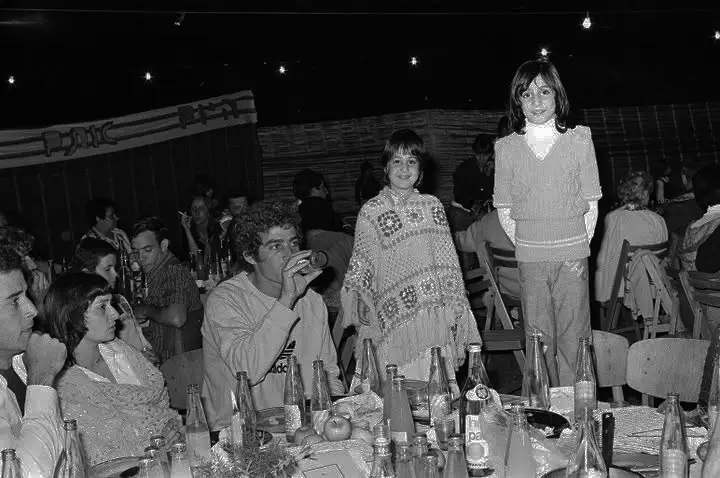
- Passover (The Kibbutz Haggadah): Perhaps the most profound example of this cultural shift was the creation of the unique Kibbutz Haggadahs. Kibbutzim rewrote the traditional text to downplay religious liturgy, instead emphasizing the universal and national themes of liberation from slavery, the birth of spring, and the contemporary struggle for freedom. It became a multi-generational theatrical and musical performance involving the kibbutz members dining together in the communal dining hall (hadar ochel), singing songs, telling the story and enjoying each other’s company.
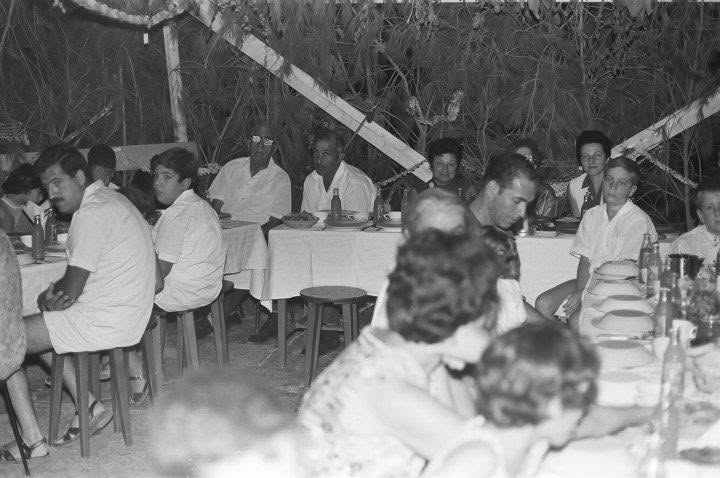
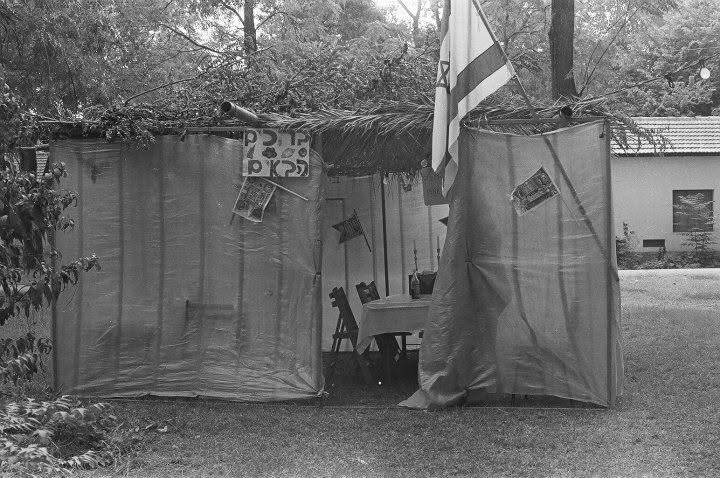
- Sukkot and Shmini Atzeret: Reclaimed as an end-of-year harvest celebration, Sukkot was deeply tied to storing the autumn yield. “Sukkot”, which are temporary, walled booths or huts were built for the week-long Jewish festival of Sukkot, decorated elaborately with branches, art created by the children of the kibbutz and sometimes crops harvested directly from the collective’s fields. Within these vibrant structures, members would gather to sing songs and eat together, transforming the ancient holiday into a deeply shared, multi-generational communal experience under the stars.
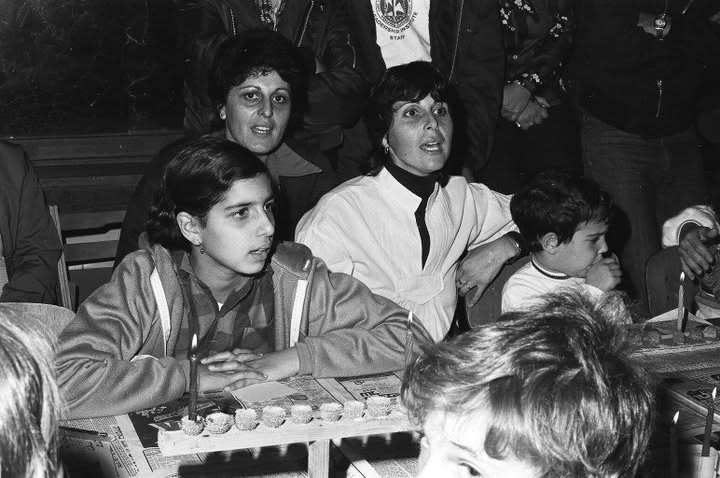
- Hanukkah: Hanukkah was celebrated not as a miracle of divine oil, but as a triumph of Jewish heroism, self-determination, and the victory of the few over the many. In preparation for the holiday, children would craft their own Hanukkiyot (menorahs) within the communal children’s houses. On the first night of the festival, the communal dining hall (hadar ochel) typically served as the central gathering point, where the entire collective would assemble to light the main Hanukkiya, sing songs, and share a meal. The kibbutz kitchen would prepare traditional sufganiyot (jelly donuts) and crispy latkes (potato pancakes) for all the members to enjoy together.
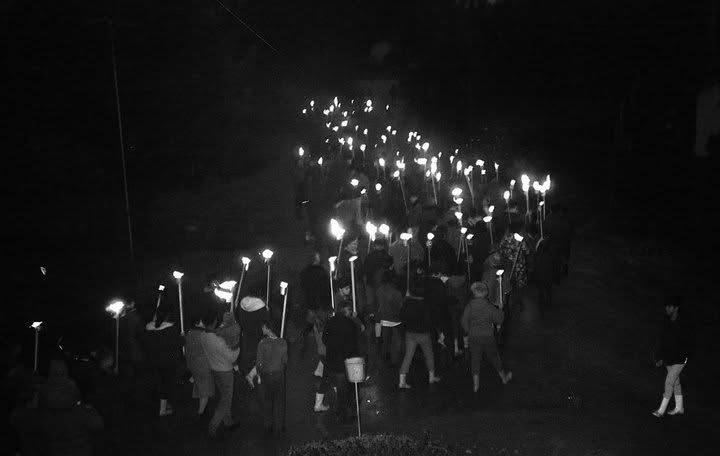
- Before the formal indoor festivities began, many kibbutzim would orchestrate a Tahaluchat Lapidim (תהלוכת לפידים)—a dramatic torchlight procession. The entire community would march through the kibbutz pathways carrying lit torches to symbolize the casting of light over darkness, frequently singing traditional pioneer anthems such as “Anu Nose’im Lapidim” (“We are Carrying Torches”).
Internal Governance and Structure
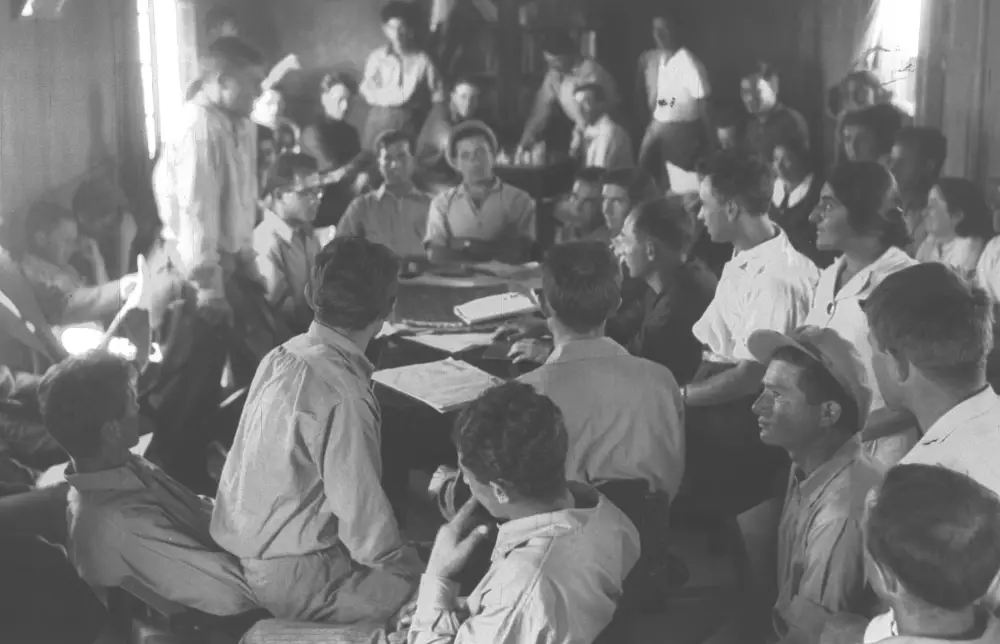
The governing mechanics of a kibbutz represent one of the purest forms of direct democracy in modern history.
Here is how it works:
- The General Assembly (Asefa): The ultimate authority of the kibbutz rests not with an elite executive board, but with the Asefa—a regular gathering where every single member has an equal voice and an equal vote. Major life decisions, from adopting new agricultural technologies to approving higher education funding for a member’s child, are debated and voted upon collectively.
- The Committee System: To manage daily operations, members elect functional committees on a rotating basis. Positions such as the farm manager, the economic secretary, or the cultural coordinator are temporary responsibilities, ensuring that leadership roles never solidify into permanent social hierarchies.
- Communal Institutions: Historically, daily life centered around shared communal structures. Members dined together in a large central dining hall (Hadar Ochel), which served as the social and political heartbeat of the community. Children were often raised together in communal children’s houses, learning the values of sharing, teamwork, and independence from infancy.
The Modern Evolution: Privatization and Adaptability
As the decades progressed and global economies shifted, the kibbutz model naturally adapted. In the late 20th century, many communities underwent a process of structural “privatization” (Hafracha). While some kibbutzim remain strictly collective, many modern iterations utilize a balanced hybrid framework. Today, members often earn differential salaries based on their professional work and manage private household budgets.
Crucially, even privatized kibbutzim fiercely preserve their core safety nets, ensuring robust mutual aid, community welfare funds, and a shared communal cultural life. Furthermore, economic engines have expanded dramatically; while agriculture remains a proud heritage, modern kibbutzim are home to high-tech green engineering, global manufacturing plants, and eco-tourism ventures.
The Kibbutz as a Sanctuary for Fine Art
For a visual artist, the kibbutz lifestyle provides an extraordinary and rare incubator. By removing the immediate, exhausting pressures of commercial survival and replacing them with a secure, supportive social framework, the community historically recognized cultural development as a vital human need.
Living in an environment deeply integrated with changing crop cycles, seasonal rains, and the untamed borderlands grants a creator an organic, immersive connection to the soil. When you look upon these canvases, you are witnessing an authentic, localized perspective—an artistic record shaped by the profound values of a community that continues to stand as a frontline sentinel of history, labor, and ideals.
Historical Genesis: From the Bilu Idealists to Degania
The foundations of modern kibbutz collectivism were laid decades before the formal realization of statehood, emerging from a potent mixture of European socio-political philosophies and Zionist necessity:
- The Bilu Pioneers: In the 1882, young Jewish intellectuals fleeing Eastern European persecution formed the Bilu movement. Operating under the banner of national revival, they championed manual agricultural work (Avodah Ivrit) as the ultimate path to personal and collective restoration.
- The first organized group of 14 BILU pioneers arrived at the port of Jaffa, marking one of the earliest organized Zionist immigration efforts during the First Aliyah. The BILU pioneers initially worked at Mikveh Israel before helping establish or strengthen agricultural settlements such as Rishon LeZion and later Gedera
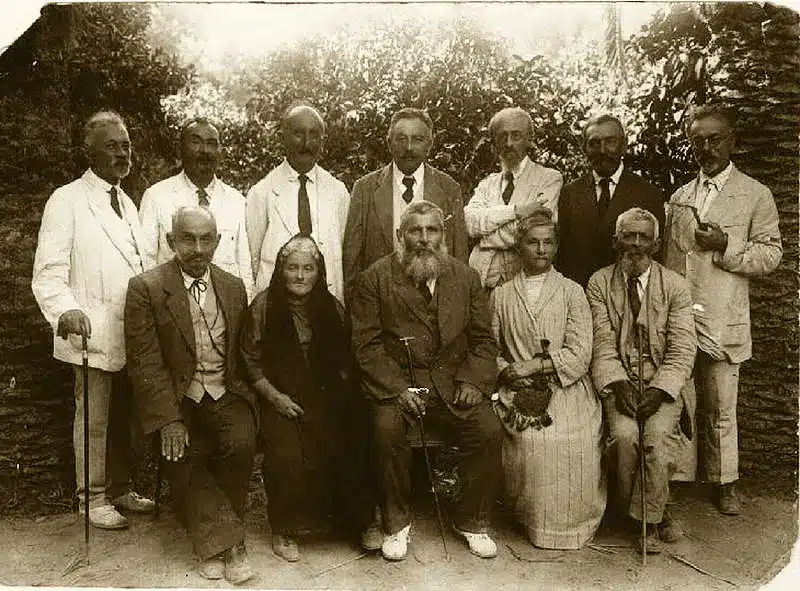
- Degania (1910): The abstract principles of cooperative living found physical form with the founding of Degania, the world’s first kibbutz, near the shores of the Sea of Galilee. It established a revolutionary economic framework: a classless society structured around shared assets, rotation of positions, and absolute group responsibility.
- Frontline Sentinels: As subsequent immigration waves expanded the movement throughout the 1920s and 1930s, new kibbutzim were established along strategic geographic boundaries, combining community development with civic defense initiatives.
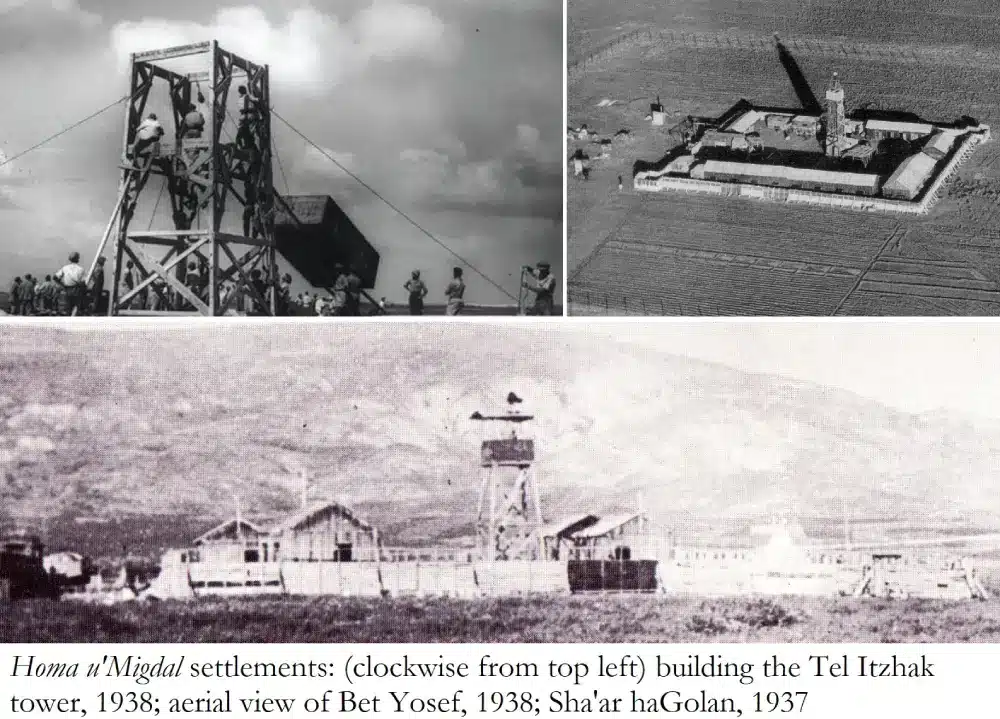
- Precursors to the Frontier: From Homa U’Migdal to the Heachzut Outpost: To fully understand the artistic representation of the northern frontier’s landscape, one must view it through the lens of early pioneering defensive architecture, which fundamentally reshaped the geography of Israel. Long before the modern borders took their shape, the visual identity of these border regions was established by two groundbreaking strategic tactical models: Homa U’Migdal (Tower and Stockade) and the Heachzut (military-agricultural outpost).
- Homa U’Migdal (חוֹמָה וּמִגְדָּל): Establishing Facts on the Ground: Originating during the complex security environment of the late 1930s, Homa U’Migdal was an ingenious clandestine settlement methodology designed to secure Jewish land ownership and maintain a defensive presence against ongoing regional violence. Exploiting an archival loophole remaining from pre-World War I Ottoman real estate law, the Zionist pioneering movement capitalized on a rule stating that no fully erected building featuring a completed roof could be legally demolished by the governing authorities. Operating under this constraint, hundreds of volunteers would mobilize to construct a defensive community in a single daylight operation or overnight push. A standard blueprint was utilized: pre-fabricated double-layer wooden walls were quickly bolted together and packed with gravel to absorb gunfire, surrounding a central, pre-built observation tower equipped with a sweeping spotlight. Dozens of modern agricultural communities across the country—most notably model sites like Nir David and the rugged outpost of Hanita in the Western Galilee—trace their lineages directly to this rapid-response architecture.
- Heachzut (הֵאָחֲזוּת): The Fusion of Agriculture and Military Defense: Following the establishment of the State, the strategic blueprint for expanding into highly vulnerable frontier lines shifted to the Heachzut. Pioneered predominantly by the Nahal (Noar Halutzi Lohem / Fighting Pioneer Youth) infantry corps, an Heachzut represented a unique blending of military readiness and agricultural cultivation.Rather than deploying purely static military forces to hold barren territory, the state sent young, cohesive soldier-pioneers to vulnerable stretches along the borders. These units spent half their military commitment training as elite tactical soldiers and the other half mastering farming, land reclamation, and crop preservation under harsh, isolated conditions. Over time, as these volatile frontlines stabilized, these military installations shed their razor-wire perimeter wrappers and permanently transformed into self-sustaining civilian cooperative farms, kibbutzim, and moshavim.
When studying landscape paintings of solitary trees, old guard installations, or cultivated furrows cutting directly into unyielding terrain, one is interacting with the legacy of these structures. They represent the literal architecture of survival—where a guard tower and a tractor together formed the definitive horizon lines of a nascent nation.
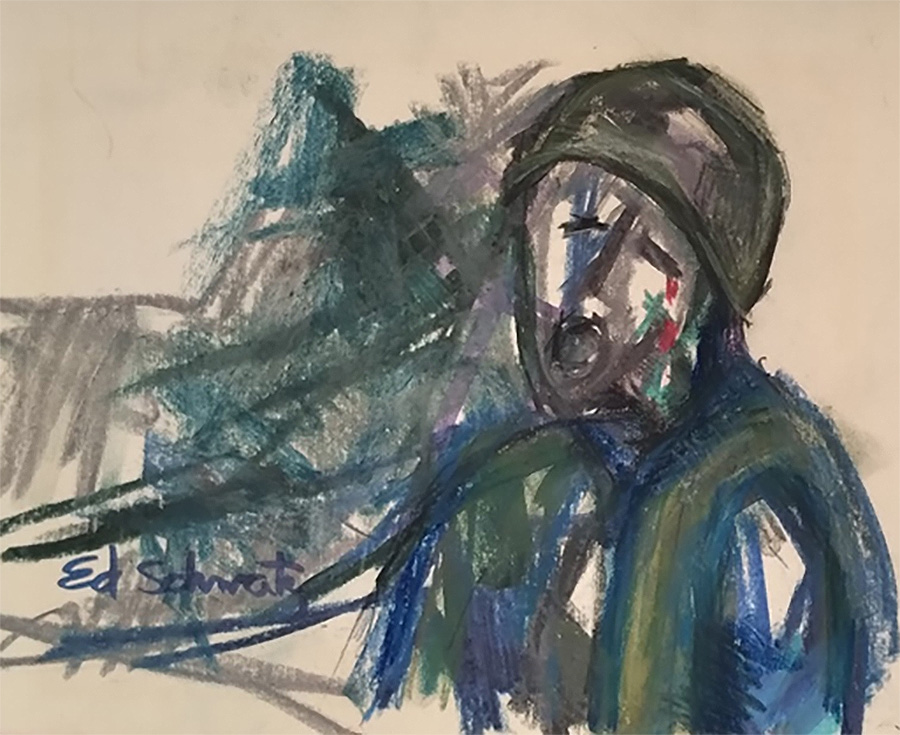
Wounded Israeli Soldier — Fine Art Work by Ednah Schwartz
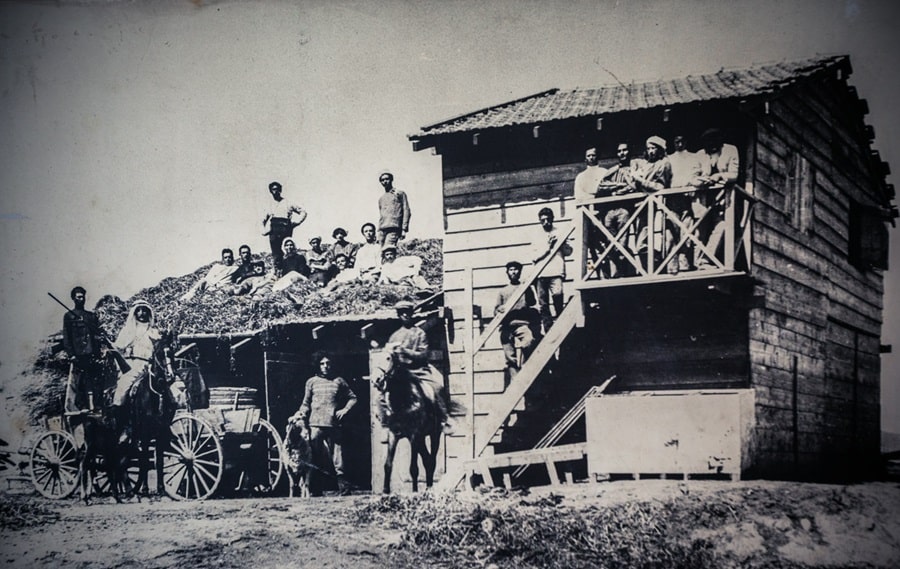
The Founding Pioneers of Kibbutz Degania Alef
Holistic Upbringing and Communal Children’s Houses
To maintain an unyielding commitment to egalitarian ideals, early kibbutzim reimagined traditional societal units by creating a radical, centralized approach to educational development.
The Children’s Houses (Batei Yeladim)
Children traditionally lived, slept, and studied together within dedicated communal “children’s houses” managed by trained community educators. This system reflected the firm belief that nurturing future generations was a collective social responsibility rather than an isolated family task. The curriculum seamlessly merged formal academic training with practical crafts, farm chores, and deep immersion in the creative arts, fostering an early spirit of independence and cultural appreciation.
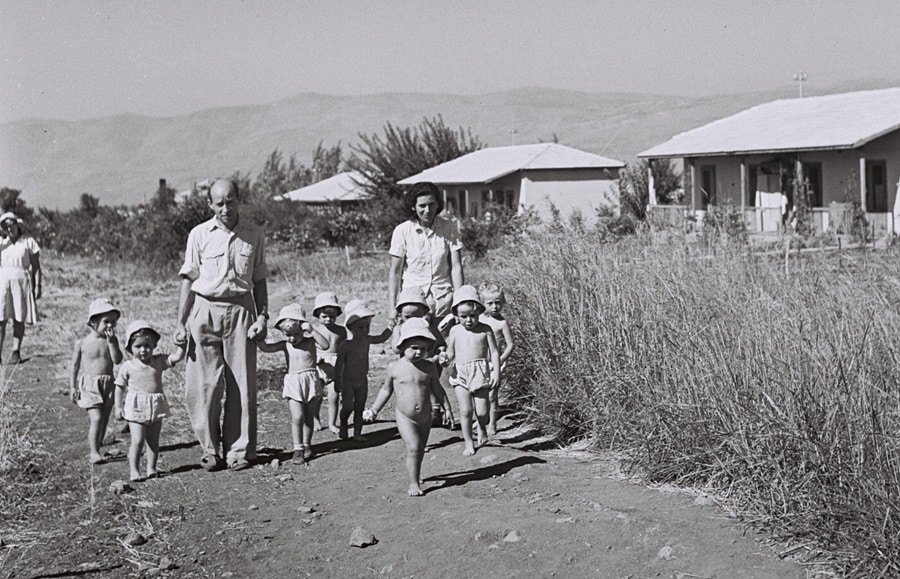
Children Sharing a Communal Outing at Kibbutz Dan
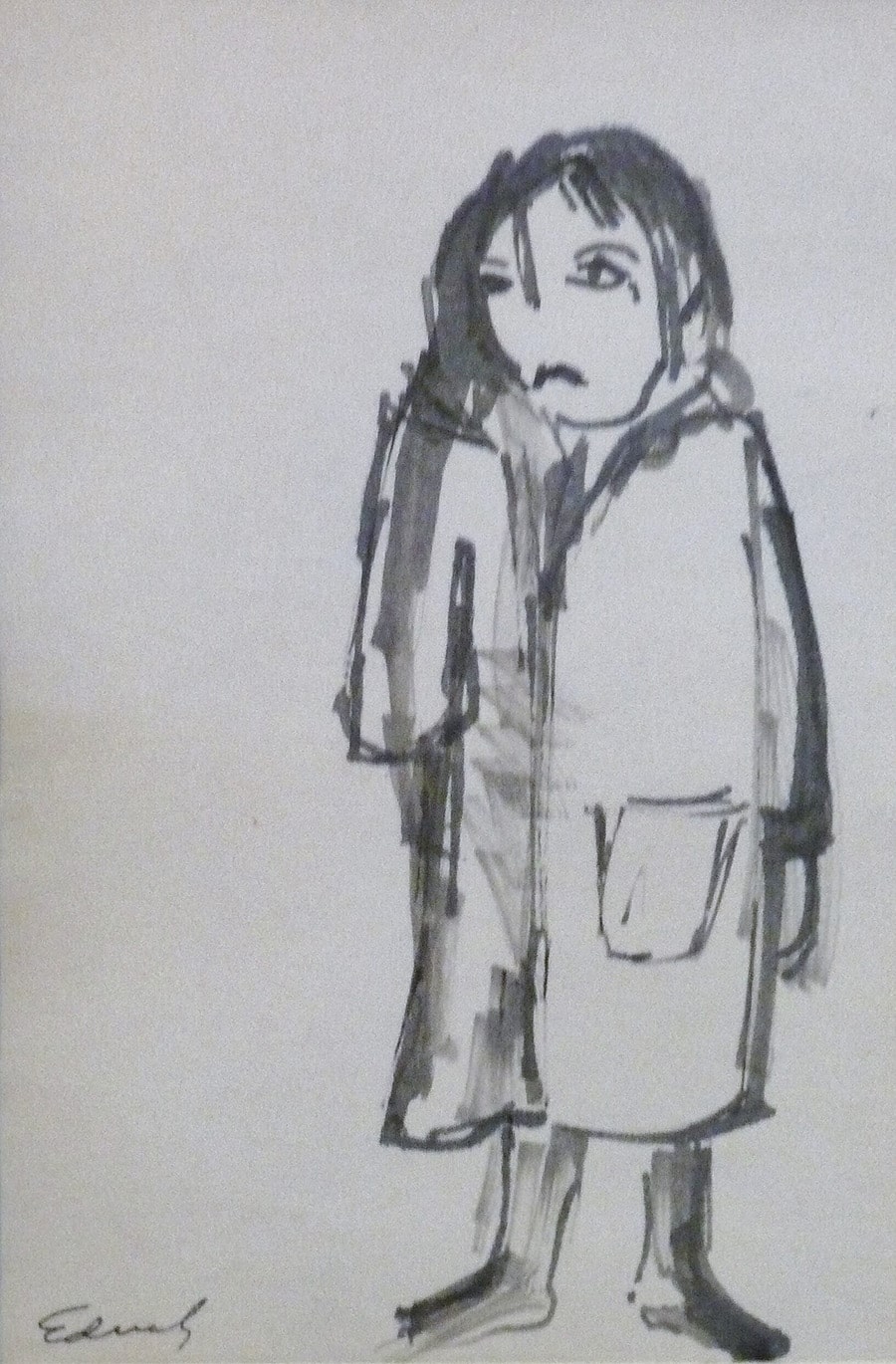
A Jewish Ghetto Child — Powerful Draftsmanship by Ednah Schwartz
The Aesthetics of Collective Living: Why Fine Art Flourished
While early kibbutz life was intentionally austere and focused on heavy labor, these communities quickly transformed into vibrant hubs of cultural development. Art was never viewed as a secondary luxury; rather, it was seen as a vital vehicle for expressing shared ideals and enriching community life.
- Shared Realities: Because members shared identical daily routines, struggles, and agricultural landscapes, artists possessed a built-in, deeply connected audience that understood their visual narratives.
- Visual Language: The classic kibbutz aesthetic brilliantly blended social realism with deep emotional symbolism—capturing the grit of manual labor, the vulnerability of wartime sacrifice, and the quiet dignity of a life tied to the land.
- Creative Outlets: After completing intensive shifts in farming or manufacturing fields, members eagerly organized complex theater groups, chamber orchestras, writing workshops, and fine art studios.
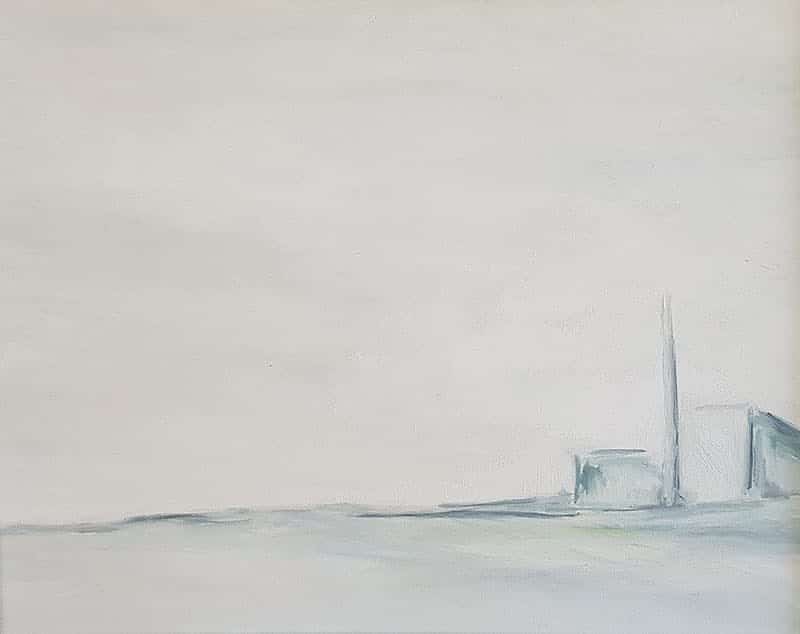
Morning Fog at the Naftali Mountains — Painting by Ednah Schwartz
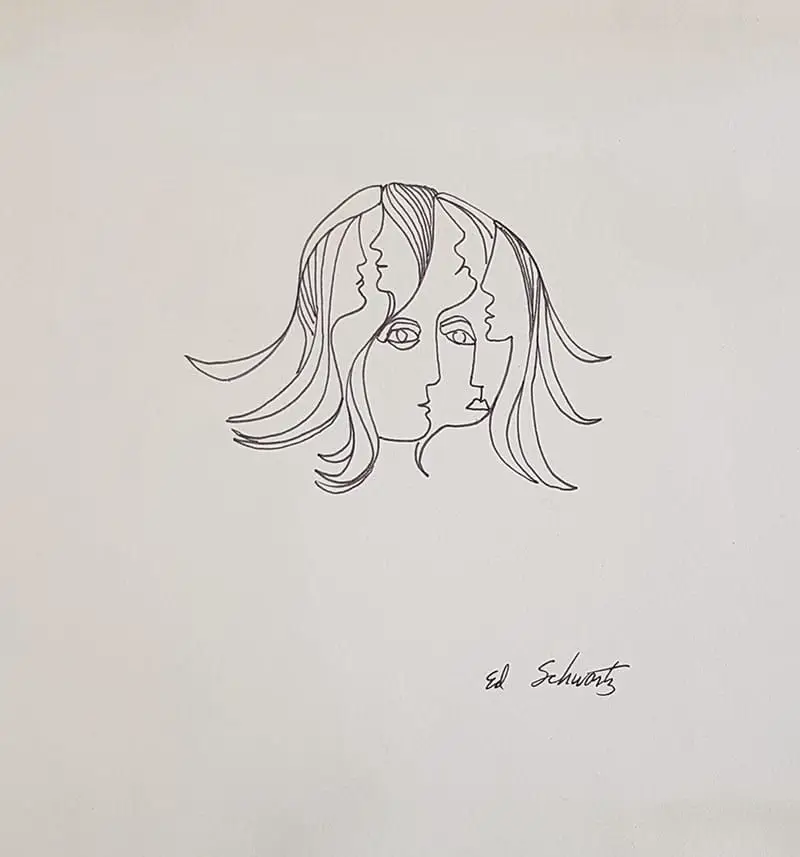
My Diverse Self — Intricate Ink Line Work by Ednah Sarah Schwartz
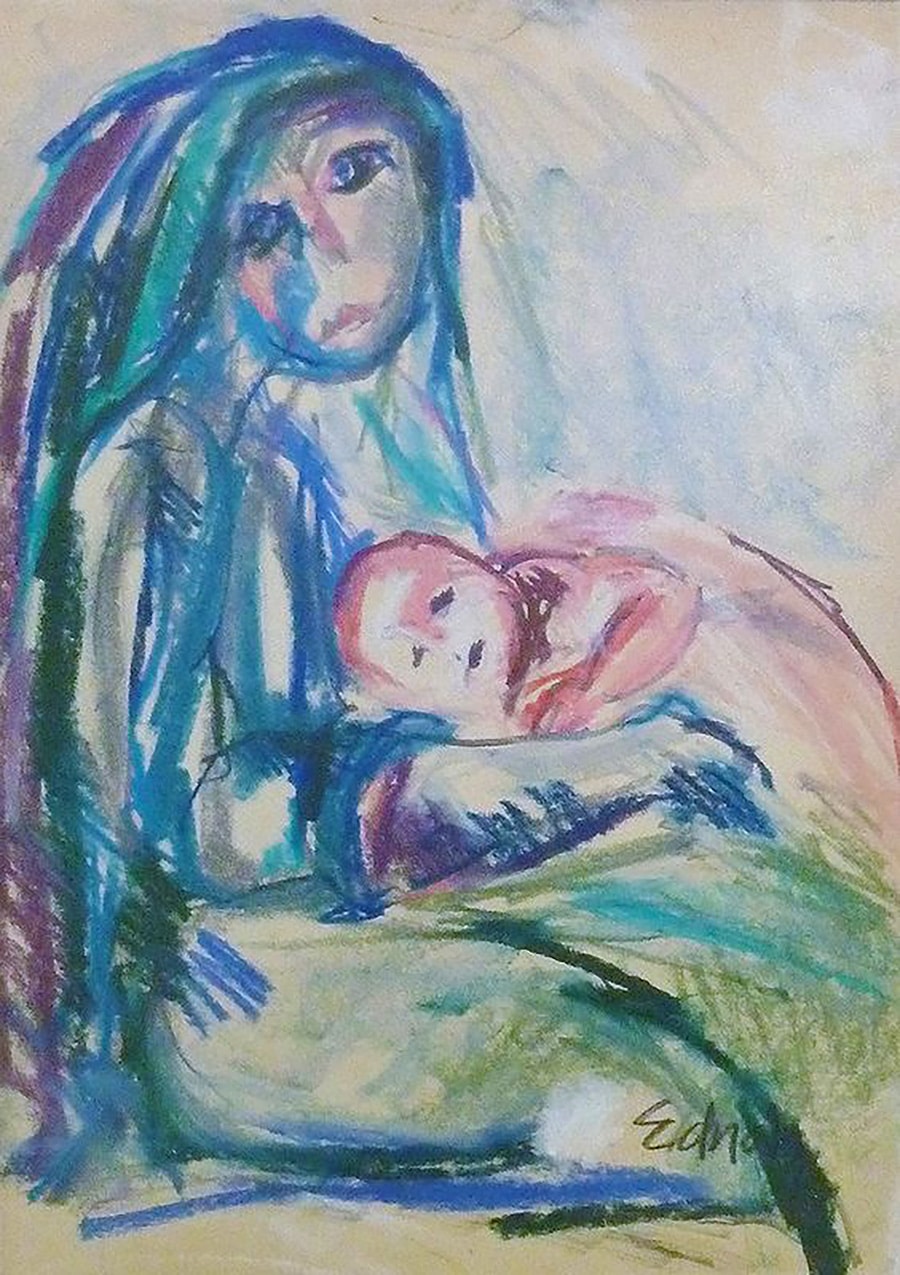
Wartime Mother And Child — Painting by Ednah Schwartz

Hula Valley Marsh — Painting by Ednah Schwartz
Celebrated Masters of the Kibbutz Art Movement
The distinctive environment of collective enclaves shaped the careers of several pioneering masters who achieved widespread acclaim while remaining deeply connected to their communal roots:
| Artist Name | Kibbutz Affiliation | Thematic Focus & Aesthetic Style |
|---|---|---|
| Yohanan Simon | Kibbutz Gan Shmuel | Warm, highly stylized social realism capturing family gatherings and communal work dynamics. |
| Leo Kahn | Kibbutz Ramat Yochanan | Classical forms enriched by modern impressionism, focusing heavily on Mediterranean light and rural textures. |
| Shraga Weil | Kibbutz HaOgen | Graphic printmaking, monumental architectural relief work, and allegorical paintings highlighting historical memory. |
| Shmuel Katz | Kibbutz Ga’aton | Fluid, expressive watercolors, narrative book illustrations, and light-filled architectural landscapes. |
| Avraham Ofek | Kibbutz Ein Hamifratz | Monumental community murals blending biblical symbolism with the day-to-day realities of immigrant integration. |
| Menachem Shemi | Kibbutz Ein Harod | Bold expressionist landscapes tracking the changing light and rugged terrains of northern Israel. |
| Ednah Sarah Schwartz | Kibbutz Kfar Blum | Evocative landscapes and profound portrait studies exploring national identity, historical trauma, and the memories of the Holocaust. |
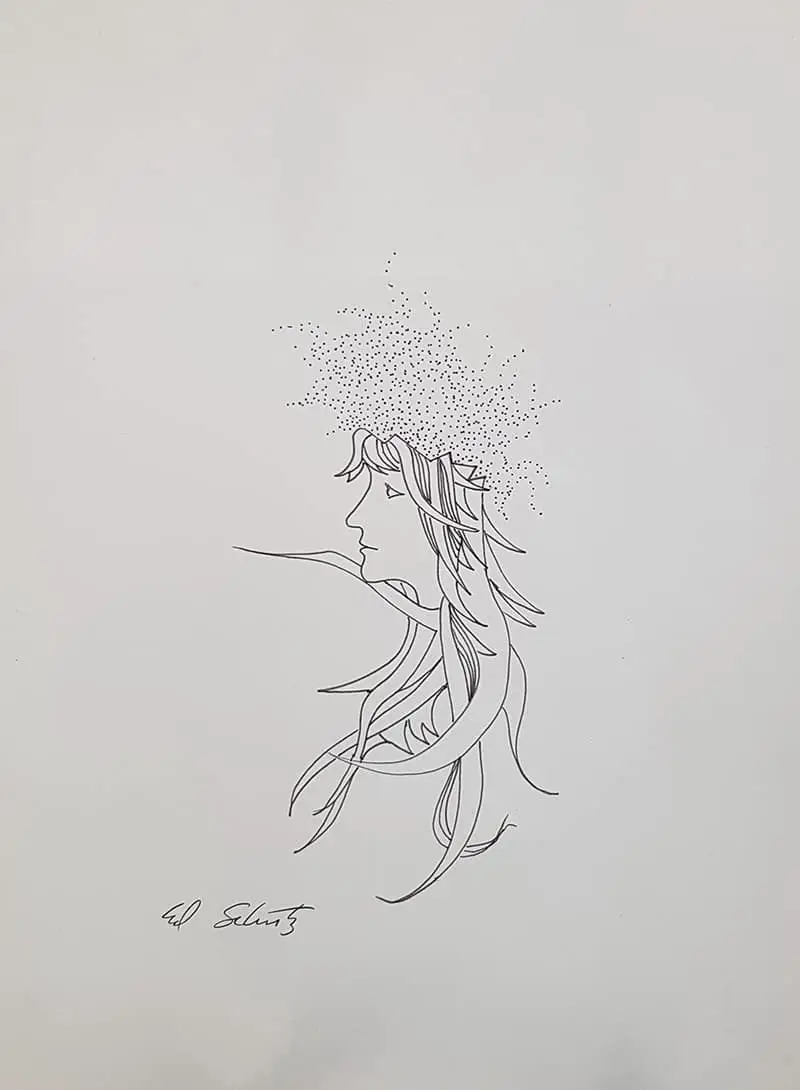
We Will All Get Along Together — Ink Illustration by Ednah Sarah Schwartz
As these agricultural communities transitioned into modern industrial spaces over the late 20th century, their enduring commitment to artistic and personal expression remained a pillar of regional culture.
❓ Frequently Asked Questions Regarding the Kibbutz Movement
What core values defined the traditional foundation of the kibbutzim?
Traditional kibbutz life was anchored entirely in absolute egalitarianism, shared asset collectivism, and economic self-reliance. Guided by the classic ideal “from each according to their ability, to each according to their needs,” members rotated positions, shared agricultural responsibilities, and enjoyed equal access to all communal resources.
How did the traditional economic model of the kibbutz transform over the late 20th century?
In response to complex economic shifts and changing individual needs, many modern kibbutzim adopted structural “privatization.” This shift allowed members to retain personal salaries and expanded lifestyle autonomy, while communities shifted away from pure farming to invest in manufacturing, high-tech engineering, and eco-tourism ventures.
Why did the kibbutz lifestyle serve as such an effective incubator for visual artists?
The communal framework highly valued cultural development as a vital component of a rich life. By blending early immersive arts education with reliable financial stability and shared connection to the surrounding landscapes, the movement provided creators with the time, resources, and community support needed to develop highly unique visual styles.
How does collective kibbutz living influence her landscape interpretations?
Residing and painting at Kibbutz Kfar Blum gives her an organic, immersive connection to the soil, seasonal crop cycles, and rushing waterways of the northern frontier. This daily proximity translates directly onto the canvas, showcasing an authentic local perspective rather than an outsider’s view.
How can educators utilize this digital gallery structure for classroom study?
Thanks to the integration of a specialized dual-caption format across the structural categories, viewers can easily study the artistic mechanics of a painting while simultaneously reviewing the exact geo-political, environmental, and historical context that inspired it.
How can art lovers arrange studio visits or purchase pieces from this collection?
Private studio viewings can be arranged by appointment for collectors interested in seeing original works firsthand. For inquiries regarding original multi-layered canvases, textured pastels, or custom museum-quality archival giclée reproductions, please contact the studio directly via the website interface.