Art About Wars and Social Issues In Israel
Historical Landscapes & Geopolitical Narratives in Ednah’s Art
📋 Exhibition Overview & Core Themes
| Artist | Ednah Sarah Schwartz – Jewish Israeli Expressionist |
| Primary Mediums | Oil on Canvas • Pastel • Pen & Ink • Mixed Media |
| Historical Scope | The Israel-Lebanon Border, Lebanese Civil War, Intifadas, Syrian Civil War, Holocaust, Modern Israel |
| Recurring Themes | Memory, survival, coexistence, resilience, motherhood, military service, historical trauma and hope. |
Art has long served as a visual record of civilization’s greatest triumphs and deepest tragedies. Long before the invention of photography, artists documented wars, migrations, revolutions and cultural transformation through painting, sculpture and drawing. Although expressionist painters often depart from strict realism, they frequently reveal emotional truths that historical documents alone cannot capture.
The artwork of Israeli artist Ednah Sarah Schwartz belongs within this long tradition. Her paintings are neither political manifestos nor detached historical illustrations. Instead, they are deeply personal responses to the landscapes such as the Hula Valley where Kibbutz Kfar Blum is located, people and conflicts that have shaped life throughout northern Israel and the broader Middle East. Having lived through decades of regional instability, Schwartz paints not only military events but also the psychological consequences carried by ordinary civilians whose lives unfold beneath the constant possibility of conflict.
Throughout her portfolio, geographical locations become emotional landscapes. Border crossings transform into symbols of lost cooperation. Mothers become universal representations of hope and protection. Soldiers become individuals rather than abstractions. Abandoned buildings, damaged infrastructure and empty roads quietly speak to histories that continue to influence the present day.
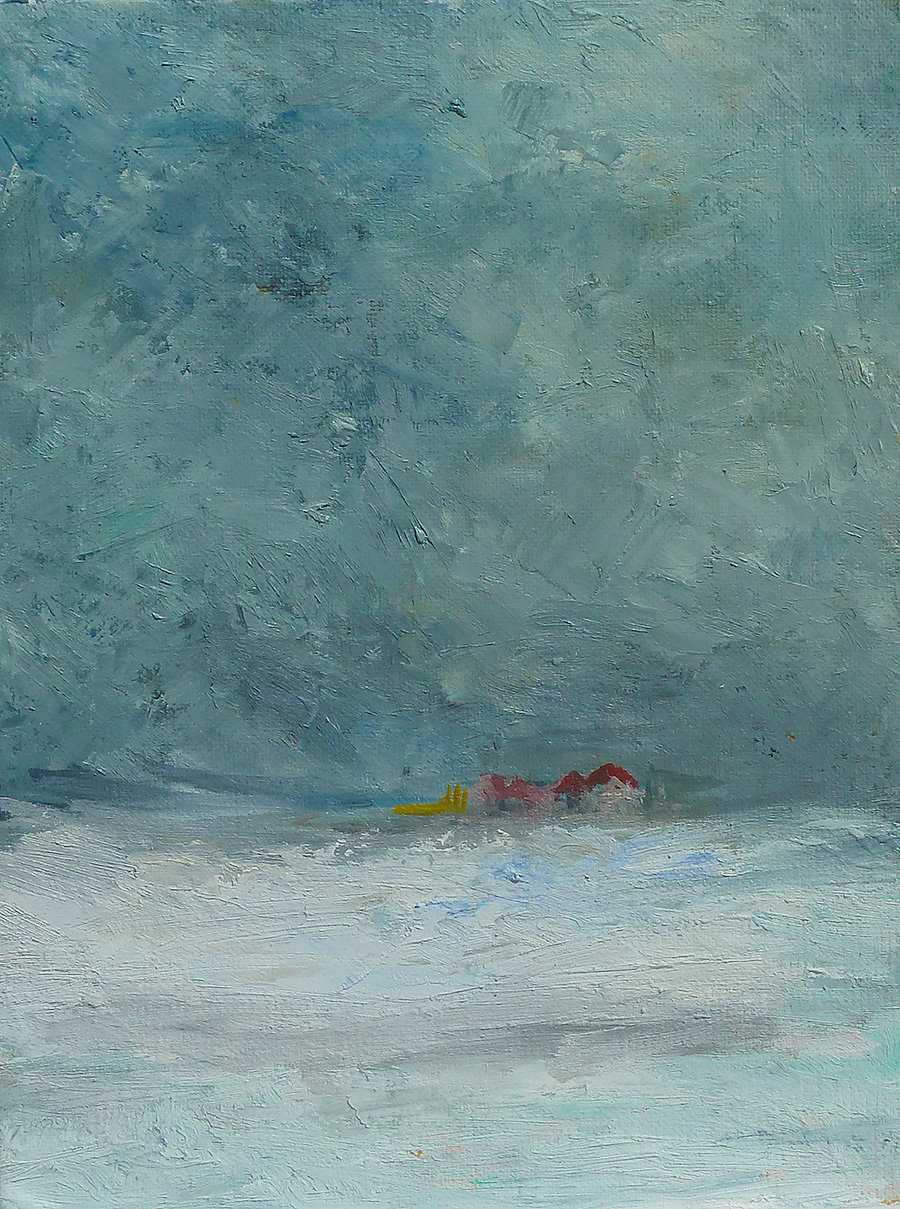
This guide explores the major historical events reflected throughout Ednah’s artwork while providing the broader historical background that allows viewers to better understand the emotional depth behind each painting. Rather than viewing each artwork in isolation, readers can appreciate how decades of interconnected events—from the Lebanese Civil War through the Syrian Civil War and beyond—collectively shaped the environments and experiences that inspired her work.
1. The Good Fence — A Vanished Era of Cooperation Along the Israel-Lebanon Border
Among the most historically significant locations represented within Ednah Schwartz’s portfolio is The Good Fence, situated near the northern Israeli town of Metula. Although today the area is defined by military fortifications and restricted access, there was once a remarkable period during which this crossing symbolized one of the Middle East’s most unusual examples of humanitarian cooperation.
The origins of the Good Fence cannot be understood without first examining the outbreak of the Lebanese Civil War in 1975. Lebanon’s complex political system, built upon delicate sectarian power-sharing between Christian, Sunni Muslim, Shiite Muslim and Druze communities, gradually collapsed into widespread civil conflict involving dozens of armed factions. As violence spread throughout southern Lebanon, many civilians found themselves caught between competing militias with limited access to employment, healthcare and essential services.

Recognizing both humanitarian concerns and growing security challenges along its northern frontier, Israel established what became known as the Good Fence in 1976. Rather than functioning solely as a military checkpoint, it developed into a carefully managed humanitarian crossing that allowed thousands of Lebanese civilians to enter Israel legally for medical treatment, agricultural employment, education and commerce. For residents of southern Lebanon, hospitals in Nahariya, Safed and Haifa became important sources of advanced medical care. Farmers crossed the border to work in Israeli agriculture, businesses exchanged goods, and families developed relationships that often transcended political divisions. While the broader region remained unstable, this narrow corridor demonstrated that practical cooperation between neighboring communities was still possible despite ongoing conflict.
During the 1980s and 1990s, southern Lebanon became increasingly dominated by armed organizations, including Hezbollah, which emerged following the 1982 Lebanon War. Rocket attacks, guerrilla warfare and ongoing military operations gradually transformed the border into one of the region’s most volatile frontiers. Despite these challenges, the Good Fence continued operating for many years, quietly serving thousands of civilians whose daily lives depended upon its continued existence.
Israel also maintained a security zone in southern Lebanon between 1985 and 2000, supported in part by the South Lebanon Army. The objective was to create strategic depth against cross-border attacks targeting northern Israeli communities such as Metula, Kiryat Shmona and numerous Galilee kibbutzim. Residents throughout the region experienced frequent rocket attacks, air raid sirens and periods of heightened military activity, realities that profoundly influenced artists living in Israel’s north.
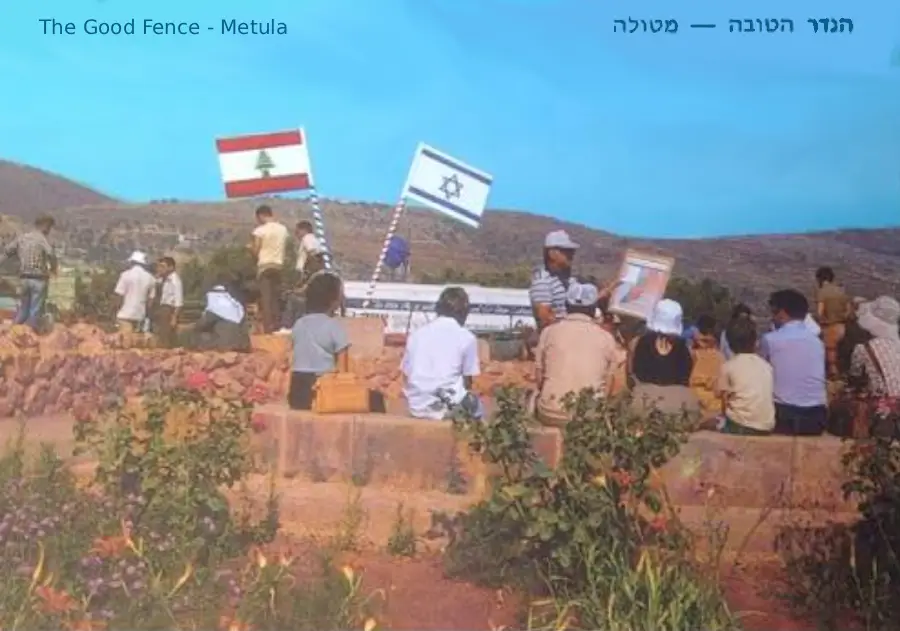
Everything changed in May 2000 when Israel withdrew its forces from southern Lebanon in accordance with decisions made by the Israeli government and subsequent international verification of the withdrawal. Following Israel’s departure, Hezbollah rapidly expanded its presence throughout the former security zone, and the humanitarian crossing ceased operations. The Good Fence, once a symbol of cautious coexistence, became another abandoned piece of infrastructure marking the end of an extraordinary chapter in regional history.
Ednah Schwartz’s painting captures more than the physical remains of a border crossing. Rusting gates, weathered fencing and empty pathways become symbols of memory itself. Rather than emphasizing military hardware, she portrays silence. The absence of movement, commerce and human interaction invites viewers to reflect on how rapidly cooperation can disappear when political realities shift.
Today, the painting stands not merely as documentation of a historical location but as an artistic meditation on coexistence, fragility and lost opportunity. For those familiar with northern Israel, the Good Fence remains a powerful reminder that the border has not always represented separation alone. For a generation of Lebanese and Israeli families, it once represented hope, employment, healing and the possibility—however temporary—that ordinary people could build bridges even while governments and armed groups remained locked in conflict.
2. The Lebanese Civil War — The Conflict That Reshaped Israel’s Northern Border
To fully appreciate many of Ednah Sarah Schwartz’s paintings exploring northern Israel, it is important to understand the conflict that transformed one of the Middle East’s most peaceful frontiers into one of its most heavily militarized borders. The Lebanese Civil War, which lasted from 1975 until 1990, fundamentally altered life throughout southern Lebanon and had lasting consequences for neighboring Israeli communities that continue to shape the region today.
Unlike many modern wars fought primarily between two opposing nations, the Lebanese Civil War involved a remarkably complex web of political parties, religious communities, foreign governments and armed organizations. Lebanon’s political system had long depended upon a delicate balance between Maronite Christians, Sunni Muslims, Shiite Muslims, Druze and numerous smaller communities. As demographic changes, economic inequality and regional tensions intensified, that balance gradually unraveled into widespread violence.
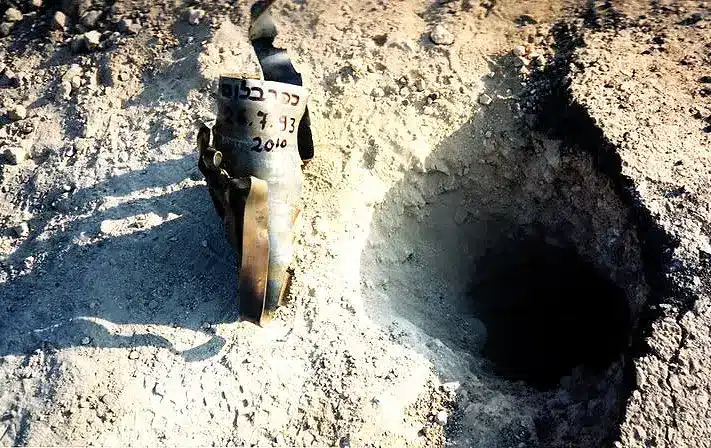
The conflict quickly expanded beyond Lebanon’s borders. Palestinian armed organizations, Syrian forces, Israeli military operations, outside influence and numerous local militias all became participants in what evolved into one of the twentieth century’s longest and most complicated civil wars. Entire towns were devastated, hundreds of thousands of civilians were displaced and generations grew up surrounded by instability.
For residents living in northern Israel, particularly communities such as Metula, Kiryat Shmona and neighboring kibbutzim throughout the Upper Galilee, the war was not a distant geopolitical event. Cross-border shelling, infiltrations and periodic military escalations became an unfortunate reality of everyday life. Families increasingly adapted to emergency procedures, bomb shelters and the uncertainty that accompanies living beside an active conflict zone. It was during this difficult period that the Good Fence emerged as one of the few enduring symbols of humanitarian cooperation.
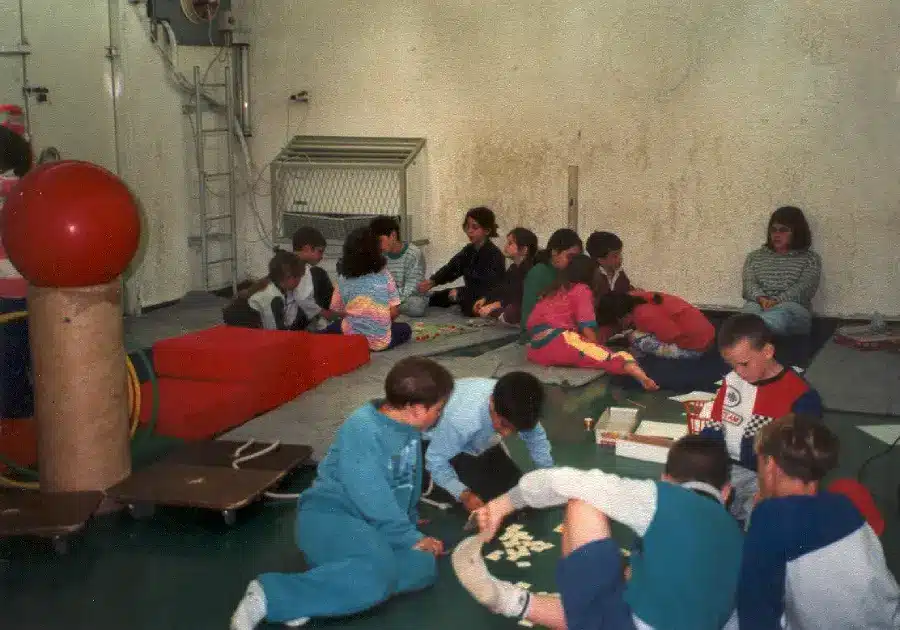
While armed conflict dominated headlines, thousands of Lebanese civilians continued crossing into Israel for medical treatment, employment and commerce, demonstrating that ordinary people often sought peace even when political circumstances made it extraordinarily difficult.
Rather than portraying battlefield heroics, Ednah Schwartz frequently focuses on the quieter emotional consequences of these decades. Empty landscapes, isolated military positions, weathered infrastructure and silent roads become visual metaphors for communities adapting to prolonged uncertainty. Her paintings remind viewers that wars reshape not only governments and borders but also the rhythms of ordinary civilian life.
3. Israel’s Security Zone (1985–2000) Buffer, Battlefield & Everyday Reality
Following years of increasing attacks against northern Israeli communities, Israel established what became known as the Security Zone in southern Lebanon in 1985. Extending several kilometers beyond Israel’s northern border, this narrow strip of territory was intended to reduce cross-border rocket fire, guerrilla infiltrations and attacks directed at civilian populations.
The Security Zone was maintained jointly by the Israel Defense Forces (IDF) and the South Lebanon Army (SLA), a Lebanese militia that opposed many of the armed organizations operating throughout southern Lebanon. While military planners viewed the buffer zone as a strategic necessity, life within and around the area remained extraordinarily complex for civilians living on both sides of the border.
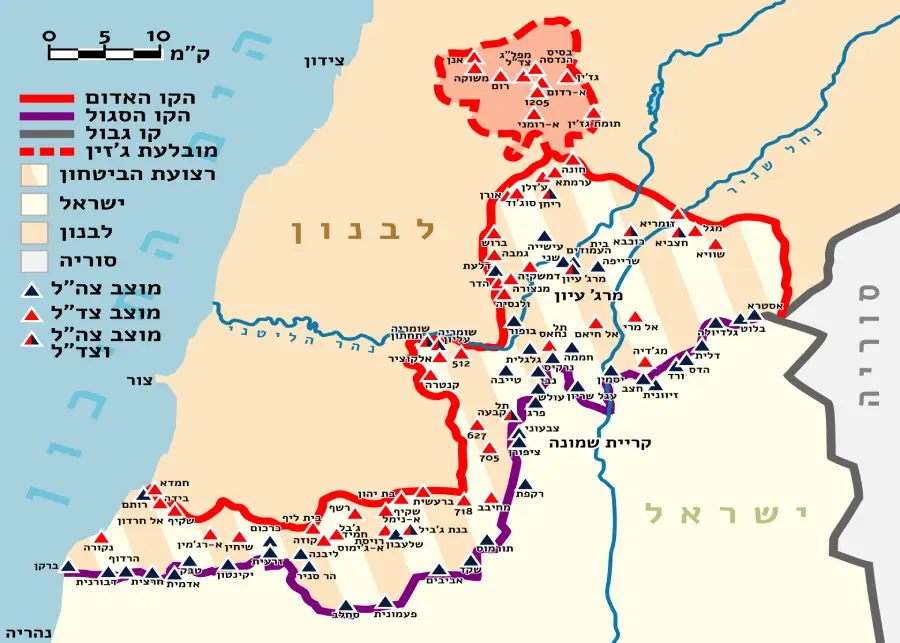
Throughout these years, Israeli border communities continued experiencing intermittent rocket attacks, while soldiers stationed in the region faced roadside bombs, ambushes and sniper fire. At the same time, many Lebanese civilians continued relying upon humanitarian assistance provided through the Good Fence, illustrating the extraordinary contrast between ongoing conflict and continuing acts of cooperation. For artists living in northern Israel, military activity became woven into the ordinary landscape. Observation posts overlooked agricultural fields. Soldiers shared roads with farmers. Children practiced emergency drills as routinely as fire drills. Bomb shelters became an accepted component of residential architecture rather than temporary emergency facilities.
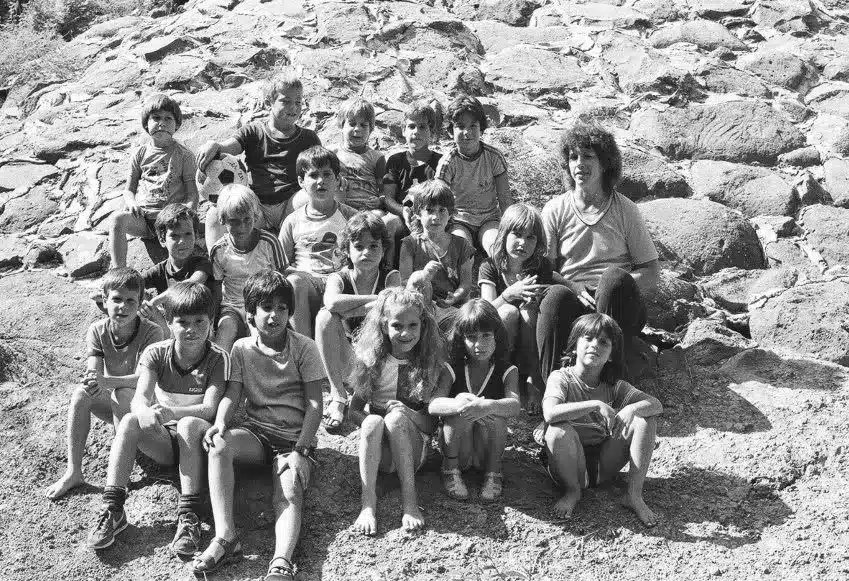
Ednah Schwartz’s Israeli landscapes often communicate precisely this coexistence between ordinary life and constant vigilance. Rather than depicting dramatic combat scenes, she emphasizes the psychological atmosphere surrounding communities that continue planting crops, raising families and building futures despite persistent uncertainty. Her work quietly documents resilience rather than spectacle.
In May 2000, Israel completed its withdrawal from southern Lebanon after approximately fifteen years of maintaining the Security Zone. The withdrawal marked the conclusion of one chapter in the region’s history but also the beginning of another, as Hezbollah rapidly consolidated its presence throughout much of southern Lebanon following Israel’s departure.
4. Operation Accountability (1993) — Escalation Along the Northern Frontier
By the early 1990s, attacks originating from southern Lebanon had intensified considerably. Hezbollah increasingly launched Katyusha rockets toward civilian communities in northern Israel while simultaneously engaging Israeli military forces operating inside the Security Zone. These growing hostilities ultimately resulted in Operation Accountability, conducted during July 1993.
Israel’s stated objective was to reduce rocket attacks by targeting Hezbollah positions and military infrastructure throughout southern Lebanon while encouraging diplomatic pressure that might limit future attacks against Israeli civilian populations.
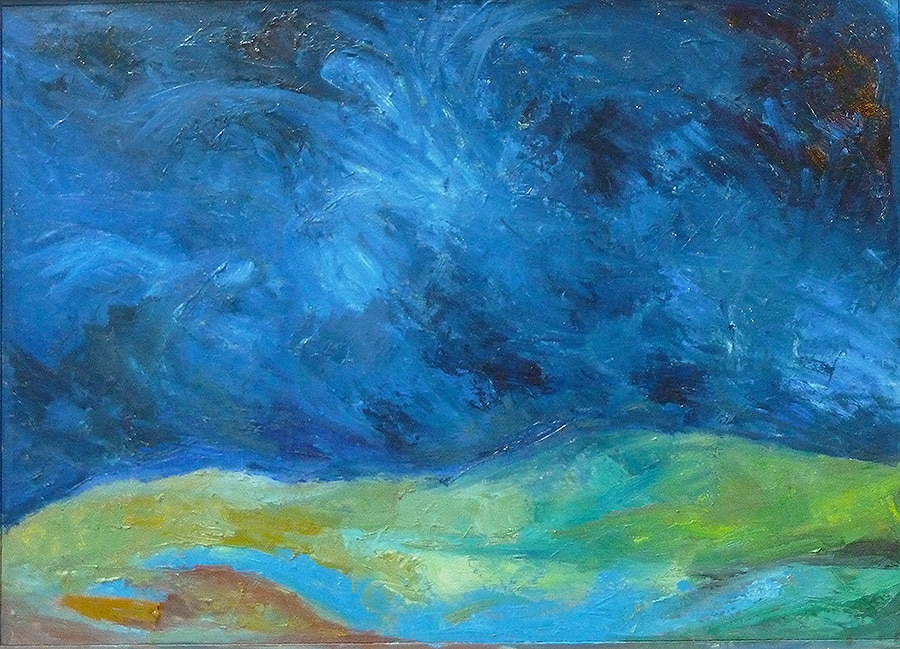
The operation included extensive air strikes and artillery fire directed at militant positions. The military campaign also generated significant humanitarian consequences. Large numbers of Lebanese civilians fled combat areas, while Israeli residents throughout the Galilee experienced continuing periods of uncertainty under the threat of additional rocket attacks.
International diplomatic efforts ultimately produced an informal understanding intended to reduce attacks directed against civilian populations on both sides of the border. Although the agreement temporarily reduced tensions, the underlying strategic issues remained unresolved. Within only a few years, renewed escalation culminated in an even larger military operation that would become one of the defining conflicts reflected throughout Ednah Schwartz’s northern landscapes.
5. Operation Grapes of Wrath (1996) — War Along the Border Communities
Operation Grapes of Wrath, conducted between April 11 and April 27, 1996, represented one of the largest military confrontations along Israel’s northern border during the final years of the Security Zone. Launched in response to sustained Hezbollah rocket attacks targeting civilian communities throughout northern Israel, the operation sought to degrade militant infrastructure while restoring greater security for residents living under repeated bombardment.
Throughout the sixteen-day campaign, Israeli aircraft and artillery targeted military positions, weapons storage facilities, transportation routes and command infrastructure used by Hezbollah throughout southern Lebanon. Simultaneously, Hezbollah continued launching Katyusha rockets into Israeli towns and agricultural communities, forcing civilians into bomb shelters and disrupting daily life across much of the Galilee.
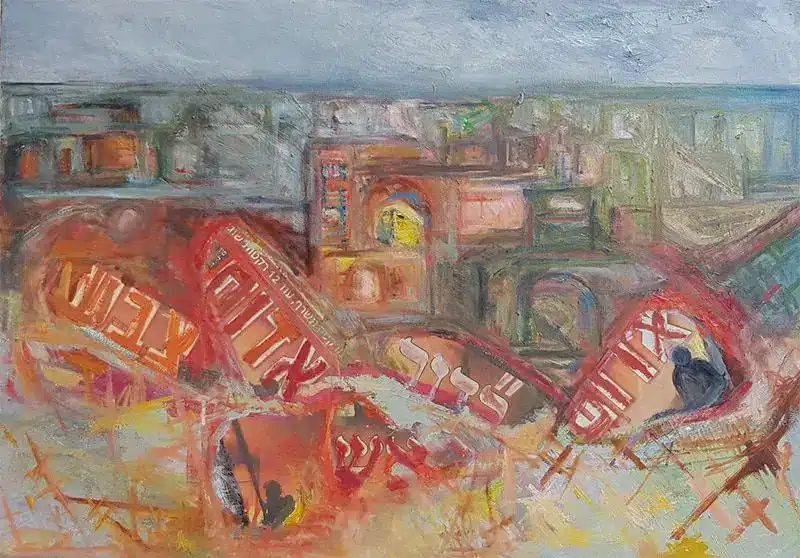
One of the conflict’s most widely discussed events occurred near the village of Qana, where Israeli artillery struck a United Nations compound sheltering civilians. The incident resulted in significant civilian casualties and prompted widespread international condemnation, intensive diplomatic engagement and renewed debate regarding the humanitarian costs of modern warfare. The tragedy became one of the defining moments associated with the operation and remains a subject of historical examination.
The fighting concluded after intensive international mediation produced an understanding intended to reduce attacks against civilian populations while establishing monitoring mechanisms involving the United States, France, Israel, Lebanon and Syria. Although large-scale fighting subsided, periodic violence along the border continued during the following years until Israel’s withdrawal from southern Lebanon in 2000.
Rather than illustrating military hardware or tactical victories, Ednah Schwartz’s interpretation emphasizes the emotional atmosphere surrounding prolonged conflict. Through expressive brushwork, layered textures and dramatic contrasts, she communicates the uncertainty experienced by communities living within range of recurring rocket attacks. The painting functions not simply as a historical record but as an exploration of endurance, fear and resilience—qualities that have defined life for generations living along Israel’s northern border.
6. The Palestinian Intifadas — Uprising, Diplomacy and the Transformation of Israeli Society
Among the most influential events reflected throughout Ednah Sarah Schwartz’s work are the two Palestinian Intifadas, prolonged periods of confrontation that fundamentally reshaped relations between Israelis and Palestinians while leaving lasting social, political and psychological consequences for both societies. Lasting nearly two decades collectively, these uprisings transformed not only security policy but also everyday civilian life throughout Israel, the West Bank and Gaza.
The Arabic word Intifada literally translates as “shaking off” and came to describe popular Palestinian uprisings against Israeli administration in the West Bank and Gaza Strip. Although both Intifadas shared common political aspirations, they differed significantly in their methods, intensity and historical outcomes.
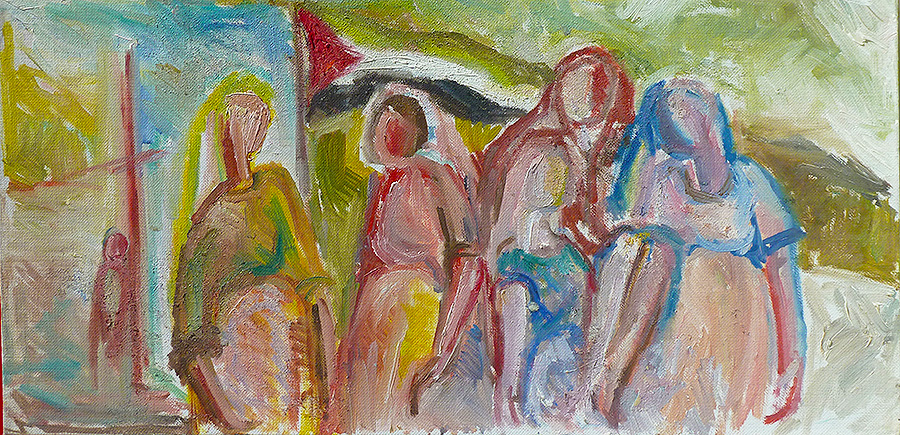
Rather than presenting these events through political rhetoric, Ednah Schwartz approaches them from a profoundly human perspective. Her paintings focus upon ordinary individuals whose identities become intertwined with larger historical forces beyond their control. Through expressive color, distortion and symbolism, she documents emotional realities that statistics and political documents alone cannot fully communicate.
The First Intifada (1987–1993)
The First Intifada began in December 1987 following a traffic accident involving an Israeli military vehicle and Palestinian civilians in Gaza. Existing everyday tensions rapidly evolved into widespread demonstrations that spread throughout the West Bank and Gaza Strip.
Unlike later phases of the conflict, the First Intifada was initially characterized primarily by mass civil resistance. Demonstrations, commercial strikes, labor boycotts, graffiti campaigns and widespread stone throwing became defining images of the uprising. Young Palestinians frequently emerged as highly visible participants, creating images that would come to symbolize the movement internationally.
As the uprising continued over several years, casualties mounted, while international attention increasingly focused upon the conflict.
The First Intifada also produced an important diplomatic consequence. Growing recognition that the conflict could not be resolved solely through military means resulted in Yasser Arafat PLO dropping its call for the destruction of the Jewish state and recognized its right to exist. This made negotiations possible and ultimately resulted in the Oslo peace process during the early 1990s.
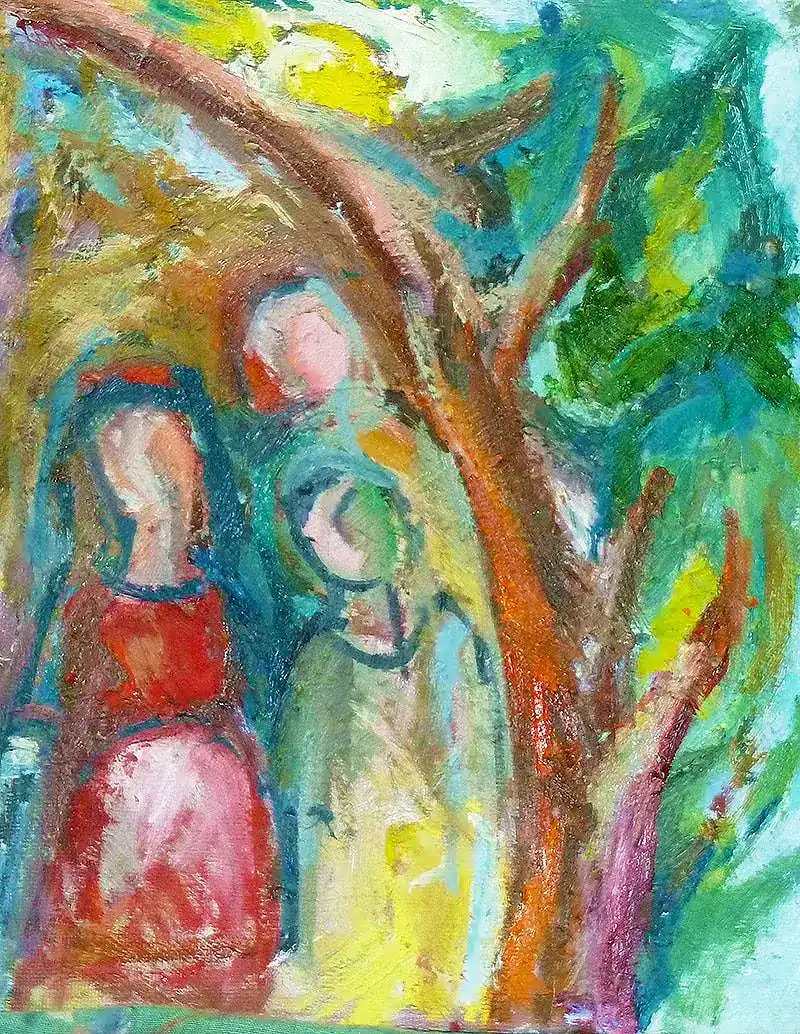
Schwartz’s painting avoids portraying individuals as political symbols alone. Instead, she emphasizes the vulnerability, uncertainty and emotional burden experienced by younger generations growing up amid prolonged unrest. Her expressionist treatment reminds viewers that behind every historical event exist countless personal stories shaped by circumstances far beyond individual control.
The Oslo Peace Process (1993–1995)
One of the most significant outcomes of the First Intifada was the series of negotiations that produced the Oslo Accords. Secret discussions held in Norway eventually resulted in mutual recognition between Israel and the Palestine Liberation Organization (PLO), creating cautious optimism that decades of conflict might gradually give way to negotiated coexistence.
The agreements established the Palestinian Authority and introduced phased transfers of administrative responsibilities within portions of the West Bank and Gaza Strip. For many observers throughout the world, the signing of the accords represented one of the most hopeful moments in the modern history of the conflict.
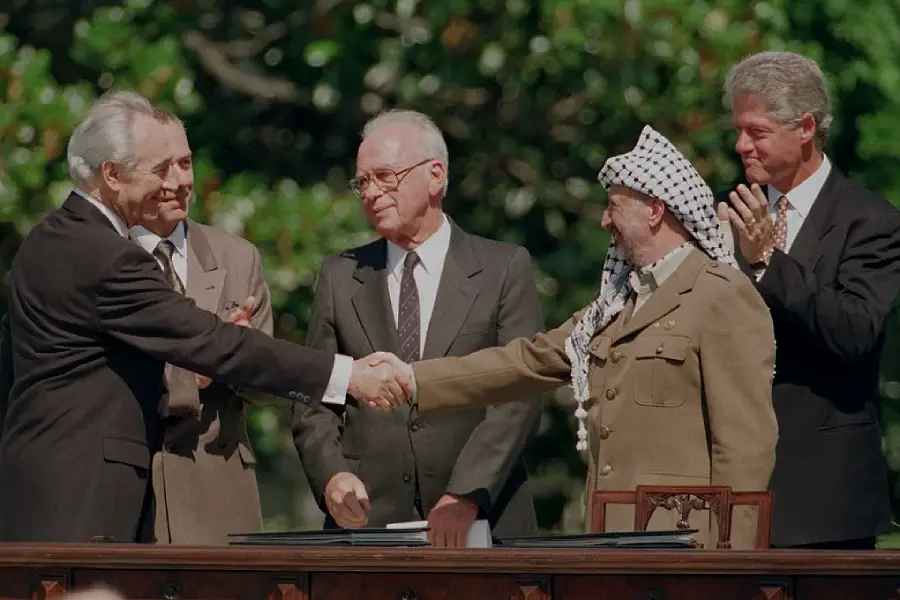
Yet implementation proved extraordinarily difficult. Continued violence, mutual distrust, political opposition within both societies and disagreements regarding borders, settlements, refugees and the status of Jerusalem complicated the peace process. Although Oslo fundamentally altered diplomatic relations, many of the conflict’s most difficult questions remained unresolved.
Historical Milestones of the Oslo Process
- 1993 — Oslo I Accord signed in Washington.
- Mutual recognition between Israel and the PLO.
- Creation of the Palestinian Authority.
- Israeli withdrawal from selected population centers.
- Plans for future negotiations regarding permanent status issues.
Camp David and the Collapse of Negotiations
In July 2000, Israeli Prime Minister Ehud Barak, Palestinian Authority Chairman Yasser Arafat and U.S. President Bill Clinton met at Camp David in an effort to negotiate a permanent peace agreement. Discussions addressed some of the conflict’s most sensitive issues, including borders, settlements, security arrangements, refugees and the future status of Jerusalem.
Despite intensive negotiations, and unprecedented compromises by Barak and his team, the summit concluded without a final agreement. Historians continue debating the reasons for its failure, with differing interpretations emphasizing negotiating positions, political constraints and unresolved disagreements. What remains broadly accepted is that the collapse of the summit was due to Arafat and significantly weakened public confidence that a negotiated settlement could be achieved quickly.
The Second Intifada (2000–2005)
Only months after the Camp David negotiations ended, tensions escalated dramatically. The visit of Israeli opposition leader Ariel Sharon to Jerusalem’s Temple Mount/Haram al-Sharif in September 2000 became one of several immediate catalysts for widespread demonstrations that rapidly expanded into the Second Intifada.
Unlike the largely grassroots character of the First Intifada, the Second Intifada became significantly more militarized. Armed confrontations increased, Israeli military operations expanded, and Palestinian militant organizations carried out numerous suicide bombings targeting buses, restaurants, shopping centers and other civilian locations inside Israel.
These attacks profoundly affected Israeli society. Daily routines changed as heightened security measures became commonplace. Public transportation, cafés, shopping districts and schools increasingly adopted protective measures that reflected a new reality in which civilians were frequently targeted.
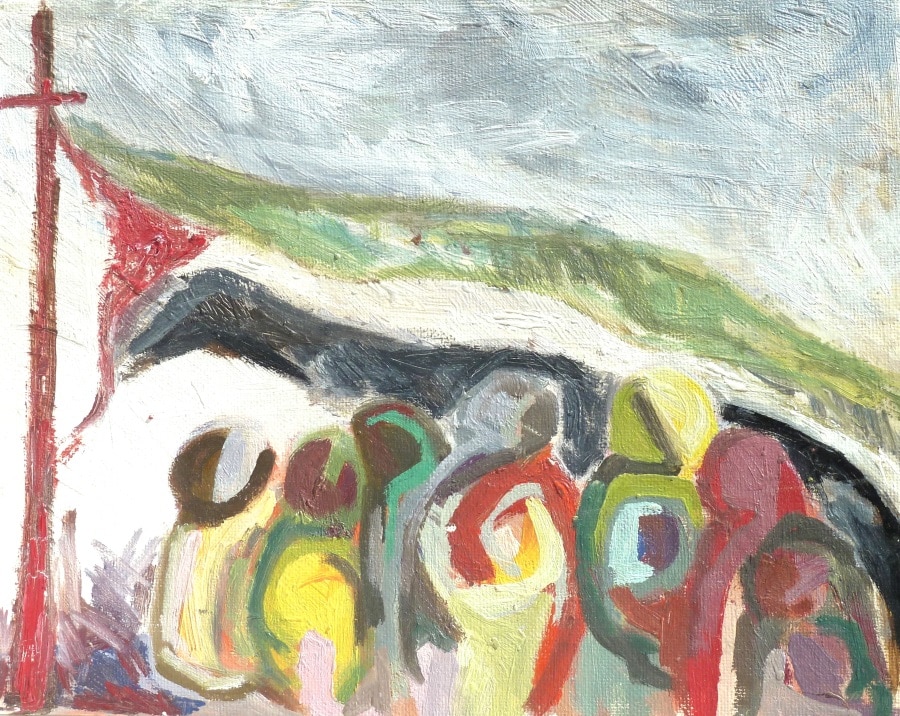
Israel responded through extensive military operations intended to dismantle militant infrastructure and prevent additional attacks. Among the largest of these operations was Operation Defensive Shield in 2002, during which Israeli forces re-entered several Palestinian cities in the West Bank following a wave of deadly suicide bombings.
During this period, Israel also began constructing the security barrier separating much of the West Bank from Israel. Supporters argued that it significantly reduced suicide bombings and improved civilian security, while critics raised concerns regarding humanitarian effects, freedom of movement and the barrier’s route through disputed territory. The barrier remains one of the conflict’s most debated physical symbols.
By approximately 2005, the intensity of the Second Intifada had declined substantially, although many of the political issues that contributed to the conflict remained unresolved. Its legacy continues influencing Israeli and Palestinian society, security policy and public memory today.
Ednah Schwartz’s work reflects these years not through depictions of violence itself, but through emotional atmosphere. Her paintings communicate uncertainty, resilience, exhaustion and humanity rather than military strategy. By concentrating upon individual faces, families and everyday life, she reminds viewers that history is ultimately experienced one person at a time.
7. The Syrian Civil War — Humanitarian Catastrophe Along Israel’s Northern Frontier
While much of Ednah Sarah Schwartz’s work explores the history of Israel and Lebanon, her artistic vision also extends beyond national borders to examine one of the defining humanitarian disasters of the twenty-first century: the Syrian Civil War. Although the conflict primarily unfolded inside Syria, its consequences reshaped the entire Middle East, affecting neighboring countries through mass displacement, regional instability, international military intervention and an unprecedented refugee crisis. For residents of northern Israel, the war was never an abstract international news story. Fighting frequently occurred only a short distance from the Golan Heights.

Smoke from battles could often be seen across the border, artillery fire occasionally echoed through nearby Israeli communities, and the humanitarian suffering unfolding just beyond the frontier profoundly affected many Israelis living in the Galilee.
Rather than depicting military campaigns alone, Schwartz’s paintings examine the emotional devastation left behind by prolonged violence. Her work focuses on grief, loss, displacement and the shared vulnerability of civilians caught between competing military and political forces.
The Arab Spring and the Beginning of the Conflict
The Syrian Civil War began during the broader wave of demonstrations known as the Arab Spring. Beginning in late 2010 and spreading throughout 2011, popular movements emerged across North Africa and the Middle East calling for political reform, greater civil liberties, economic opportunity and government accountability.
In Syria, peaceful demonstrations initially took place in several cities during March 2011. Protesters demanded reforms from the government of President Bashar al-Assad, whose family had governed Syria for decades. Government security forces responded forcefully to many demonstrations, leading to increasing casualties and escalating public unrest.
As violence intensified, parts of the opposition gradually abandoned peaceful protest in favor of armed resistance. By late 2011 and into 2012, Syria had descended into full-scale civil war involving government forces, opposition factions, Islamist organizations, Kurdish forces and numerous foreign powers.
Major Phases of the Syrian Civil War
- 2011 – Peaceful demonstrations begin.
- 2012 – Widespread armed conflict develops.
- 2013–2014 – Rise of ISIS and expanding territorial control.
- 2015 – Russian military intervention dramatically alters the conflict.
- 2016–2020 – Government forces gradually regain much of western Syria.
- Continuing humanitarian and reconstruction challenges remain today.
The Rise of ISIS and Expanding Regional Instability
One of the most consequential developments during the Syrian Civil War was the rapid emergence of the Islamic State (ISIS). Exploiting political instability in both Syria and Iraq, ISIS captured extensive territory and declared a self-described caliphate in 2014. The group’s extreme violence, persecution of minority communities and international terrorist attacks transformed what had begun as a domestic uprising into a conflict with truly global implications.
The rise of ISIS further fragmented Syria’s already complicated battlefield. Government forces, Kurdish militias, various opposition organizations, Hezbollah units, Iranian-backed groups, Russian forces, Turkish military operations and a U.S.-led international coalition all became involved in different aspects of the conflict, making Syria one of the most militarily complex regions in the modern world.
International Intervention
As the conflict intensified, foreign governments increasingly became direct participants. Iran provided extensive military and financial assistance to the Syrian government, while Hezbollah deployed thousands of fighters from neighboring Lebanon. In September 2015, Russia launched a major military intervention supporting the Assad government through extensive air operations and logistical assistance.
At the same time, the United States and an international coalition primarily focused on combating ISIS while supporting selected local partner forces. Turkey also carried out multiple military operations in northern Syria related to its own national security concerns. These overlapping interventions transformed Syria into one of the most internationally contested conflicts of the modern era.
The Humanitarian Crisis
Beyond military developments, the Syrian Civil War produced one of the largest humanitarian crises since the Second World War. Hundreds of thousands of people lost their lives, entire cities suffered extensive destruction, and millions of Syrians were forced to flee their homes. Families became internally displaced within Syria while millions more sought refuge in neighboring countries and Europe.
Hospitals, schools, cultural heritage sites and essential infrastructure were severely damaged throughout many parts of the country. Entire generations of children experienced interrupted education, prolonged displacement and profound psychological trauma.
It is this human dimension—not military strategy—that resonates most strongly throughout Ednah Schwartz’s work. Her paintings emphasize mourning rather than victory, survival rather than conquest and shared human suffering rather than political ideology.
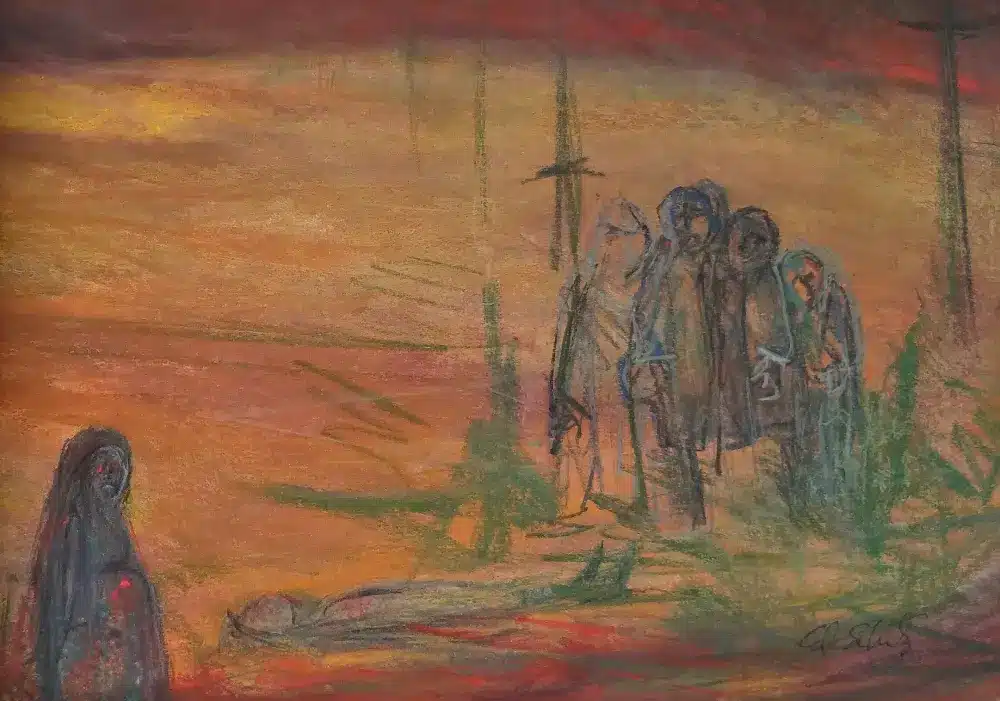
In Standing Over the Dead, Schwartz deliberately shifts attention away from military equipment and battlefield tactics. Instead, the viewer encounters the aftermath of violence through expressions of grief, isolation and remembrance. The painting serves as a powerful reminder that behind every headline are individual lives forever altered by conflict.
Israel’s Humanitarian Response — Operation Good Neighbor
Although Israel did not become a formal participant in the Syrian Civil War, the humanitarian consequences unfolding along its northern frontier prompted a series of relief efforts. Between 2016 and 2018, the Israel Defense Forces carried out Operation Good Neighbor, a humanitarian initiative that provided medical treatment, food, clothing, fuel and humanitarian supplies to thousands of Syrian civilians living near the Golan Heights.
Israeli hospitals treated wounded Syrian men, women and children who crossed the border for emergency medical care. Aid deliveries included infant formula, winter clothing, generators, medicines and other essential supplies intended to alleviate suffering among civilian populations affected by the conflict.
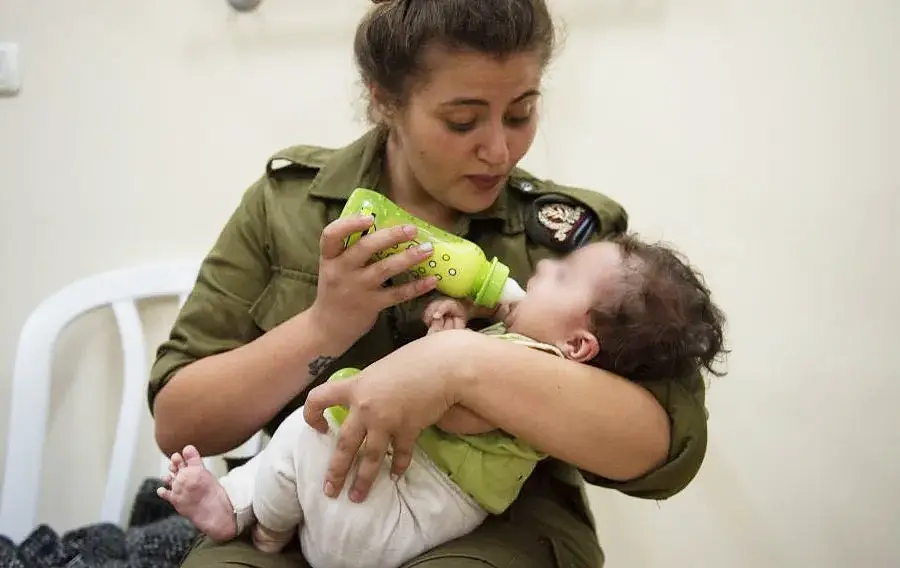
The operation echoed, in many respects, the earlier humanitarian spirit represented by the Good Fence decades before. Although separated by different conflicts and generations, both initiatives illustrated moments in which humanitarian concerns temporarily transcended political boundaries.
Why the Syrian Civil War Matters Within Ednah’s Portfolio
Schwartz’s paintings demonstrate that humanitarian suffering cannot be understood solely through national narratives. Her work consistently returns to universal themes of grief, resilience, motherhood and memory that transcend political borders. Whether depicting Israeli soldiers, Lebanese landscapes, Palestinian mothers or Syrian civilians, she repeatedly emphasizes shared human experience over ideological division.
By connecting the Syrian Civil War to earlier conflicts throughout the region, her portfolio illustrates how successive generations inherit both the visible and invisible consequences of war. Borders may shift, governments may change and alliances may evolve, yet the emotional realities experienced by ordinary families often remain remarkably similar. Through expressionism rather than documentary realism, Ednah Sarah Schwartz transforms these histories into enduring reflections on human dignity, compassion and survival.
8. Beyond Conflict — Visions of Peace, Shared Humanity and Coexistence
Although much of Ednah Sarah Schwartz’s portfolio documents war, displacement and historical upheaval, an equally important thread runs quietly throughout her work: hope. Rather than allowing conflict to define every relationship between neighboring peoples, Schwartz repeatedly returns to moments of reflection, compassion and shared humanity. Her paintings suggest that while governments wage wars and borders become contested, ordinary individuals continue to dream, nurture families, preserve culture and seek peaceful futures.
This recurring theme distinguishes her work from traditional military art. Instead of celebrating victory or defeat, she examines the emotional resilience that survives long after conflicts fade from newspaper headlines. The same landscapes that have witnessed artillery fire also produce harvests. The same border communities that endure periods of violence continue raising children, creating art and imagining better futures.
Throughout these works, Schwartz consistently invites viewers to see individuals before politics. Her figures possess dignity independent of nationality, religion or ethnicity, encouraging audiences to recognize shared human experiences that transcend geopolitical divisions.
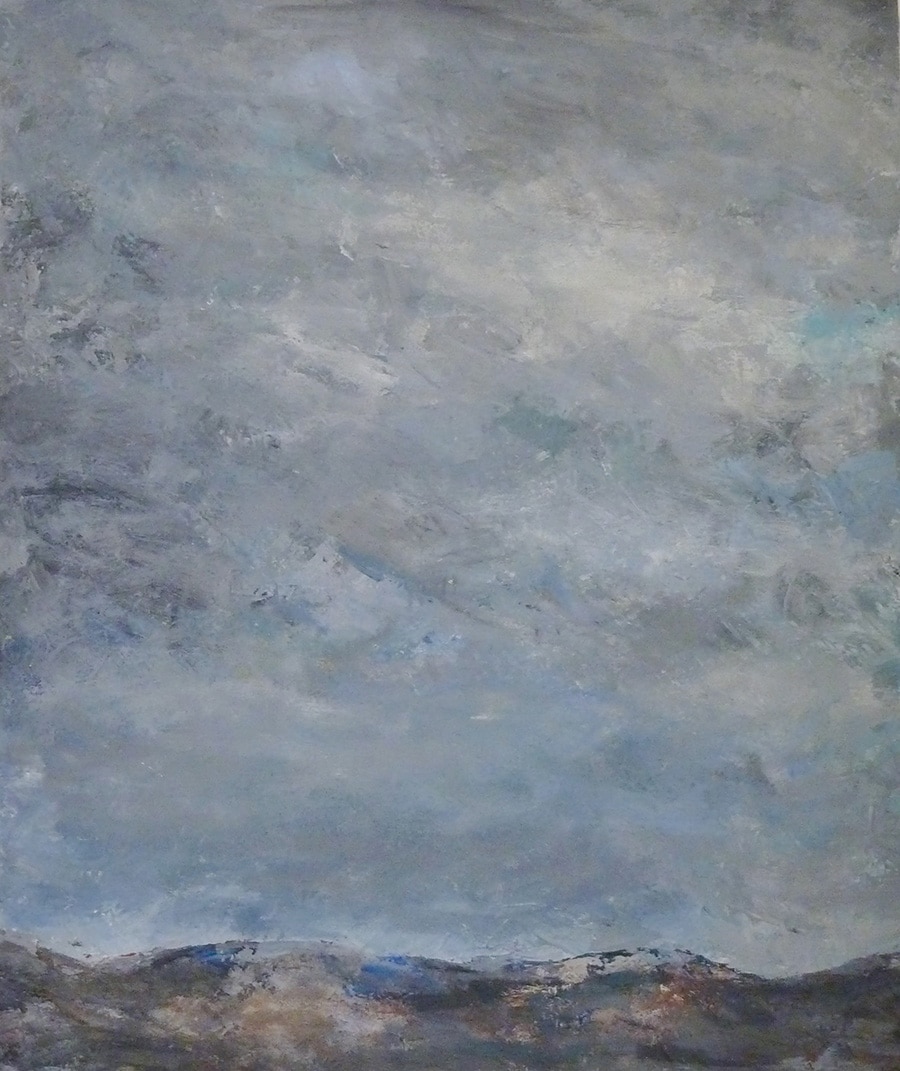
Looking Towards Lebanon and Peace beautifully illustrates this philosophy. Rather than emphasizing military boundaries, Schwartz paints the landscape itself as a place capable of reconciliation. The mountains, valleys and skies remain unchanged despite decades of political upheaval, quietly reminding viewers that geography often outlasts conflict.
The painting reflects one of the central ideas running throughout her body of work—that peaceful coexistence is neither naïve nor impossible, but rather an aspiration continually challenged by history. It recalls earlier periods of cross-border cooperation, including the humanitarian relationships fostered through the Good Fence, while encouraging viewers to imagine what future cooperation might one day resemble.
Motherhood as a Universal Language
Few themes appear more consistently throughout Schwartz’s work than motherhood. Across cultures, religions and national identities, mothers become symbols of protection, sacrifice, continuity and hope. By repeatedly returning to maternal imagery, Schwartz deliberately shifts attention away from political labels and toward emotional experiences shared by families throughout the region.
Rather than presenting Israeli, Palestinian or Lebanese mothers as representatives of opposing communities, she portrays them first as parents. Concern for children’s safety, grief over violence, moments of tenderness and quiet resilience become universal emotional experiences that transcend borders.
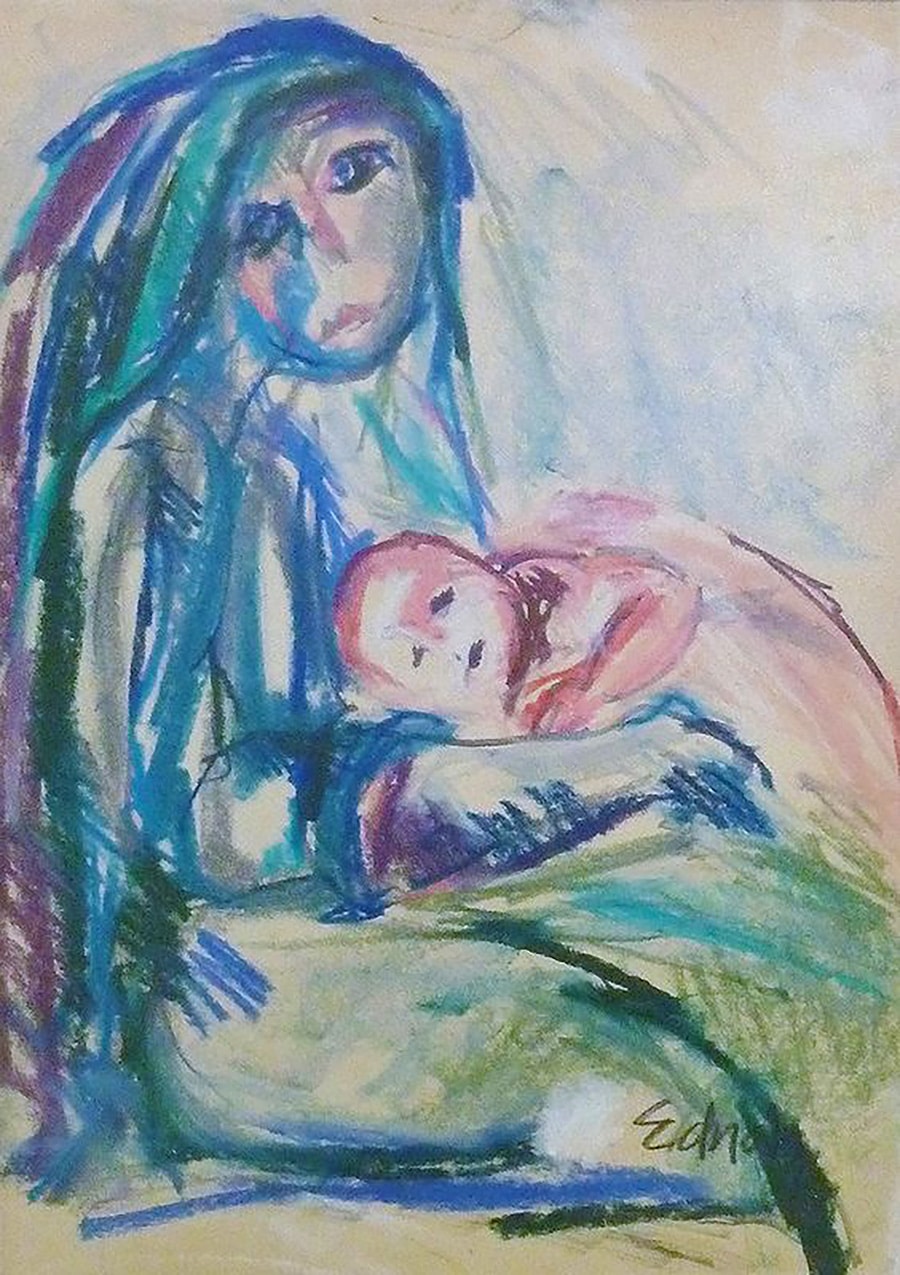
Throughout art history, motherhood has frequently symbolized hope during periods of instability. Schwartz continues this tradition while placing it within the modern Middle East, where generations of families have experienced recurring cycles of uncertainty. Her paintings acknowledge cultural distinctions without allowing those differences to obscure the emotional realities that unite people across communities.
The emotional power of these works lies in their restraint. Rather than illustrating dramatic historical moments, Schwartz captures intimate interactions that could occur almost anywhere in the world. This universality enables viewers from diverse backgrounds to connect with the paintings regardless of their familiarity with Middle Eastern history.
Arab Israeli Women — Individual Identity Beyond Headlines
Another recurring subject throughout Schwartz’s portfolio is the portrayal of Arab Israeli women. These works stand apart because they refuse to reduce their subjects to symbols of conflict. Instead, they present thoughtful, introspective individuals whose identities extend far beyond political narratives.
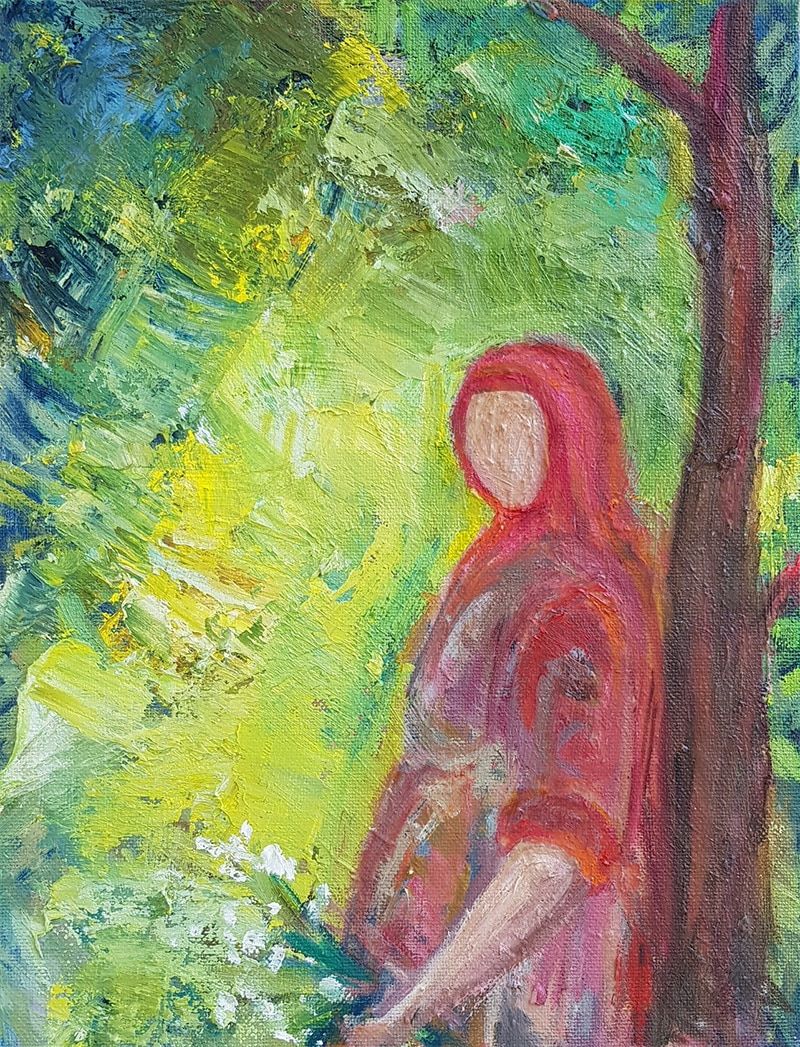
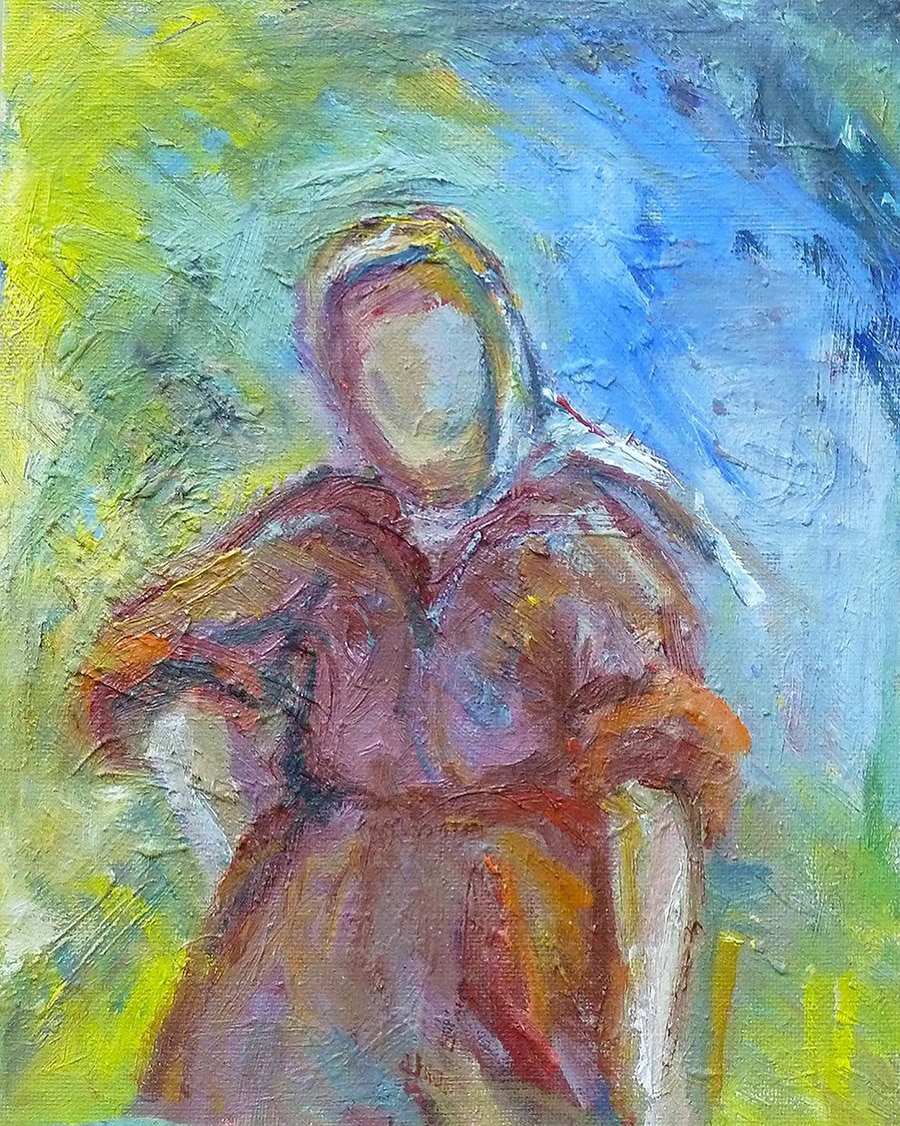
Rather than emphasizing political identity, Schwartz explores personality, contemplation and individuality. Expressions, posture and subtle gestures invite viewers to consider inner emotional lives rather than external labels. These portraits quietly challenge simplistic narratives by reminding audiences that individuals cannot be fully understood through ethnicity or nationality alone.
This human-centered approach reflects one of the defining characteristics of expressionism. Emotional truth takes precedence over literal documentation, allowing viewers to encounter the humanity of the subject before considering broader historical contexts.
9. Living With Conflict — The Psychological Weight of Everyday Warfare
For many people outside the Middle East, war is understood primarily through headlines announcing battles, ceasefires or diplomatic negotiations. For those living in regions repeatedly affected by conflict, however, the experience is often far quieter and considerably more complex. Daily routines continue despite uncertainty. Children attend school. Farmers cultivate fields. Families celebrate holidays. Life persists even while the possibility of violence remains ever present. This psychological reality forms one of the most significant themes throughout Ednah Schwartz’s portfolio. Her paintings frequently explore the emotional landscape created by prolonged vigilance rather than warfare itself. Instead of explosions or military offensives, she depicts waiting, endurance, reflection and resilience.
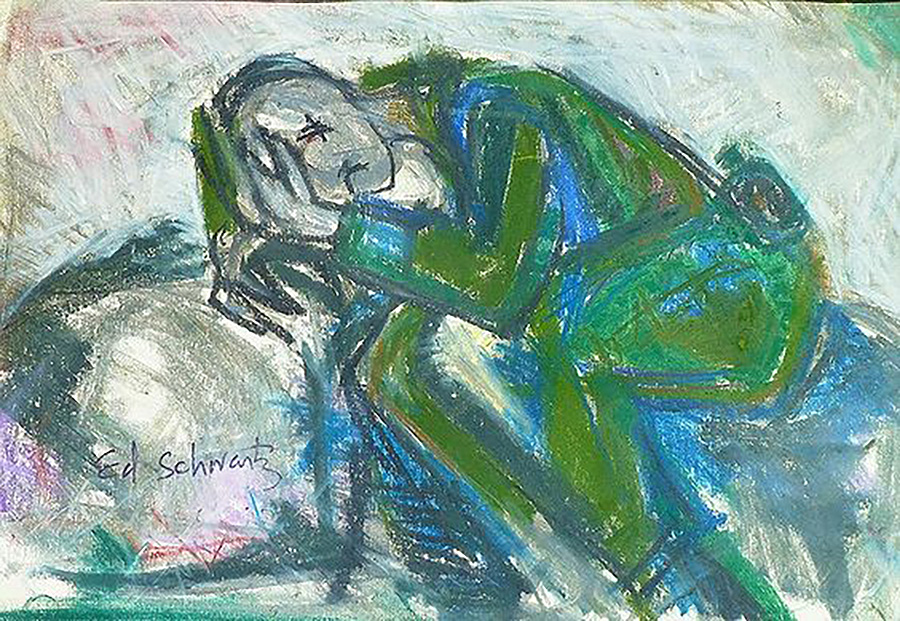
Rather than portraying soldiers as anonymous military figures, Schwartz presents individuals carrying extraordinary emotional responsibility. Long deployments, uncertainty and separation from family become central themes. Her work emphasizes humanity rather than heroism alone, encouraging viewers to consider the personal costs of prolonged military service.
These themes continue through her paintings of wounded soldiers and rehabilitation. Rather than ending when battles conclude, war often leaves lasting physical and emotional consequences that continue for years. Recovery, adaptation and resilience become important chapters in the broader human story.
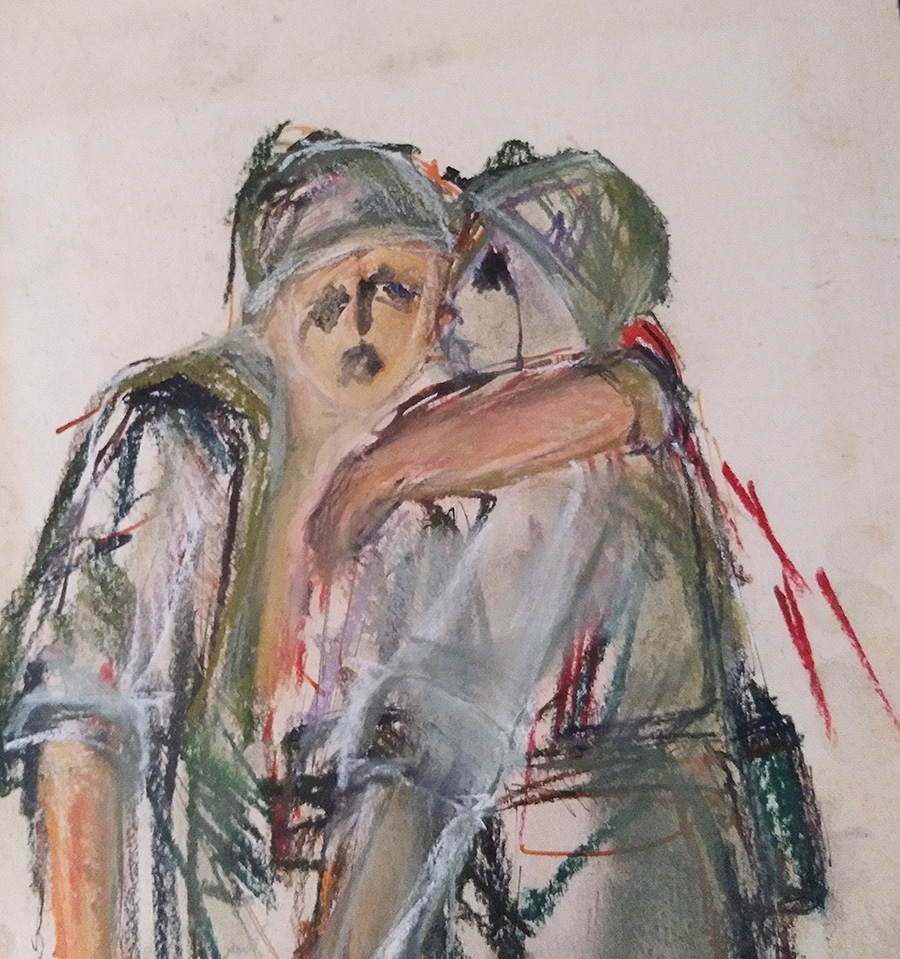
Collectively, these works argue that the true impact of conflict extends far beyond the battlefield. It lives within memory, relationships, communities and the quiet determination to rebuild ordinary life. Through expressionism, Ednah Sarah Schwartz captures these invisible dimensions of history with remarkable sensitivity, reminding viewers that resilience is often measured not in victories but in the simple decision to continue living with hope.
10. The Holocaust, Collective Memory and Historical Consciousness
At the foundation of Ednah Sarah Schwartz’s historical work lies the enduring legacy of the Holocaust (Shoah). Although separated by decades from many of the conflicts explored throughout her portfolio, the Holocaust remains one of the defining influences shaping modern Jewish identity, Israeli society and the work of countless Jewish artists around the world.
For many artists, the Holocaust is not simply a historical subject. It represents a continuing moral obligation to remember. As survivors become fewer with each passing year, art increasingly serves as an important vehicle through which future generations can engage with individual stories, collective trauma and the dangers of hatred, antisemitism and dehumanization.
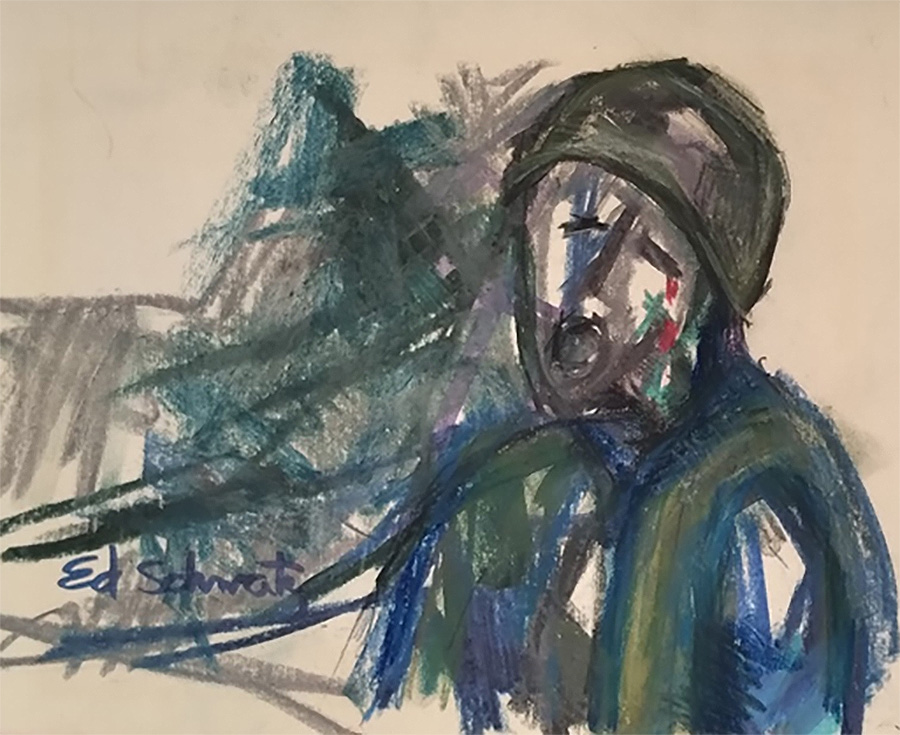
Rather than attempting to recreate historical events literally, Schwartz approaches Holocaust remembrance through expressionism. Her drawings and paintings seek to preserve emotional truth—fear, courage, grief, resilience and hope—allowing viewers to connect with individuals rather than statistics.
This emphasis on memory reflects a longstanding tradition within Jewish culture, where remembrance is understood not simply as recalling the past, but as an active responsibility carried into the present. In Schwartz’s work, remembrance becomes an act of preservation, ensuring that the experiences of previous generations continue informing contemporary understanding.
The Holocaust in Historical Context
Between 1933 and 1945, Nazi Germany systematically persecuted and murdered six million Jews alongside millions of other victims, including Roma, people with disabilities, political prisoners, Soviet prisoners of war and others targeted by the regime. The Holocaust remains one of history’s most extensively documented examples of state-sponsored genocide and continues to influence international discussions concerning human rights, genocide prevention and historical responsibility.
Entire Jewish communities that had existed throughout Europe for centuries disappeared within only a few years. Families were separated, cultural institutions destroyed and countless works of art, literature and religious heritage were lost forever.
For Israeli artists born after the Second World War, these events nevertheless remain deeply personal. Many grew up listening to the stories of parents, relatives, neighbors or teachers whose lives had been permanently shaped by the Holocaust. The memories of those experiences naturally became woven into artistic expression, literature and public remembrance throughout Israeli society.
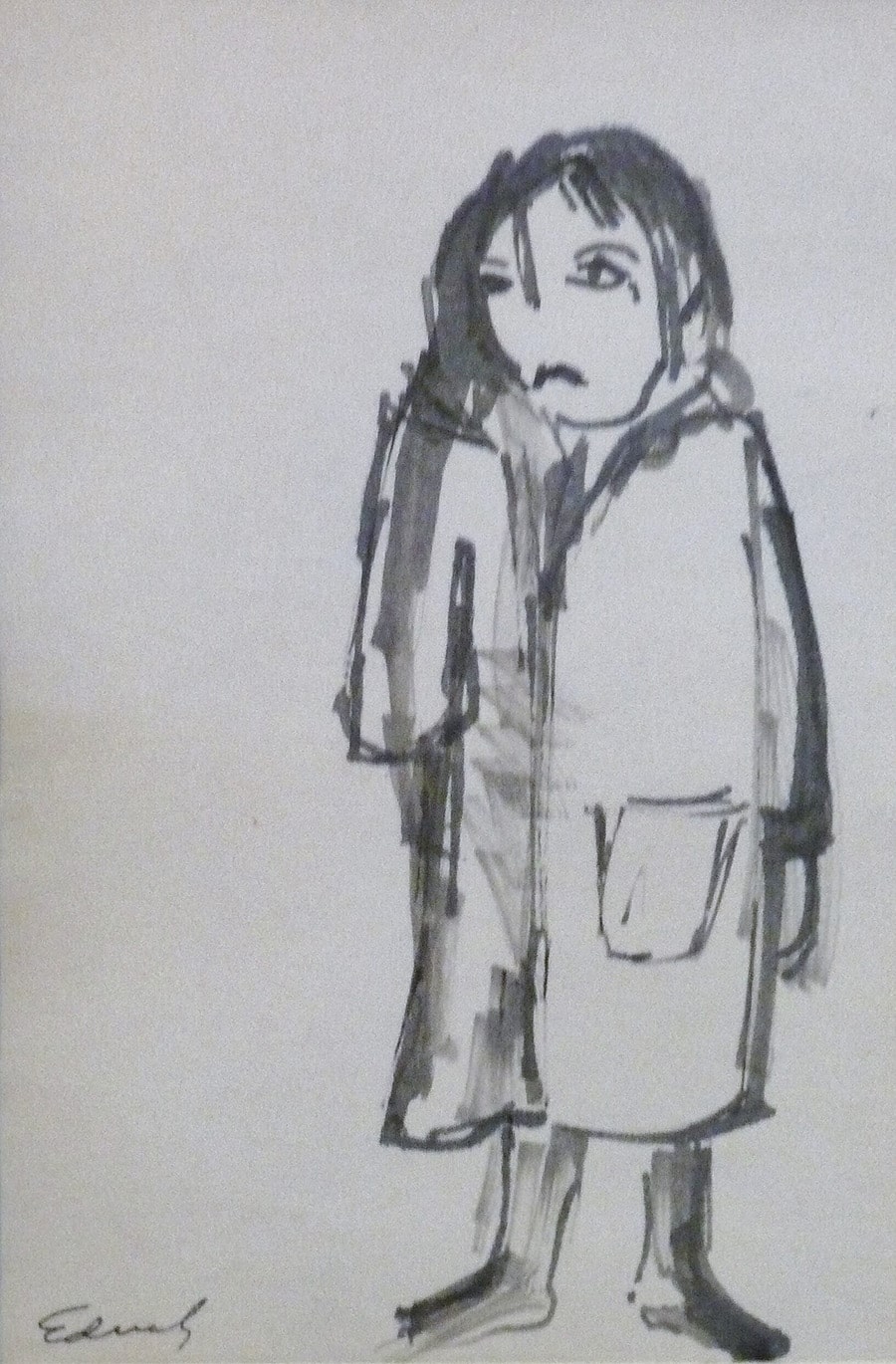
In A Jewish Ghetto Child, Schwartz intentionally avoids dramatic theatrical imagery. Instead, the drawing centers on a single child whose expression quietly communicates vulnerability, uncertainty and resilience. By focusing upon one individual rather than vast historical scenes, she reminds viewers that the Holocaust ultimately consisted of millions of personal stories rather than anonymous historical statistics.
Remembering Resistance
While Holocaust remembrance often focuses upon suffering and loss, Schwartz also highlights another equally important chapter of Jewish history: resistance. Throughout occupied Europe, Jewish men and women participated in underground organizations, partisan movements, intelligence networks and armed uprisings despite overwhelming odds.
Resistance assumed many forms. Some smuggled children to safety. Others forged identity documents, transported weapons, gathered intelligence, sabotaged military infrastructure or joined partisan units operating behind enemy lines. Even preserving religious practice, maintaining cultural traditions or secretly educating children represented powerful forms of resistance against systematic efforts to erase Jewish identity.
By acknowledging these acts of courage, Schwartz expands historical understanding beyond victimhood alone. Her work emphasizes dignity, determination and moral courage alongside remembrance.
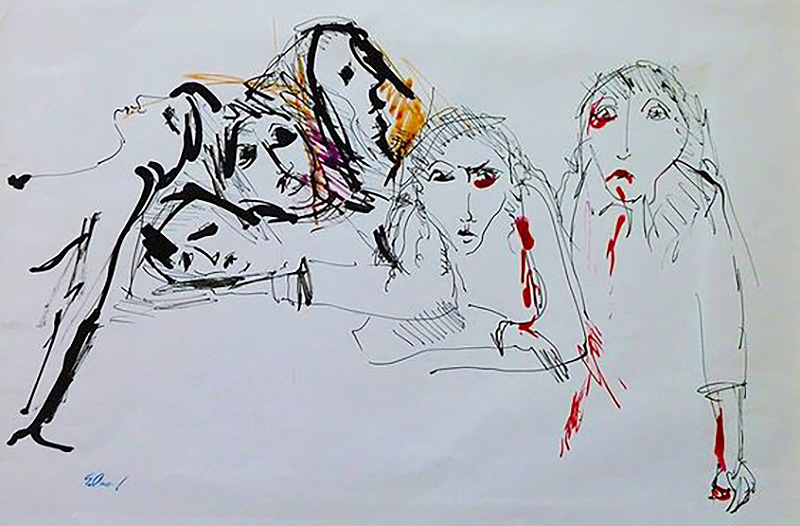
Women of the Resistance celebrates individuals whose bravery frequently remained overlooked for decades. Through intricate line work and expressive composition, Schwartz acknowledges the countless women who served as couriers, intelligence operatives, medical workers and armed resistance fighters throughout occupied Europe. Their stories remind viewers that resistance was measured not only through military victories but also through extraordinary acts of personal courage carried out under impossible circumstances.
11. Expressionism as Historical Documentation
Although history is often associated with photographs, official documents and archival records, visual art provides another equally valuable form of historical understanding. Expressionism, in particular, offers artists the freedom to communicate emotional realities that conventional documentary methods cannot always capture.
Rather than reproducing scenes exactly as they appeared, expressionist artists intentionally distort color, perspective, proportion and composition to reveal inner psychological experience. Fear may appear through exaggerated contrasts. Isolation may be conveyed through empty landscapes. Hope may emerge through unexpected color relationships. In this way, expressionism becomes less concerned with literal accuracy than with emotional authenticity.
Ednah Sarah Schwartz consistently employs this approach throughout her portfolio. Whether depicting abandoned border crossings, grieving mothers, soldiers recovering from injury or Holocaust remembrance, she emphasizes emotional truth over photographic realism. Her paintings invite viewers not simply to observe historical events but to experience something of the emotional atmosphere surrounding them.
This artistic philosophy places her work within a broader lineage of twentieth-century expressionism, while maintaining a distinctly personal perspective rooted in Israel’s landscapes and history. Geography becomes psychological space. Architecture becomes memory. Figures become symbols of resilience rather than anonymous participants within political narratives.
Through this approach, Schwartz transforms historical events into deeply human experiences. The viewer is encouraged not merely to learn history but to reflect upon its continuing emotional consequences across generations.
Ednah Sarah Schwartz — Painting as Historical Testimony
“To look at a canvas by Ednah Sarah Schwartz is to confront an unvarnished architecture of memory—a space where geography outlasts geopolitics, and where the human face acts as an immutable ledger of regional inheritance.”
In the standard codification of history, we are accustomed to looking toward the concrete artifact: the archival transcript, the state decree, the statistical record of military expenditure, or the clinical black-and-white frame of a press photograph. While these instruments provide an indispensable anatomy of dates and developments, they inherently lack the vocabulary required to articulate the psychological baseline of raw survival. It is here that the fine artist assumes a critical, permanent office as a historical witness. The artist does not merely recount what occurred; they capture the precise emotional atmosphere of the era in which it happened. Where state papers summarize structural transitions, the painter documents the human cost of those transitions, providing future generations with an indispensable window into the human consciousness during periods of trauma, shifting frontiers, and profound sociological anxiety.
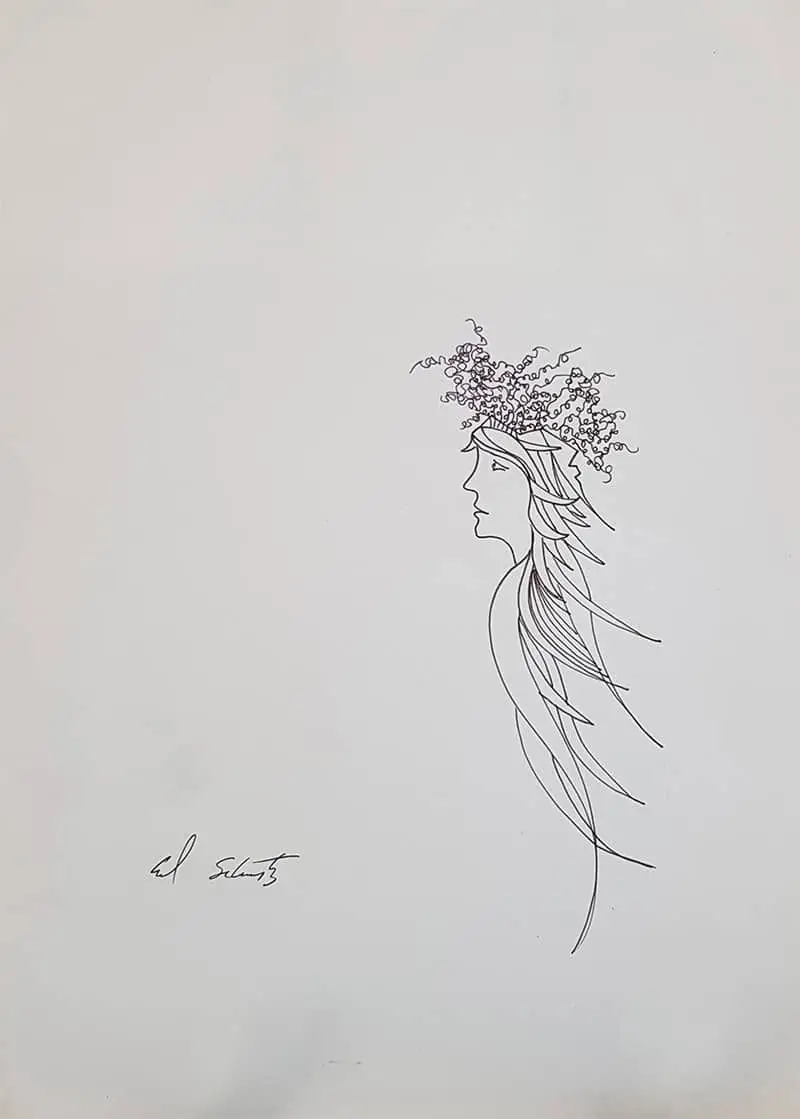
This artistic registry differs fundamentally from the objective tenets of journalism. The journalist operates on an empirical timeline, working to preserve an immediate, detached, and literal account of an event as it unfolds in real time. Journalism provides the outward shape of a conflict—the strategic parameters of a border checkpoint or the logistical reality of a regional mobilization. Memory, however, operates via an entirely separate topography. It is fluid, cumulative, and inherently subjective, retaining the sensory and psychological residue of an event long after the headlines have turned over. Ednah Sarah Schwartz’s paintings do not attempt to compete with the journalistic lens; rather, they map the deep internal landscape of memory. Her brushwork captures how a border crossing or an empty military road feels to those who must build their lives beneath its shadow, translating historical trauma into an active, breathing psychological continuum.
To record these layers of memory, Schwartz relies heavily on the technical and philosophical framework of expressionism. By departing from literal realism—by altering perspective, destabilizing color relationships, and prioritizing heavy, textured mark-making—expressionism bypasses superficial documentation to communicate an underlying emotional truth. A photographic record of a bomb shelter or a regional frontier reveals only material composition; an expressionist rendering can manifest the heavy weight of prolonged vigilance, the quiet exhaustion of military deployments, or the fiercely protective instinct of a mother navigating an unmapped future. Through deliberate distortion and heightened color saturation, the internal reality of an individual is pulled into the external world. The canvas ceases to be an passive window and becomes a dynamic arena where historical pressure and human resilience explicitly collide.
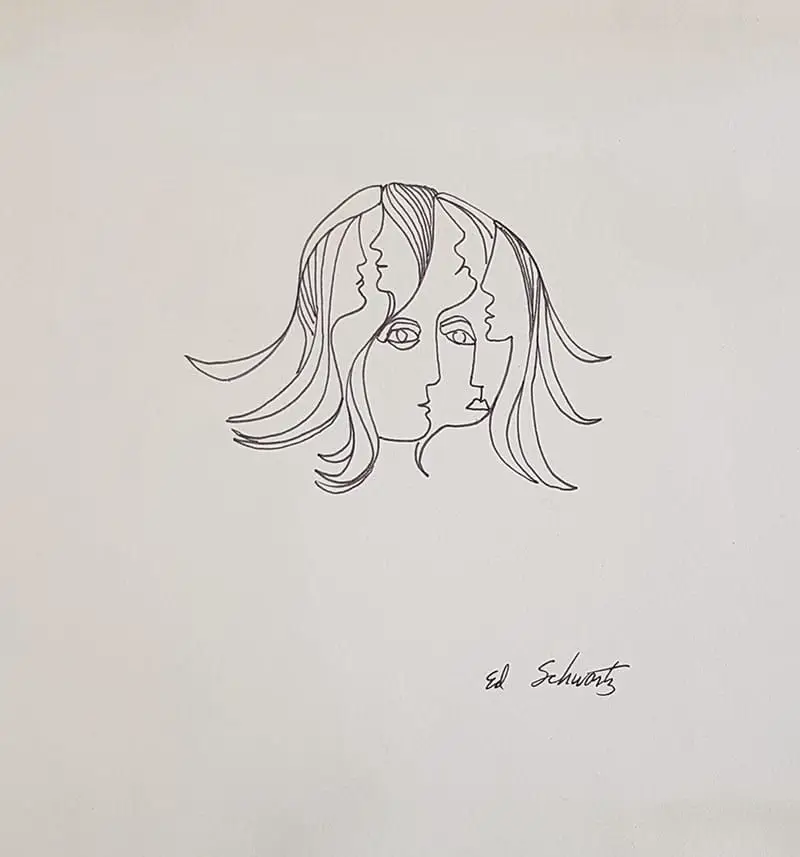
Within this expressive universe, the landscape itself undergoes a profound transmutation, evolving from a passive setting into an authoritative historical document. In regions marked by decades of cyclical instability, geography is never neutral. A hill, a valley, an empty road, or a rusted gate along the Upper Galilee or the Lebanese border carries an invisible weight of historical narrative. Schwartz treats these physical spaces as repositories of human experience. By capturing the structural quietude of abandoned humanitarian corridors like the Good Fence, or the stark, sweeping vistas looking toward Lebanon, her landscapes register the profound shifts in regional cooperation and separation. The earth is rendered not as an idyllic escape, but as a silent, enduring witness to the generations that have tilled its soil, patrolled its borders, and sought shelter within its topographies.
This curatorial methodology firmly aligns Schwartz’s portfolio with a historic twentieth-century lineage of artists who utilized expressionism as a primary tool for documenting institutional war, social trauma, and historical remembrance. Her work shares a clear spiritual and thematic blueprint with the devastating graphic output of Käthe Kollwitz, whose raw treatments of motherhood, protection, and mourning gave a universal voice to civilian suffering during Europe’s darkest passages. Similarly, one detects echoes of Otto Dix’s unflinching indictments of combat’s psychological aftermath and the structural isolation of the wounded soldier. Furthermore, Schwartz’s lyrical yet urgent approach to cultural memory and displacement evokes the artistic vocabulary of Marc Chagall, who masterfully blended personal history, religious heritage, and folkloric symbolism to preserve the identity of communities facing systematic erasure. Like these modernist predecessors, Schwartz uses the brush not to glorify conflict, but to critique its human cost and demand accountability from history.
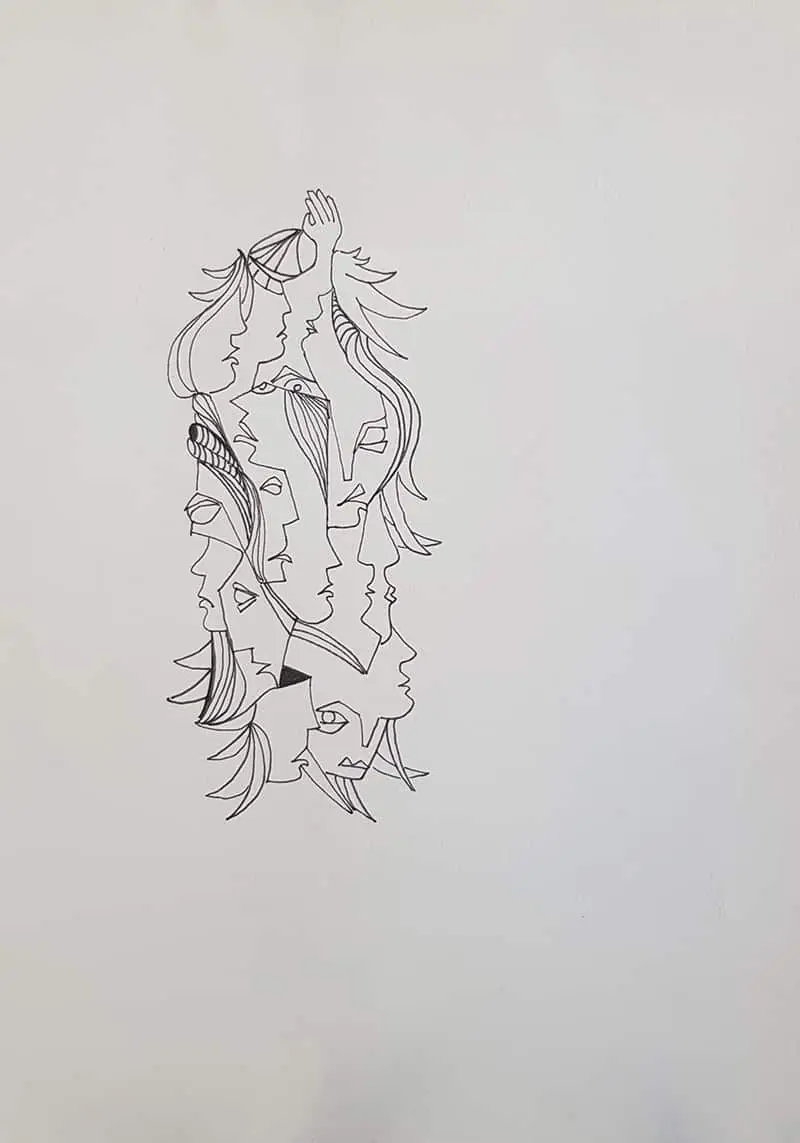
Ultimately, preserving these expressionist records is of paramount importance for future generations. As time distances us from the acute witness of survivors and the immediate participants of regional conflicts, history faces the perpetual danger of becoming clinical, abstracted into numbers, or oversimplified by textbook rhetoric. A collection of paintings functions as a permanent cultural bastion against historical amnesia. Schwartz’s work ensures that the lived reality of these decades—the delicate balance of coexistence, the profound vulnerability of children in conflict zones, and the moral courage of resistance—remains tangible, vibrant, and urgent. These canvases serve as an emotional compass for those who will inherit these landscapes, reminding them that beneath every shifting geopolitical line lies an unalterable history of shared human dignity, quiet endurance, and an unextinguished longing for peace.
Frequently Asked Questions: Art, History, and Expressionism
How does expressionism function as a historical record compared to photography?
While photography captures a precise, literal fraction of a second, expressionism records the psychological and emotional impact of an era over time. By utilizing distorted forms, layered textures, and symbolic colors, expressionist art documents internal human reactions—such as anxiety, grief, and resilience—that a realistic lens cannot directly visualize.
What was the historical significance of the “Good Fence” in Ednah Schwartz’s paintings?
The Good Fence was a real humanitarian crossing near Metula on the Israel-Lebanon border that operated from 1976 until Israel’s military withdrawal in May 2000. During the Lebanese Civil War and its aftermath, it allowed thousands of Lebanese civilians to enter Israel for medical care, commerce, and agricultural employment, standing as a rare symbol of cross-border coexistence before it was permanently sealed.
Why is motherhood such a prominent, recurring motif in this portfolio?
For Ednah Sarah Schwartz, motherhood functions as a universal human language that transcends geopolitical and religious divisions. By shifting the focus away from soldiers or political figures and focusing on the raw, protective bond between mothers and children (whether Israeli, Palestinian, or Syrian), the artwork highlights shared vulnerability and humanity rather than ideological differences.
How do these paintings address the history of the Holocaust?
The portfolio treats the memory of the Holocaust as a foundational element of modern historical consciousness and identity. Rather than recreating mass trauma literally, pieces like A Jewish Ghetto Child and Women of the Resistance honor individual stories of vulnerability and moral courage, emphasizing the active cultural responsibility to remember resistance alongside loss.
What regional conflicts are structurally referenced throughout the art historical timeline?
The historical framework spanning the portfolio includes the Second World War and the Holocaust, the Lebanese Civil War (1975–1990), Israel’s Security Zone era (1985–2000), Operation Accountability (1993), Operation Grapes of Wrath (1996), both Palestinian Intifadas, and the ongoing international complexities of the Syrian Civil War since 2011.
Historical Timeline Featured Throughout Ednah Sarah Schwartz’s Artwork
| Year | Historical Event |
|---|---|
| 1939–1945 | Second World War and the Holocaust. |
| 1975 | Lebanese Civil War begins. |
| 1976 | The Good Fence opens near Metula. |
| 1982 | First Lebanon War. |
| 1985 | Israeli Security Zone established. |
| 1987 | First Palestinian Intifada begins. |
| 1993 | Oslo Accords and Operation Accountability. |
| 1996 | Operation Grapes of Wrath. |
| 2000 | Israeli withdrawal from southern Lebanon; Second Intifada begins. |
| 2002 | Operation Defensive Shield and construction of the security barrier. |
| 2005 | Second Intifada largely subsides. |
| 2011 | Syrian Civil War begins. |
| 2014 | ISIS expands across Syria and Iraq. |
| 2015 | Russian military intervention in Syria. |
| 2016–2018 | Operation Good Neighbor humanitarian mission. |
Conclusion: The Living Ledger of Modern History
Ultimately, the historical landscapes and geopolitical narratives structuralized within Ednah Sarah Schwartz’s artwork form a dynamic visual ecosystem of memory and endurance. By rejecting passive realism in favor of a deeply felt expressionism, her portfolio successfully converts documentation into testimony. Through these canvases, history ceases to be an unmoving record of the past and becomes an active, living dialogue with the human spirit across generations.