Effects Of War And The Holocaust On Jewish and Israeli Artists
Visualizing Survival: Artistic Expression from the Holocaust to Modern Israeli Warfare
The Holocaust sought not only to murder millions of Jewish men, women, and children, but also to erase their culture, identity, history, and humanity. Within ghettos, concentration camps, labor camps, and places of hiding, artists faced starvation, forced labor, disease, and the constant threat of execution. Despite these unimaginable conditions, many continued to draw, paint, sculpt, write, and document what they witnessed. Their work became an extraordinary act of resistance against Nazi attempts to erase both individual lives and collective memory.
Creating art under Nazi occupation was extraordinarily dangerous. Possessing pencils, charcoal, paint, or paper could result in severe punishment or death. Yet artists secretly sketched daily life inside ghettos, recorded deportations, portrayed fellow prisoners, and captured scenes that official Nazi photographs deliberately concealed. Many hid their work beneath floorboards, buried it underground, or entrusted it to friends with the hope that future generations would one day discover the truth.
Why Holocaust Art Matters Historically
- It provides first-hand visual testimony created by victims themselves rather than outside observers.
- Many drawings document locations, living conditions, deportations, and atrocities before Allied liberation.
- The artwork preserves the individuality of victims who otherwise risked becoming anonymous statistics.
- These works demonstrate that culture, imagination, and hope endured even under systematic persecution.
- Today these drawings, paintings, sculptures, and journals remain invaluable historical evidence studied by historians, museums, educators, and descendants around the world.
Art as an Act of Resistance
Resistance during the Holocaust extended far beyond armed uprisings. Every effort to preserve Jewish identity, document reality, educate children, practice religion, or create culture challenged the Nazi objective of total dehumanization. For many artists, producing a sketch or hiding a notebook represented an act of profound courage. Their work declared that even if their bodies could be imprisoned, their voices and memories would not disappear.
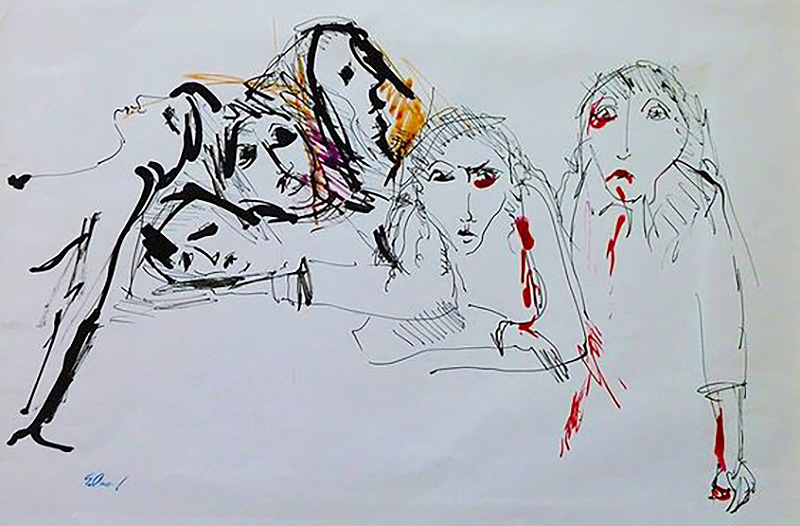
Many drawings were never intended for public exhibition. Instead, they served deeply personal purposes: recording family members before deportation, preserving familiar streets that would soon vanish, documenting starvation, or simply proving that ordinary human life had existed before unimaginable destruction. Today these intimate works provide an emotional connection to individual experiences that photographs alone often cannot convey.
Hidden Sketchbooks and Secret Archives
Throughout occupied Europe, Jewish artists developed ingenious methods to protect their work. Some folded drawings into clothing seams. Others concealed paintings beneath loose floorboards or inside walls. Entire collections of documents and artwork were buried inside metal containers and milk cans in the hope they would survive if their creators did not. The famous Ringelblum Archive from the Warsaw Ghetto included not only written testimony but also illustrations and artistic records documenting everyday life under Nazi occupation.
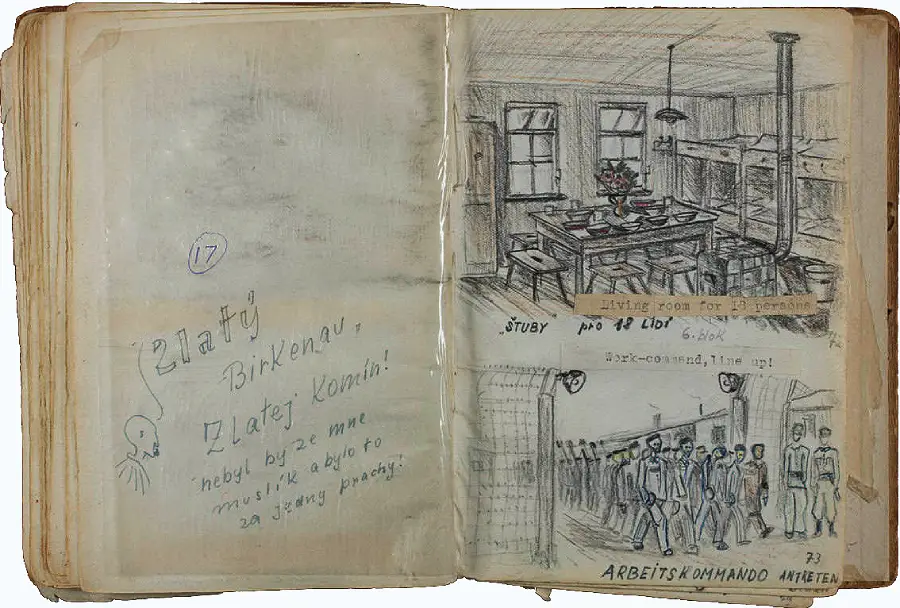
Many surviving collections were recovered only after the war, sometimes decades later. Each discovery added another fragment to the historical record, revealing deeply personal perspectives that official wartime documentation could never capture. Together these works transformed art into historical evidence, preserving both facts and emotions that continue to educate future generations.
“Every drawing became an act of remembrance. Every hidden sketch challenged the Nazi belief that an entire people could simply disappear from history.”
More Than Documentation
Holocaust artwork cannot be understood solely as historical documentation. These pieces also reveal the emotional lives of their creators. Expressions of fear, hope, grief, love, faith, longing, and resilience appear throughout surviving collections. Even under unimaginable conditions, artists continued searching for beauty, preserving childhood memories, depicting family members, and imagining freedom beyond barbed wire. Their creative spirit became a quiet affirmation that humanity itself could survive even when civilization had seemingly collapsed.
For contemporary Jewish and Israeli artists, these works remain profoundly influential. They demonstrate that art possesses the unique ability to preserve memory where language sometimes fails. Rather than allowing silence to dominate history, these artists transformed pencils, charcoal, brushes, and paper into enduring witnesses whose testimony continues long after the voices of many victims were lost.
Art in the Jewish Ghettos: Preserving Humanity Behind the Walls
Before millions of Jews were deported to concentration and extermination camps, many were forced into overcrowded ghettos established throughout Nazi-occupied Europe. These enclosed districts became places of starvation, disease, forced labor, and unimaginable uncertainty. Yet despite these horrific conditions, remarkable artistic communities continued to exist. Painters, illustrators, sculptors, musicians, photographers, writers, and teachers refused to allow Jewish culture to disappear. Their work documented daily existence while preserving the dignity of communities under systematic persecution.
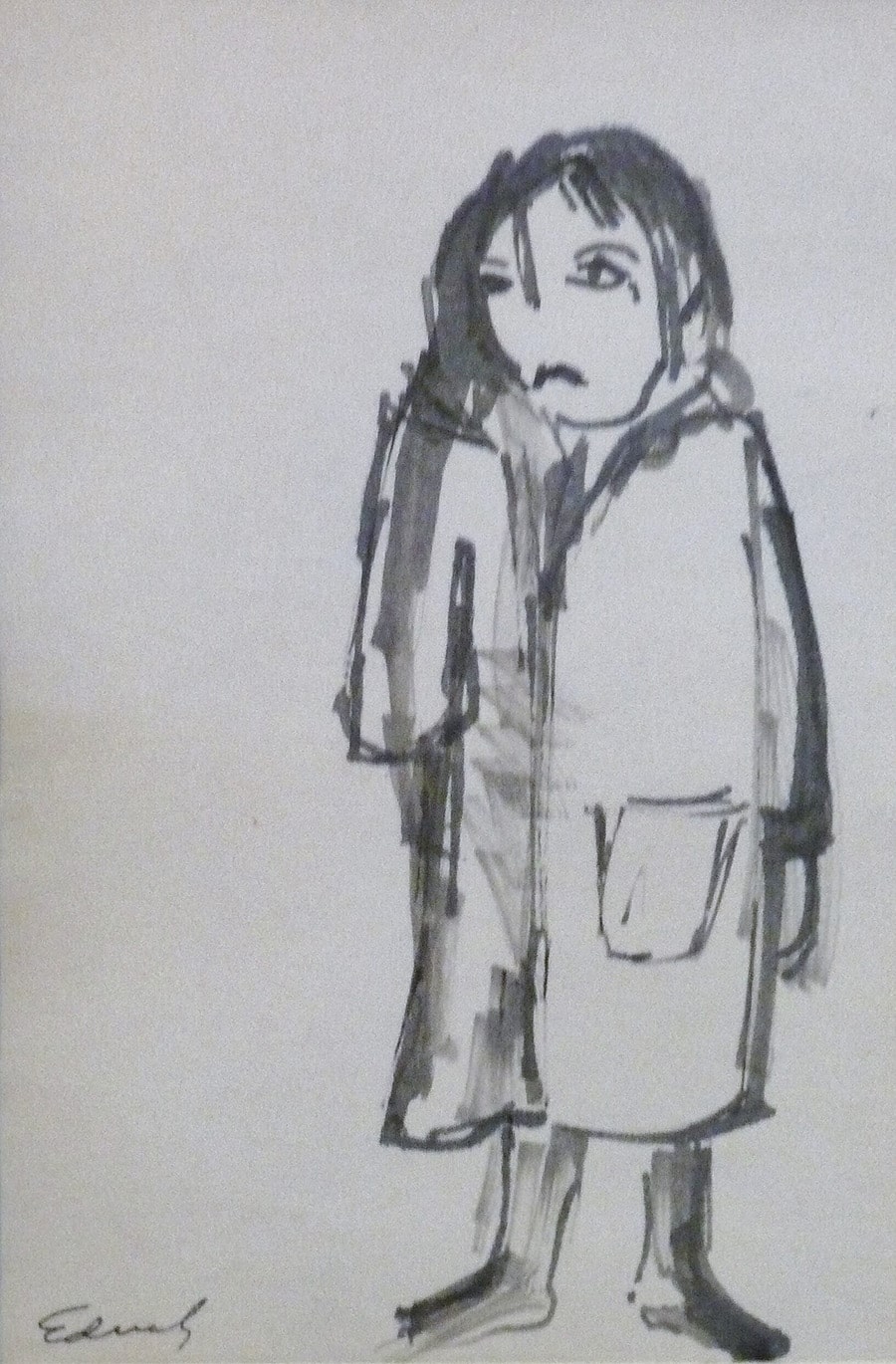
Unlike official Nazi propaganda, which deliberately portrayed Jews through hateful stereotypes, the artwork created inside the ghettos showed authentic human lives. Artists depicted children attending clandestine schools, families sharing scarce meals, musicians performing in hidden concerts, elderly residents waiting in bread lines, and workers returning from forced labor. These deeply personal images now provide historians with an irreplaceable visual record of Jewish life during one of history’s darkest periods.
📌 Major Jewish Ghettos Where Holocaust Art Was Created
- Warsaw Ghetto — Home to one of Europe’s largest underground cultural communities and extensive artistic documentation.
- Łódź Ghetto — Artists secretly recorded everyday life despite severe food shortages and forced labor.
- Vilna Ghetto — Often called the “Jerusalem of Lithuania,” where scholars and artists fought to preserve Jewish culture.
- Theresienstadt (Terezín) — A unique transit ghetto where thousands of drawings, paintings, musical compositions, and children’s artworks survived.
- Numerous Smaller Ghettos — Across occupied Poland, Lithuania, Belarus, Ukraine, Hungary, and elsewhere, artists quietly documented local Jewish communities before many were destroyed.
The Warsaw Ghetto: Art as Historical Testimony
Established in 1940, the Warsaw Ghetto became the largest Jewish ghetto in Nazi-occupied Europe. More than 400,000 Jews were confined within a small section of the city under catastrophic conditions. Starvation, disease, overcrowding, and deportations became everyday realities. Yet even here, artists continued working in secret, believing that future generations would need visual proof of what had occurred.
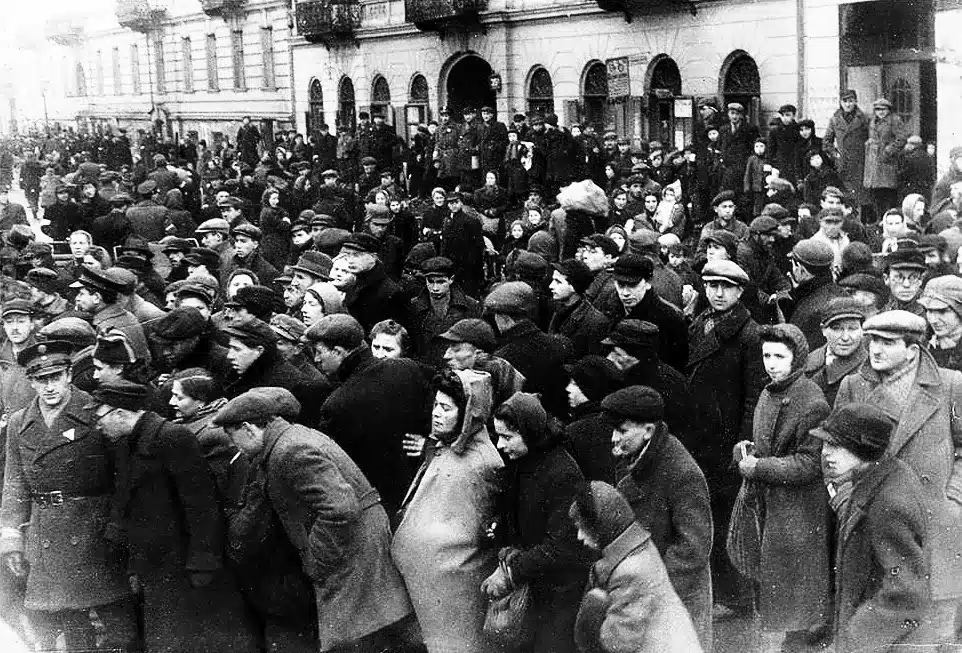
Many artists focused not on dramatic scenes of violence but on ordinary moments of humanity. Children playing in narrow courtyards, market vendors attempting to survive, exhausted laborers returning home, families comforting one another, and elderly residents quietly waiting in bread lines all became subjects worthy of preservation. These images reveal not only suffering but also remarkable resilience, dignity, and compassion amid unimaginable hardship.
The Łódź Ghetto: Recording Daily Survival
The Łódź Ghetto operated for nearly five years and became one of the longest-lasting ghettos established by Nazi Germany. Daily existence revolved around forced labor, food shortages, and relentless uncertainty. Artists there documented workshops, factories, crowded apartments, children searching for food, and families struggling to maintain routines despite increasingly desperate conditions.
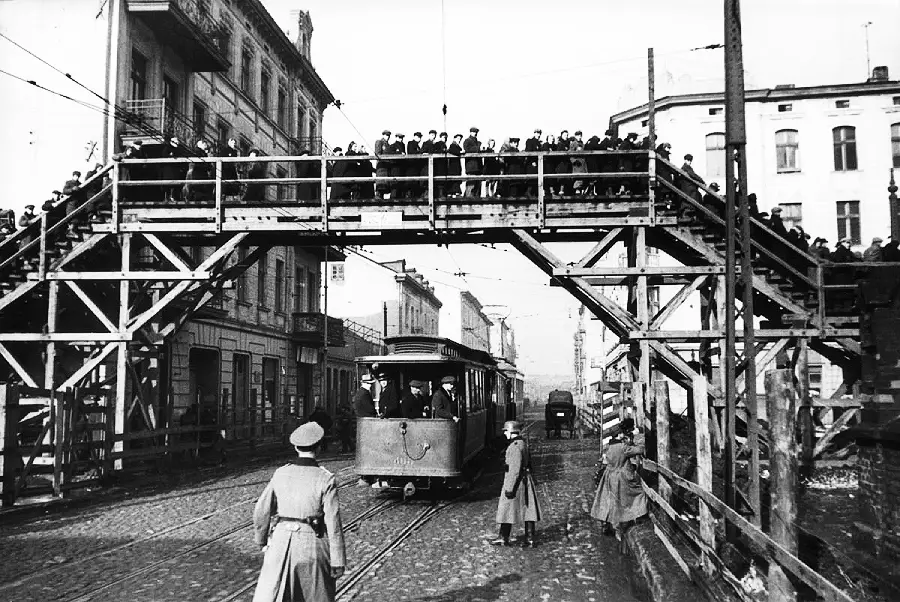
Because photography was tightly controlled by German authorities, sketches and paintings often became the only honest visual record of life inside the ghetto. Today these works help historians understand the psychological and emotional dimensions of survival that official documents rarely convey.
Vilna: Defending Culture Through Creativity
Before the Holocaust, Vilna was internationally recognized as one of Europe’s great centers of Jewish scholarship and cultural life, often called the “Jerusalem of Lithuania.” Even after the establishment of the Vilna Ghetto, artists, musicians, actors, educators, and writers continued organizing exhibitions, lectures, theatrical performances, and artistic workshops whenever circumstances permitted.
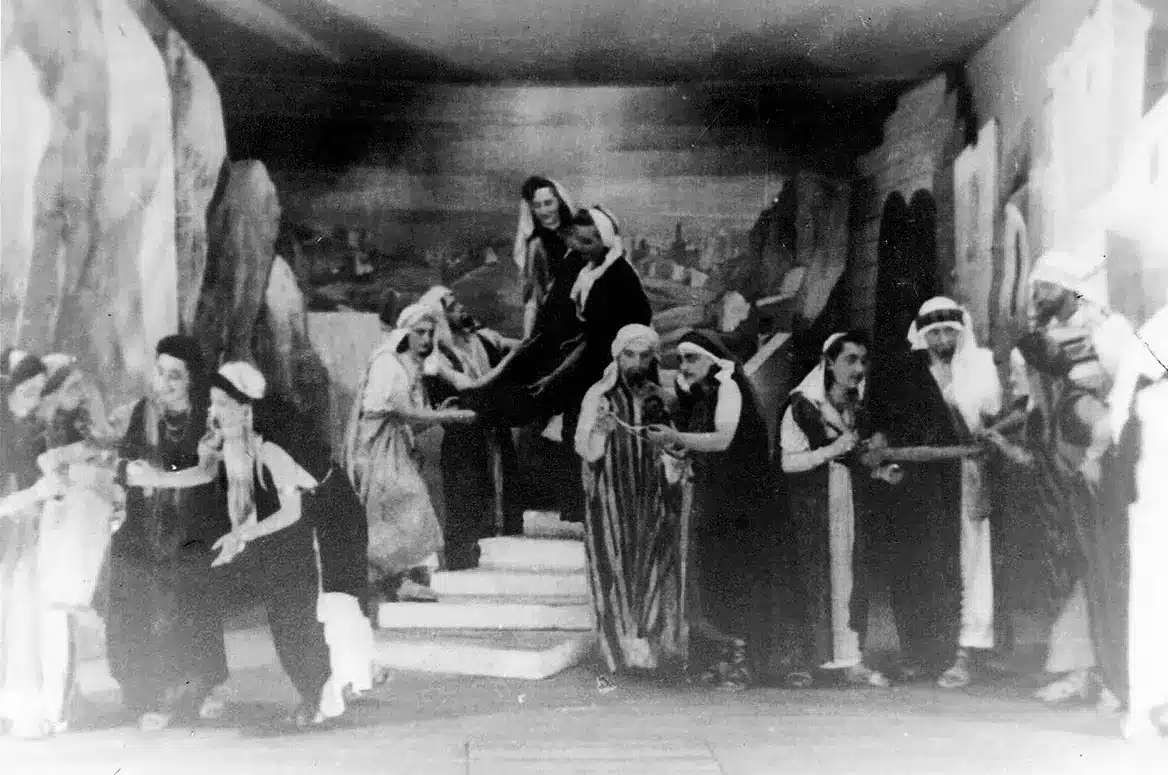
Their determination reflected a powerful belief that preserving Jewish culture constituted a form of resistance equal to any physical act of defiance. Every poem written, every painting completed, and every lesson taught became an affirmation that Jewish civilization would endure despite Nazi efforts to eradicate it.
Theresienstadt: A Complex Cultural Center
Theresienstadt occupied a unique place within the Holocaust. Although it functioned as a transit camp for many prisoners ultimately deported to extermination camps, it also became the site of an extraordinary concentration of artists, musicians, writers, composers, educators, and intellectuals. The Nazis cynically exploited this community for propaganda, attempting to portray Theresienstadt as a humane “model settlement” while concealing the suffering, overcrowding, hunger, and deportations taking place behind the scenes.
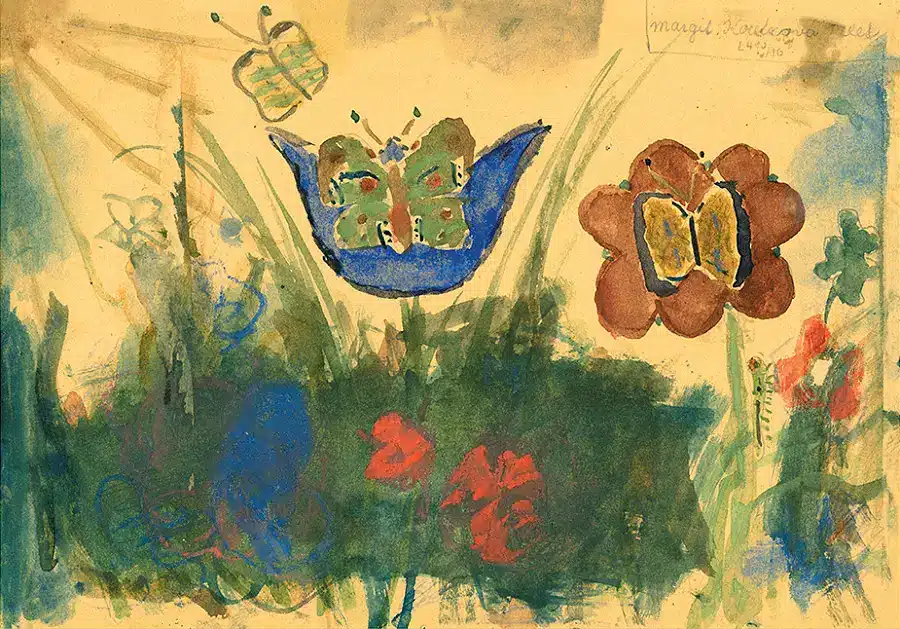
Margit Koretzova Margit Koretzova (1933-1944) painted this while imprisoned at the Terezín ghetto, and died at age ten. Children were chiefly remembered by their creativity while at Terezín
Many imprisoned artists secretly documented the reality hidden beneath the propaganda. Their paintings exposed cramped living quarters, exhausted prisoners, fear, illness, and the ever-present uncertainty surrounding transports to Auschwitz. Some works were concealed until liberation, while others were smuggled out by courageous prisoners determined that the outside world would eventually learn the truth.
“Within walls designed to erase identity, artists continued creating works that affirmed the value of every individual life.”
Art Preserved More Than Buildings
Many of the streets, synagogues, homes, schools, and neighborhoods depicted in Holocaust-era artwork no longer exist. Entire Jewish communities that had flourished for centuries were destroyed during the war. As a result, surviving paintings and drawings have become invaluable historical documents preserving not only architecture but also traditions, relationships, occupations, religious customs, celebrations, and everyday routines that otherwise might have been lost forever.
Historians frequently compare these works with photographs, survivor testimony, wartime documents, archaeological evidence, and family records to reconstruct the lives of communities wiped out during the Holocaust. In many cases, a single sketch has helped identify streets, buildings, or individuals whose stories would otherwise have disappeared from history.
For contemporary Jewish artists and descendants of Holocaust survivors, these ghetto drawings continue to serve as profound reminders that creativity can survive even in humanity’s darkest moments. They demonstrate that while oppression may attempt to silence individuals, artistic expression possesses an extraordinary power to preserve memory, restore identity, and bear witness across generations.
Art as Resistance: Music, Theatre, and Secret Exhibitions
Clandestine creative expression during the Holocaust went far beyond physical drawings. Within the crowded confines of the ghettos and the terrifying shadow of death camps, cultural activity transformed into a vital frontline defense against total psychological annihilation. Creating music, orchestrating underground theatrical productions, composing poetry, and arranging illicit art exhibitions allowed victims to defiantly assert their individual agency and preserve a semblance of sanity.
In the Theresienstadt (Terezín) ghetto, an active community of imprisoned intellectuals, musicians, and composers organized operas, classical concerts, and satirical plays. While the Nazi regime twisted these performances into deceptive propaganda for outside Red Cross delegations, the prisoners themselves weaponized the music as a shared psychological sanctuary. Songs like the children’s opera Brundibár carried veiled messages of hope and ultimate resistance against tyranny.
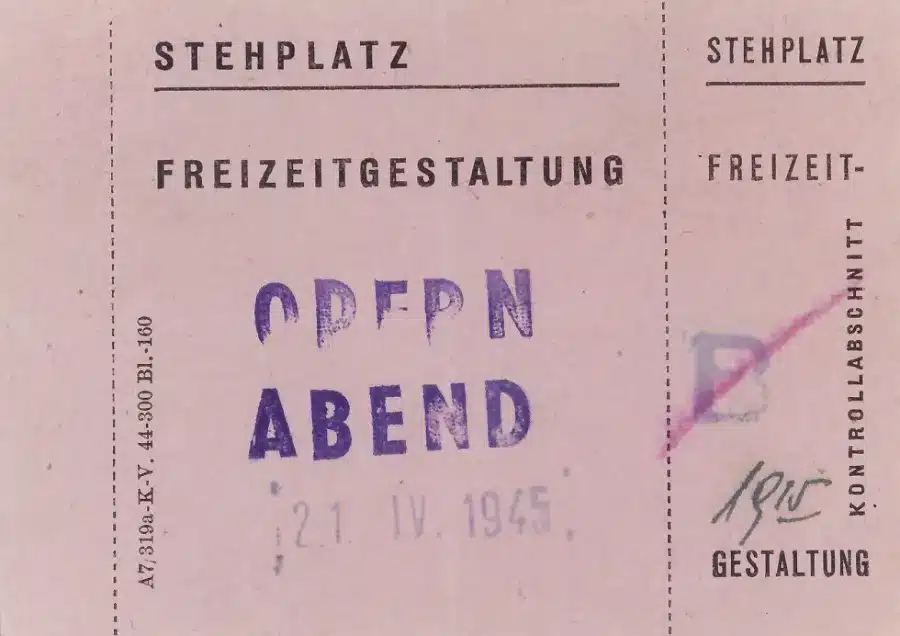
Similarly, in the Vilna and Warsaw ghettos, secret literary circles met in dark basements to recite poetry and share forbidden diaries. These shared acts of creative resistance served as intellectual lifelines, proving that while the Nazis could systematically imprison the human body, they could not fully conquer the human mind.
Women Artists of the Holocaust: Unique Visual Diaries
Female creators faced distinct horrors during the Holocaust, frequently enduring the unique trauma of forced separations, specialized medical experiments, and the agonizing murder of their children. Despite this vulnerability, numerous women left behind extraordinary, highly detailed visual diaries that offer a uniquely empathetic gaze into wartime trauma.
- Charlotte Salomon: A young German-Jewish artist who, while hiding in southern France before being deported and murdered in Auschwitz, painted her monumental masterpiece “Life? or Theater?”. This sprawling, multi-media collection of 769 gouaches seamlessly combines expressionist colors, musical cues, and text to construct a vivid narrative of her family history and psychological survival.
- Helga Weissová: Imprisoned in Terezín as a young girl, Helga brought her father paper and charcoal. He instructed her to “draw what you see.” Her resulting sketchbook documents the raw, unvarnished realities of children’s barracks, bunk beds, and lines for sparse rations with a stark, moving clarity.
- Esther Lurie: In the Kovno Ghetto, Lurie systematically documented the living arrangements, public roundups, and the forced labor of Jewish women. Recognizing the vital historical worth of her paintings, she buried her work inside pottery jars, preserving an invaluable visual record of female victimization and resilience.
- Dina Babbitt (Gottliebová): Imprisoned at Auschwitz-Birkenau, Babbitt survived because of her formidable talent. The notorious Josef Mengele discovered her artistic abilities and forced her to paint portraits of Romani prisoners to track physical traits. Her brushstrokes managed to capture the deep humanity and dignity of her subjects under horrific conditions.
- Malva Schalek: A prominent Czech painter who refused to collaborate with Nazi propaganda efforts in Terezín. Instead, she painted delicate, quiet watercolors showing the hidden, crowded interior spaces of the camp, capturing the subtle dignity of the elderly and suffering before she was murdered in Auschwitz.
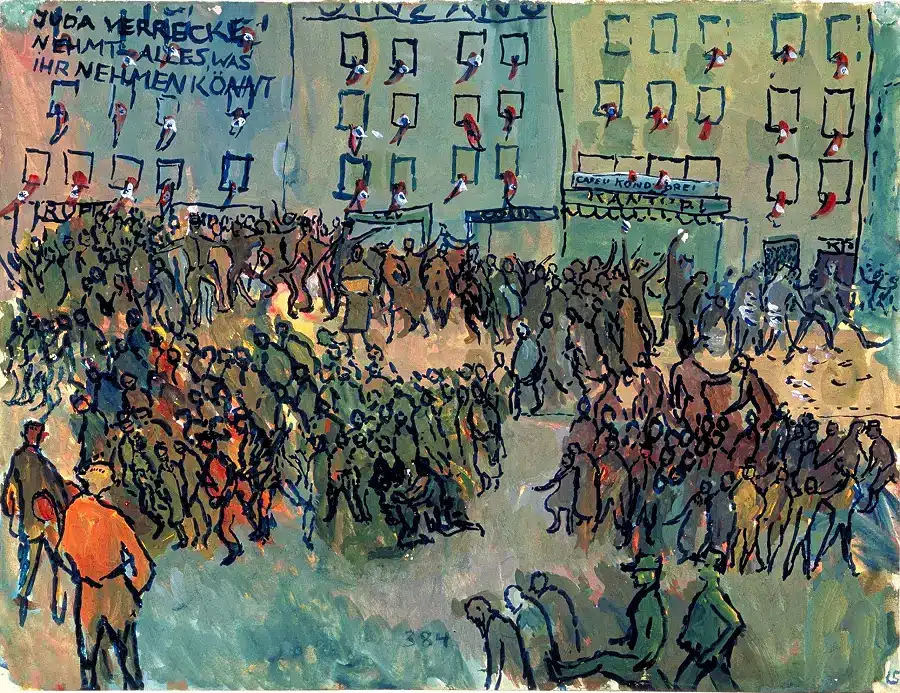
Lesser-Known Masterpieces: Indomitable Artists of the Shoah
Beyond the highly publicized works of global icons, a profound visual archive was forged by artists operating directly within Nazi persecution. These creators utilized whatever scraps of paper, cardboard, or charcoal they could scavenge to leave behind unalterable proof of their existence and the crimes committed against their people.
- Felix Nussbaum: An exceptional German-Jewish surrealist painter whose final masterpieces, executed while hiding in a tiny attic in Brussels, capture the absolute terror, isolation, and claustrophobia of a hunted human being. His painting “Self-Portrait with Jewish Identity Card” remains a haunting testament to state-enforced erasure.
- David Olère: A survivor of Auschwitz who was forced into the Sonderkommando, Olère possessed an agonizingly vital perspective. His raw, post-liberation sketches and paintings provide explicit, deeply accurate visual testimony of the interior layout and horrifying logistics of the gas chambers and crematoria.
- Yehuda Bacon: Deported to Auschwitz as a teenager, Bacon survived the death marches. His early drawings of gas chambers and camp layouts were utilized as key forensic evidence in the 1961 Adolf Eichmann trial in Jerusalem, demonstrating how victims’ art directly transitions into invaluable judicial truth.
- Samuel Bak: A child prodigy who survived the Vilna Ghetto, Bak has spent his long post-war career creating a complex, surrealist visual lexicon. His paintings are heavily populated by fractured stone tablets, chimneys, hollowed-out keys, and cracked chess pieces, reflecting a permanently shattered world that can never be fully repaired.
- Leo Haas & Bedřich Fritta: Both were prominent artists imprisoned in the Theresienstadt (Terezín) ghetto. They were tasked by the Nazis with producing deceptive propaganda art, but secretly drew the raw reality of starvation, overcrowding, and systemic death. When their clandestine drawings were discovered, Fritta was murdered in Auschwitz, while Haas survived, later retrieving their buried artwork.
- Petr Ginz: A brilliant youth from Prague imprisoned in Terezín, Ginz edited an underground magazine and drew the famous linocut “Moon Landscape,” representing an imaginative escape from the ghetto walls. Ginz was murdered in Auschwitz at age 16, but his cosmic imagery remains an eternal symbol of unyielding human imagination.
- Alice Lok Cahana: A survivor of Auschwitz, Bergen-Belsen, and Guben, Cahana dedicated her subsequent abstract expressionist career to processing the trauma of survival. Her work moves past literal depiction, using layers of ash, scorched paper, and abstract color fields to memorialize those who vanished into the smoke.
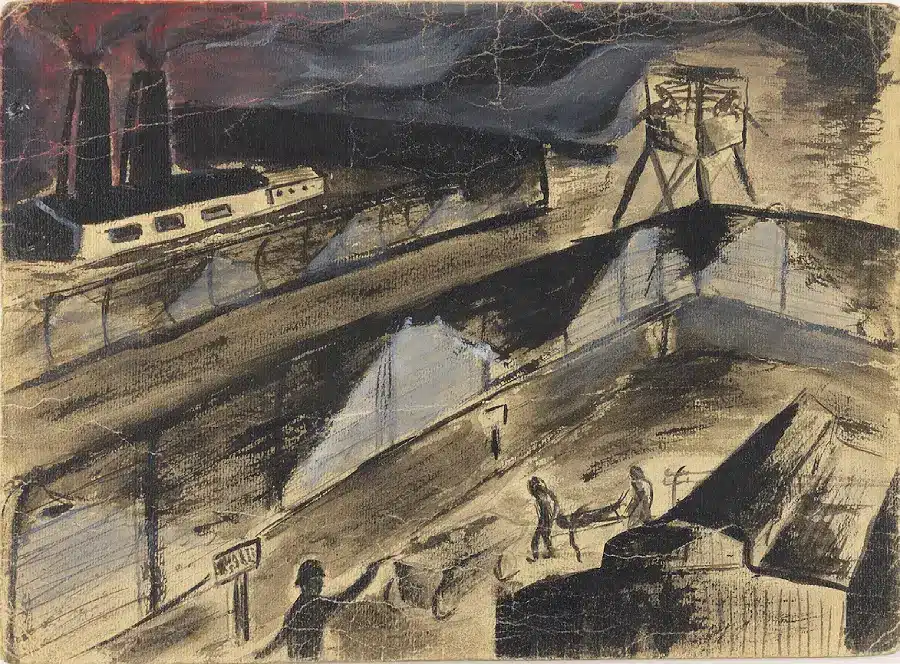
The Glossary of Symbolism: Visualizing the Unspeakable
As traditional language collapsed under the weight of industrial murder, Holocaust artists established an intricate, universal vocabulary of visual metaphors. These recurring motifs communicate deep psychological pain, survival, and grief without requiring a single spoken word.
Artistic Techniques & Mediums: Translating Chaos
The selection of physical artistic mediums during and after the Holocaust was deeply influenced by raw logistics and the psychological mechanisms of processing severe trauma. The material properties of each medium determine how successfully an artist can externalize internal panic, panic, or permanent memory.
- Charcoal, Graphite, and Pencil: Because these raw drawing materials were accessible and easily concealed in hiding places, they became the frontline tools for immediate documentation. The stark, monochromatic quality of graphite allows artists to use frantic, jagged strokes to depict panic, emaciation, and the immediate symptoms of PTSD.
- Mixed-Media & Collage: Post-war creators often incorporate physical components like burlap, string, layered ash, and scorched documents. This layering mimics the complex, fractured mental state of trauma survivors, representing a fragmented mind trying to assemble meaning from ruin.
- Bronze, Iron, and Sculpture: Conversely, three-dimensional physical sculpture handles memory through permanent mass. The weight and durability of cast iron or bronze give abstract historical trauma a permanent presence in public spaces, guaranteeing that memory cannot be easily swept away or erased over time.
The Four-Generation Shift: How Holocaust Memory Evolves
As decades separate contemporary society from the physical reality of the Second World War, the stylistic execution and core themes of Holocaust art have undergone a profound four-generation shift.
1st Generation: Literal Record & Survival Testimony
Executed by immediate eye-witnesses and camp survivors, this art prioritizes stark, unembellished, and often figurative realism. The overarching moral purpose is direct forensic verification and immediate documentation—leaving behind an undeniable visual record of state crimes.
2nd Generation: Dismantling Domestic Silence
Created by the biological children of survivors, this generation wrestles with the heavy atmosphere of unspoken parental trauma and inherited grief. The art moves away from literal camp scenes to explore domestic anxieties, psychological absences, and the complex process of decoding family silences.
3rd Generation: Distant Memory & Abstract Identity
The grandchildren of survivors engage with the Holocaust as an institutionalized, historical narrative rather than a lived domestic reality. Their works emphasize conceptual installations, globalized political warnings, and questions regarding how cultural identity can be kept alive across expanding generational divides.
4th Generation: Digital Preservation & Global Human Rights
The contemporary generation uses digital tools, virtual reality environments, and globalized pop-culture references to process the Shoah. Their art serves as an active barrier against modern digital denial, connecting historical anti-Semitism with broader global human rights issues and contemporary threats.
Growing Up During War: Childhood in Israel Through the Eyes of a Generation
For millions of Israeli children, war has never been a distant historical event discussed only in classrooms or remembered through history books. Instead, conflict has formed part of everyday life across multiple generations. Since the establishment of the State of Israel in 1948, repeated wars, terrorist attacks, missile campaigns, cross-border infiltrations, and periods of military tension have shaped the childhood experiences of families living throughout the country. While each conflict has been historically distinct, together they have created a unique cultural landscape in which resilience, preparedness, and uncertainty often exist side by side.
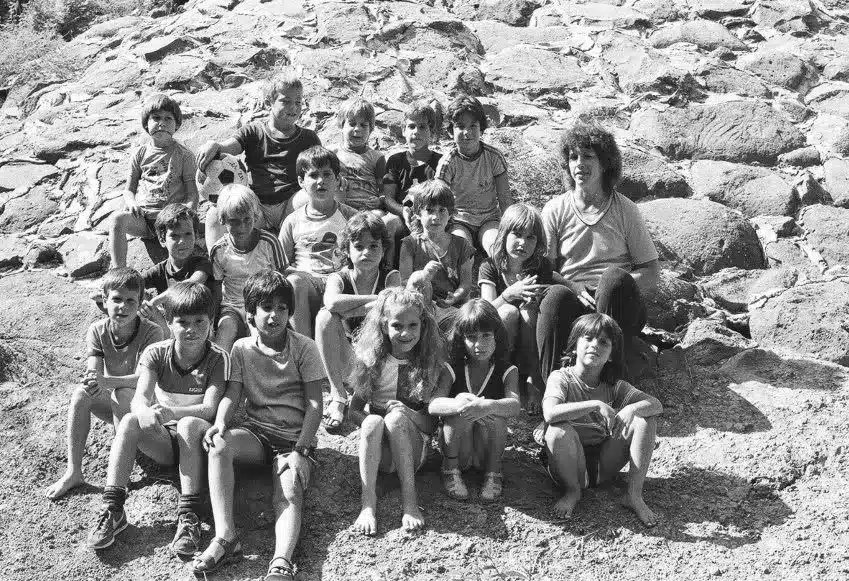
Unlike countries separated from conflict by oceans or thousands of miles, Israel’s geography places civilian communities close to international borders and areas of ongoing security concern. For many children, air raid sirens, protected rooms, reinforced schools, and emergency drills become familiar long before adulthood. Although periods of peace and normalcy are often long and vibrant, they can be interrupted with very little warning, requiring families to adapt within seconds.
Every generation has encountered different realities. Children who grew up during the 1950s often remembered border infiltrations and the uncertainty surrounding Israel’s early years. Those raised during the Six-Day War experienced rapid military mobilization, while the Yom Kippur War profoundly affected families throughout the country as thousands of reservists were suddenly called into combat. Later generations experienced the First Lebanon War, missile attacks during the Gulf War, waves of terrorism throughout the Second Intifada, years of rocket fire from Gaza, and prolonged tensions along Israel’s northern border.
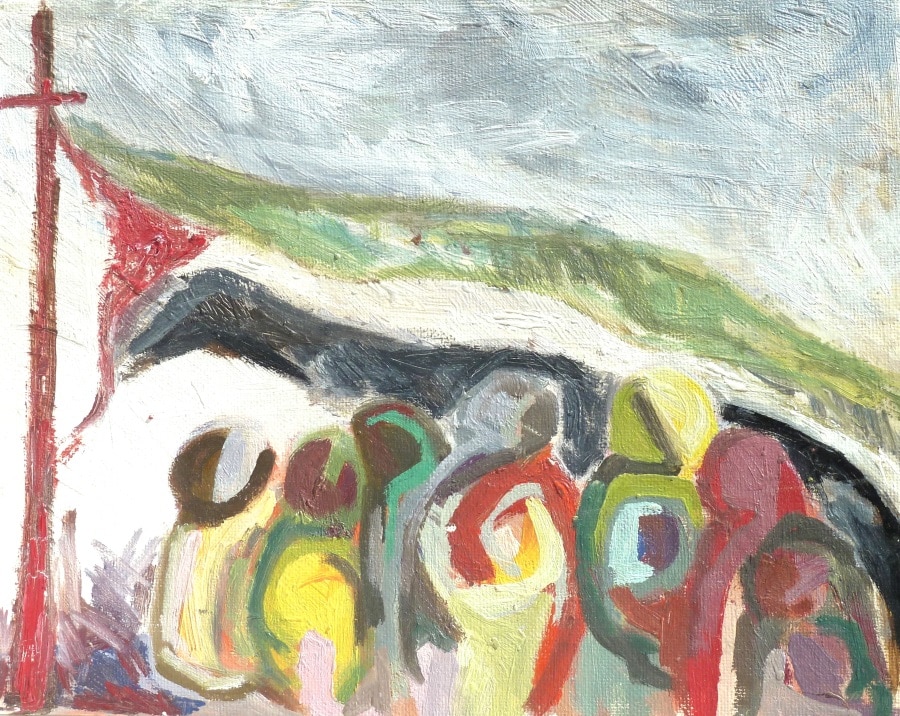
For many Israelis, childhood memories are therefore intertwined with moments that differ significantly from those experienced elsewhere. Birthday celebrations interrupted by sirens. Family dinners paused while everyone moves quickly to shelter. School lessons suddenly stopping as children calmly follow emergency procedures they have practiced repeatedly. While these events do not define every day of Israeli life, they form part of a shared national experience that has influenced literature, music, film, photography, and visual art for decades.
Childhood Experiences Shared By Many Israeli Generations
- Learning emergency procedures from an early age.
- Growing up with reinforced classrooms and bomb shelters.
- Experiencing military reserve call-ups affecting parents and siblings.
- Watching communities temporarily evacuate during periods of conflict.
- Living with the sounds of sirens, interceptions, and explosions during military escalations.
- Finding comfort through family, community, creativity, music, and art.
When Art Becomes a Childhood Memory
Children often process traumatic experiences differently than adults. Many cannot fully express fear through words, yet they naturally communicate emotion through drawing, painting, storytelling, and imaginative play. Throughout Israel’s history, teachers, psychologists, parents, and artists have observed how children’s artwork frequently reflects their experiences during periods of conflict. Pictures may include homes, families, shelters, soldiers, doves, stars, flags, broken buildings, or hopeful landscapes where peace replaces violence.
This relationship between childhood and artistic expression has become particularly significant within Israeli culture. Art offers a space where fear can be transformed into memory, confusion into understanding, and anxiety into something tangible that can be shared with others. Rather than merely documenting destruction, many artists focus on resilience, community, compassion, and the determination to preserve hope despite uncertainty.
“The history of Israel’s wars is not written only by soldiers. It is also remembered through the eyes of children who learned to live, grow, dream, and create while conflict unfolded around them.”
For artists such as Ednah Schwartz, these realities are not abstract political subjects but deeply personal experiences woven into everyday life. Her paintings frequently explore themes of family, loss, courage, memory, displacement, and hope, reflecting not only historical events but also the emotional landscape experienced by generations of Israeli civilians. Seen in this context, her work becomes part of a much larger artistic tradition in which creativity serves both as documentation and as a means of emotional survival.
Living Underground: Bomb Shelters, Safe Rooms, and Childhood Under Rocket Fire
For many people around the world, bomb shelters belong to history books describing London during the Second World War or cities devastated during the Cold War. In Israel, however, bomb shelters have remained a practical part of everyday life for generations. While many Israelis may go years without needing to enter one, communities near conflict zones have repeatedly relied on protected spaces during periods of rocket attacks, missile strikes, and cross-border hostilities. These shelters have become places not only of physical protection, but also of shared resilience, community, and memory.
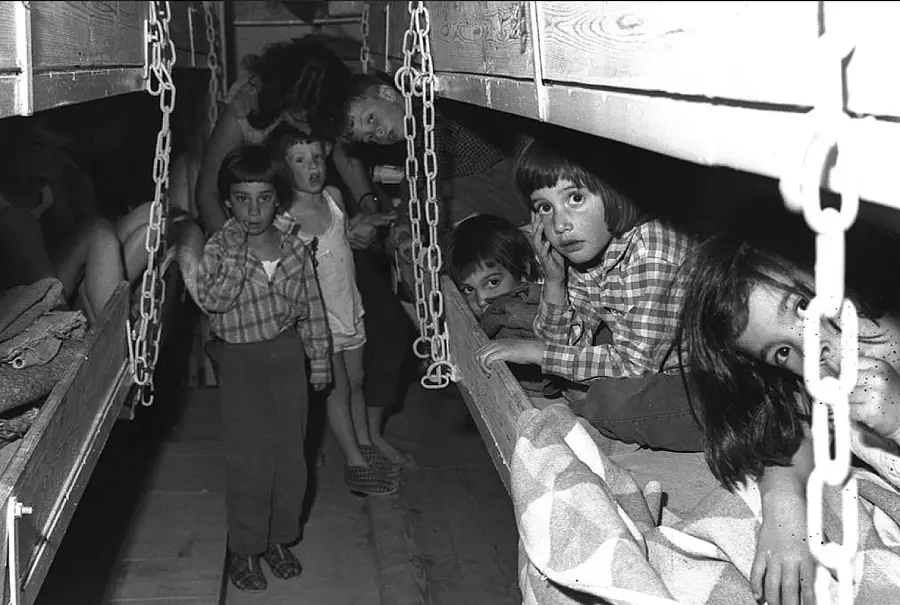
Across Israel, apartment buildings, schools, hospitals, public facilities, and private homes contain reinforced shelters or protected rooms designed to withstand blasts and shrapnel. Children often become familiar with these spaces from an early age through emergency drills conducted at school and at home. During periods of heightened conflict, families may have only seconds to reach safety after an air raid siren sounds. Depending on where they live, that warning can range from less than fifteen seconds to around ninety seconds, leaving little time to react before seeking shelter.
More Than Concrete Walls
Although designed for protection, bomb shelters quickly become temporary living spaces whenever conflict intensifies. Parents bring blankets, toys, food, books, medications, and mobile phones. Children color pictures while adults monitor emergency broadcasts. Elderly residents rest on folding chairs beside young families. Neighbors who may rarely speak during ordinary life suddenly spend hours together, sharing stories, comforting frightened children, and supporting one another through long nights interrupted by repeated sirens.
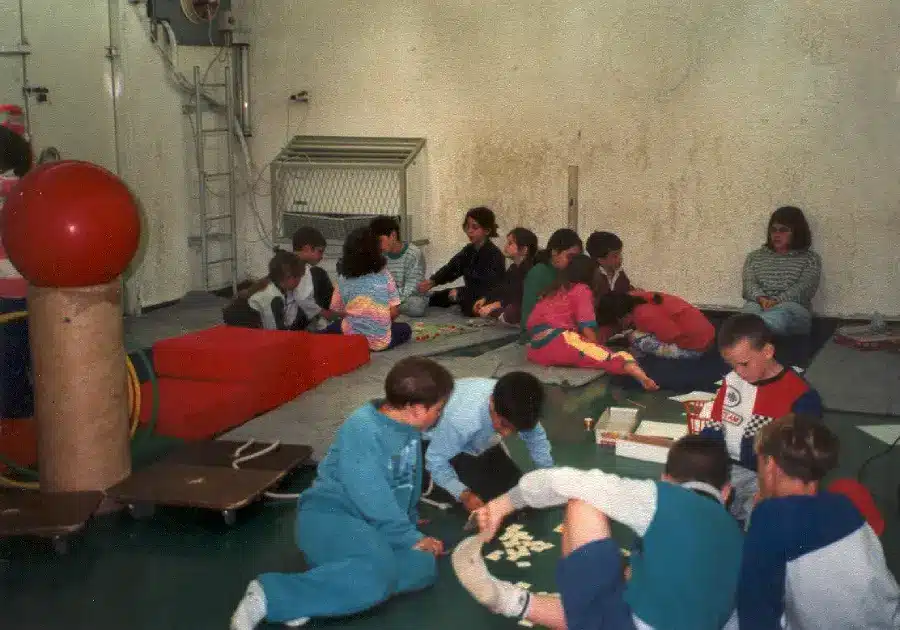
In communities experiencing sustained rocket fire, these shelters sometimes become extensions of everyday life. School lessons may continue underground. Children complete homework while explosions echo outside. Birthday celebrations, religious holidays, and community gatherings have, on occasion, taken place inside reinforced shelters rather than living rooms or playgrounds. Such moments reveal not only the disruption caused by war but also the remarkable determination of communities to preserve ordinary life despite extraordinary circumstances.
Life Inside Israeli Bomb Shelters During Conflict
- Families sleeping on mattresses for extended periods.
- Children bringing toys, books, and schoolwork underground.
- Neighbors sharing food, supplies, and emotional support.
- Parents attempting to maintain routines that reduce children’s anxiety.
- Emergency broadcasts becoming the soundtrack of daily life.
- Communities finding moments of laughter, music, and hope despite uncertainty.
The Psychological Weight of Waiting
For many civilians, the most difficult aspect of shelter life is not the shelter itself but the uncertainty. Families rarely know whether they will remain inside for minutes, hours, or much longer. Children often become accustomed to recognizing different sirens, interception explosions, and the sounds of incoming rockets. Psychologists have long observed that repeated exposure to unpredictable danger can produce heightened vigilance, sleep disruption, anxiety, and lasting emotional stress, particularly among young children who are still developing emotionally.
Parents frequently face the difficult challenge of remaining calm even while experiencing fear themselves. Their reassurance becomes one of the most powerful tools available to children during these moments. Games are invented to distract anxious minds. Stories are read aloud. Songs are sung together. Small routines help transform frightening situations into experiences children can better understand and manage.
From Shelter to Studio
For many Israeli artists, bomb shelters have become symbols extending far beyond their physical purpose. They represent vulnerability, endurance, family, uncertainty, and survival. Paintings inspired by these spaces rarely focus solely on concrete walls or steel doors. Instead, artists capture quiet human moments—a mother comforting her child, neighbors embracing after a siren, children drawing while waiting, or the exhausted relief that follows the all-clear.
Ednah Schwartz’s work often reflects this broader emotional reality. Rather than portraying conflict only through military imagery, many of her paintings emphasize the civilian experience: families separated by war, children confronting fear, wounded soldiers returning home, grieving communities, and the enduring strength found within ordinary people. Viewed together, these works become visual testimonies to resilience, demonstrating that even in places designed for protection against violence, humanity continues to create, comfort, remember, and hope.
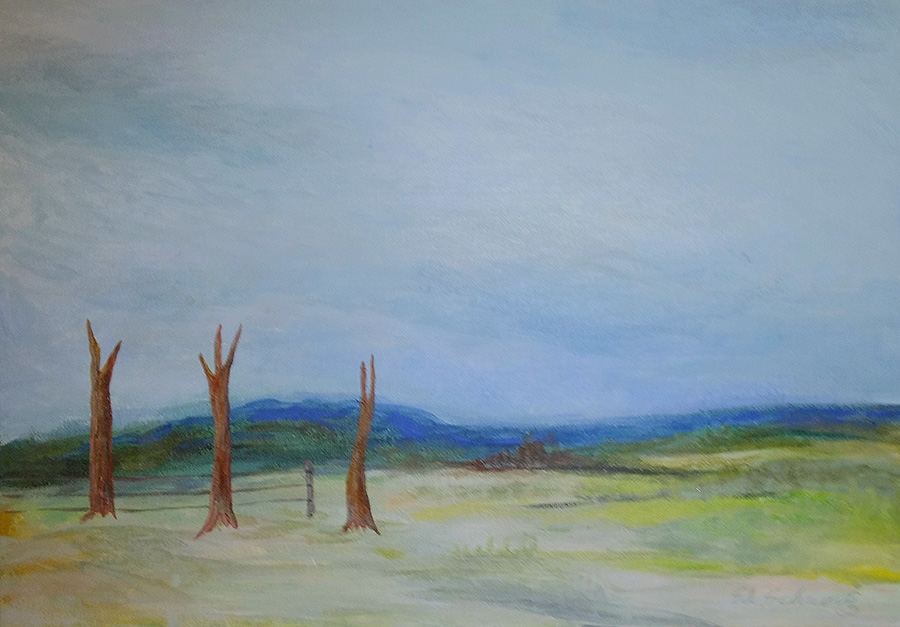
“Bomb shelters protect the body. Art often protects the memory, preserving the courage, compassion, and humanity that emerge within those walls.”
Throughout Israel’s history, countless drawings, paintings, poems, songs, and photographs have emerged from periods of conflict. Together they remind future generations that behind every air raid siren were families trying to preserve ordinary life, parents trying to calm frightened children, and communities determined that fear would never become the defining story of their lives. That enduring spirit remains one of the most powerful themes within contemporary Israeli art.
The Psychology of Israeli Children Growing Up During Conflict
Growing up under the persistent threat of conflict introduces profound psychological complexities into a child’s developmental landscape. In Israel, generations of children have navigated a reality where the boundary between a peaceful routine and immediate danger can dissolve in a matter of seconds. Understanding how these young minds process chronic stress, build resilience, and express their internal worlds provides critical context for the art born out of these collective experiences.
Living Under the Clock: The Impact of Rocket Alerts
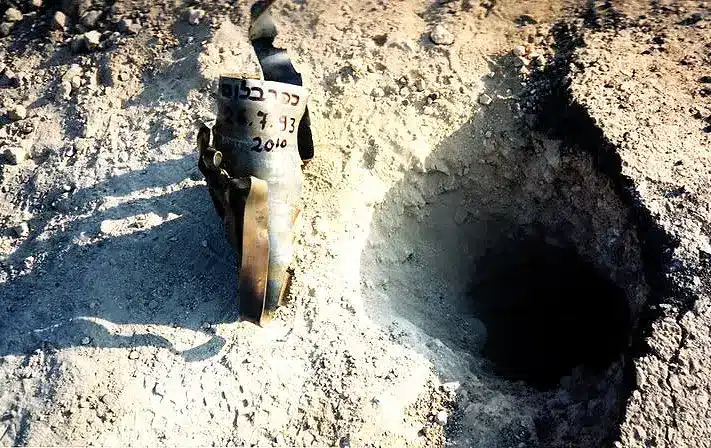
For children residing in regions frequently exposed to rocket alerts—such as communities near the Gaza envelope or along the northern border—the psychological environment is defined by anticipation. Psychological research indicates that chronic exposure to warning sirens and the strict limitation of “shelter countdowns” (ranging from 15 to 90 seconds depending on geography) forces the nervous system into a state of hyper-vigilance. Even during periods of relative calm, the unconscious anticipation of an alert can manifest as sleep disruptions, separation anxiety, and a heightened sensitivity to sudden noises.
The Mechanics of Shared Resilience
Despite these acute stressors, studies by Israeli institutions consistently highlight remarkable levels of adaptation and collective resilience among youth. This psychological insulation is largely built upon three protective pillars:
- Community and School Buffers: Israeli educational frameworks are systematically designed to absorb trauma. Classrooms regularly practice emergency drills not as terrifying events, but as proactive, empowering routines that restore a sense of agency to the child.
- Parental Regulation: A child’s psychological outcome under fire is deeply tethered to adult emotional management. When parents and educators maintain calm and establish protective routines within a shelter, children successfully re-categorize the threat into something manageable.
- Active Coping Mechanisms: Transforming passive fear into active tasks—such as checking on a pet, setting up a board game in a reinforced room, or handing out water—helps prevent the onset of psychological helplessness.
Art Therapy: Externalizing the Unspeakable
When trauma overwhelms a child’s verbal capacity, the brain often defaults to visual memory processing. This makes art therapy one of the primary psychological tools utilized across Israeli frontline communities. Inside bomb shelters, community centers, and clinical settings, handing a child paper and colors functions as an emotional relief valve. By putting their fears onto a physical page, children give boundaries to an otherwise boundless and chaotic internal panic, gaining a degree of cognitive mastery over their environment.
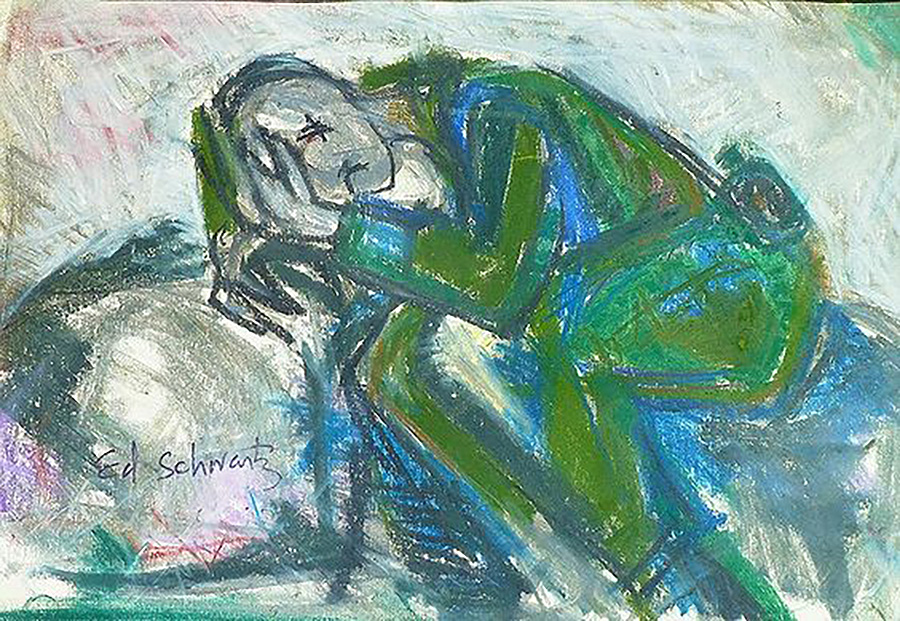
Decoding the Symbolism: Houses, Shelters, and Doves
Art therapists and researchers analyzing the drawings of children collected after periods of escalation notice a striking universality in the iconography.
These recurring motifs serve as direct indicators of psychological processing:
- Thickly Outlined Houses and Shelters: The house is a universal psychological symbol for the self and the family unit. Following a conflict, children frequently draw houses with exaggeratedly thick, heavy basalt-like borders, heavily reinforced roofs, or explicitly labeled bomb shelters. This is a visual manifestation of a profound psychological longing for structural safety, absolute defense, and the preservation of the home.
- Deeply Rooted Trees: Trees appear frequently with oversized, sprawling root networks gripping the earth tightly. This imagery reflects a child’s instinctual need for grounding, permanence, and deep-seated community stability when the world around them feels temporarily uprooted.
- The Family Unit Under One Roof: Drawings rarely depict a child isolated. Instead, tightly knit families are shown holding hands inside or directly next to a protected space. This underscores that for children, the ultimate shield against trauma is relational closeness and parental containment.
- Doves and Rainbows Bridging Chaos: White doves, rainbows, and bright suns are regularly drawn hovering over scenes of concrete shelters or armored vehicles. This striking juxtaposition proves that even when processing immediate grief, a child’s psychological trajectory naturally gravitates toward an unyielding hope for peace and restoration.

“A child’s drawing does not merely document the reality of a siren; it maps the subconscious struggle to rebuild a safe world out of fragments of anxiety and hope.”
A Shared Lexicon with Ednah’s Portfolio
This visual vocabulary creates an extraordinary, deeply empathetic loop when viewed alongside Ednah Schwartz’s fine art portfolio. The very motifs that children utilize instinctively to self-soothe and survive—the emotional emphasis on the family circle, the protective weight of shared spaces, and the resilient natural landscapes surviving war—are elements that Ednah explores with professional maturity on canvas.
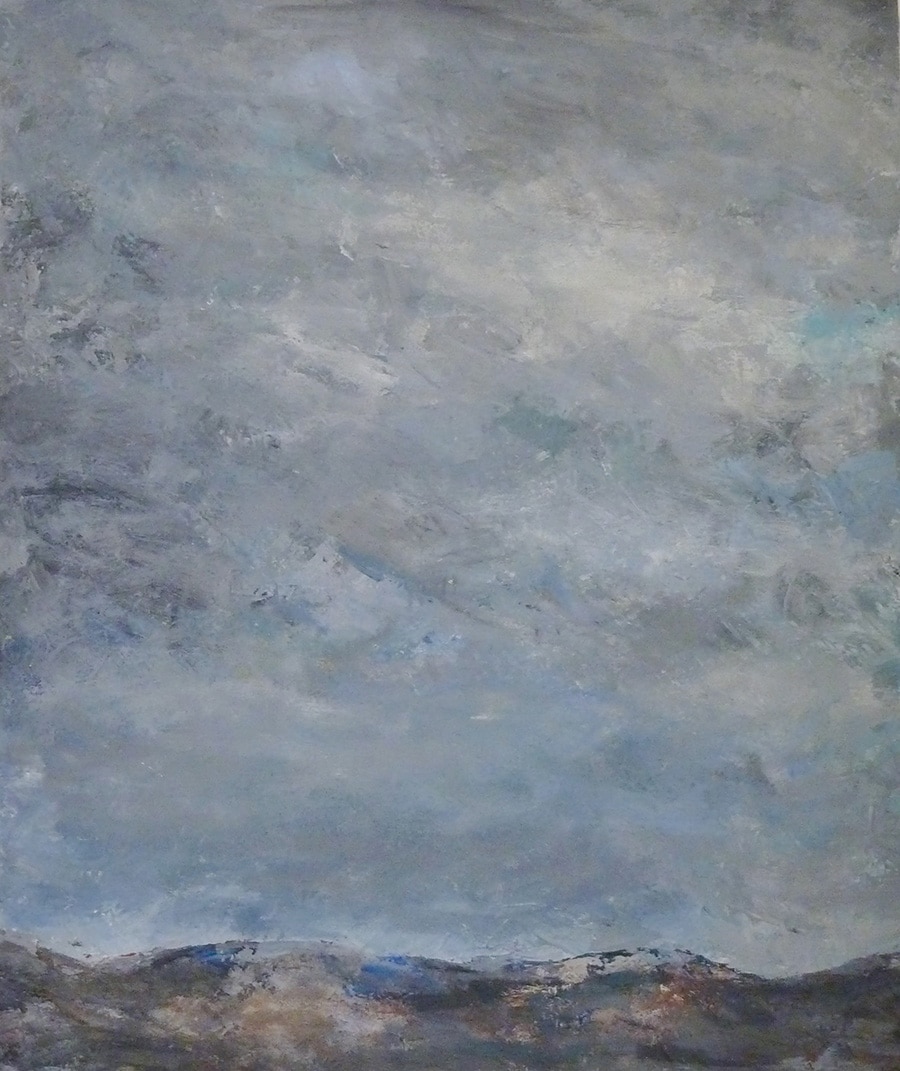
By elevating these elements into fine art, her portfolio serves not only as a personal testament but as a mirror to the psychological resilience of a whole generation. It demonstrates that whether scrawled on scrap paper in a basement shelter or layered in rich oils on canvas, art remains Israel’s most enduring tool for capturing human dignity, processing trauma, and defiantly preserving hope.
Growing Up on Israel’s Northern Border: Life in the Shadow of Conflict
For generations of Israelis living in the Upper Galilee, the Golan Heights, and communities bordering Lebanon, the concept of a distant battlefield has rarely reflected reality. Here, the border has often been visible from kitchen windows, school playgrounds, orchards, and family farms. While these regions are celebrated for their breathtaking natural beauty, vineyards, rivers, forests, wildlife, and agricultural communities, they have also experienced decades of military tension, cross-border attacks, rocket fire, and periods of evacuation that have shaped everyday civilian life.
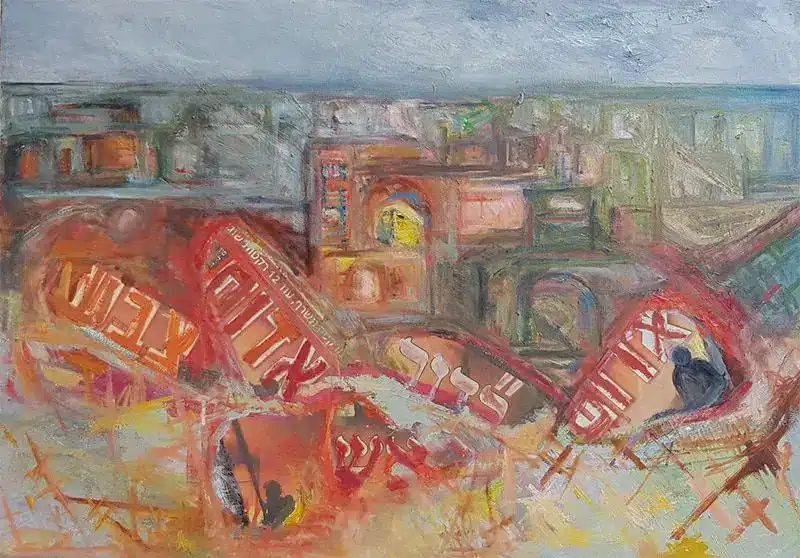
Communities including Kiryat Shmona, Metula, Misgav Am, Manara, Margaliot, Kibbutz Kfar Blum, Dan, Dafna, Snir, and many neighboring villages have each experienced periods in which conflict became part of ordinary existence. Residents have lived through Katyusha rocket attacks, Hezbollah bombardments, anti-tank missile fire, infiltrations across the border, and repeated military escalations. Although many years have also been marked by peace, tourism, farming, and vibrant community life, uncertainty has remained a familiar companion for countless families.
Childhood Measured by Seasons and Sirens
For children growing up in Israel’s north, life has often been defined by two very different realities. One is filled with hiking trails, rivers, orchards, cycling paths, wildlife reserves, kibbutz life, music festivals, and outdoor adventure. The other can appear with little warning, bringing air raid sirens, emergency instructions, school closures, and hurried trips to bomb shelters. Many families have experienced both realities within the same year.
Parents in these communities have long carried the responsibility of balancing normal childhood experiences with preparedness. Schools regularly practice emergency drills. Public buildings include reinforced shelters. Children quickly learn where protected areas are located in playgrounds, classrooms, and sports facilities. During periods of heightened tension, routines change almost instantly as families adjust to a different rhythm dictated not by clocks but by security alerts.
Life Along Israel’s Northern Frontier
- Communities surrounded by farmland while remaining close to an international border.
- Schools equipped with protected classrooms and nearby shelters.
- Farmers continuing to harvest crops during periods of military tension.
- Families adapting to temporary evacuations when security conditions require.
- Children growing up with both extraordinary natural beauty and recurring reminders of regional conflict.
- Strong community networks that provide emotional support during times of uncertainty.
Communities Built on Resilience
The kibbutzim and towns of northern Israel have long demonstrated remarkable resilience. Agricultural work often continues despite security concerns. Vineyards are harvested, dairy farms operate, schools reopen whenever conditions permit, and community events resume as quickly as possible following military escalations. This determination to preserve ordinary life has become one of the defining characteristics of the region.
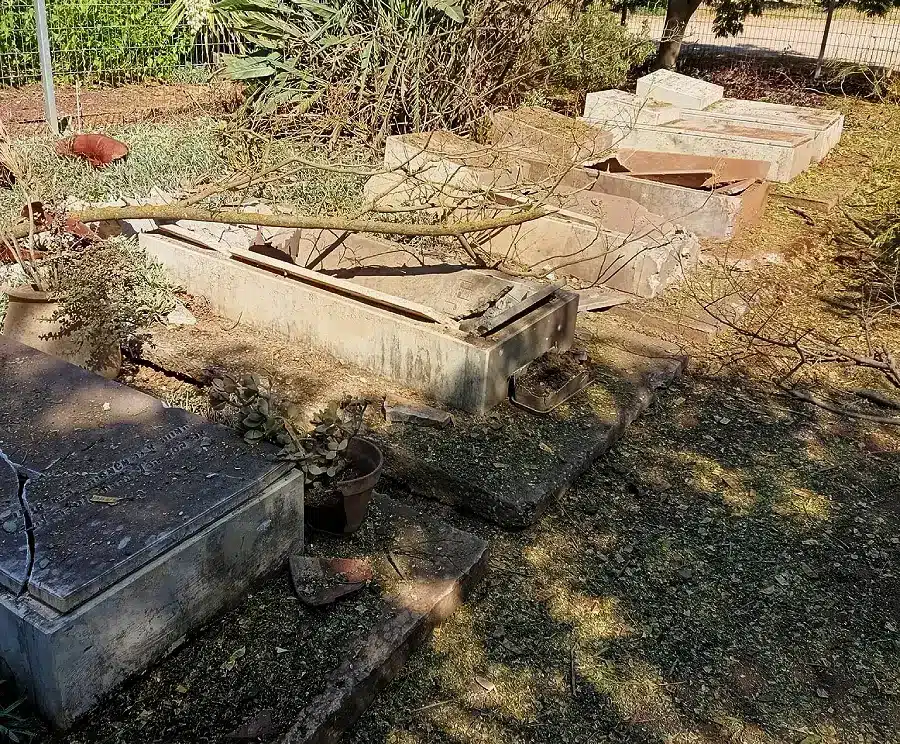
Neighbors frequently become extended family during emergencies. Volunteers organize assistance for elderly residents, children, and newly evacuated families. Community centers transform into gathering places where meals are shared, information is exchanged, and emotional support becomes just as important as physical safety. These experiences have profoundly influenced artists who seek to capture not only conflict itself but the remarkable solidarity that often emerges because of it.
The Landscape That Inspires — and Endures
Northern Israel occupies a unique place within Israeli art because its landscapes embody both extraordinary beauty and historical complexity. The Hula Valley, Mount Hermon, the Jordan River, the Upper Galilee, and the rolling hills overlooking Lebanon have inspired generations of painters who are drawn to their changing light, dramatic seasons, and rich agricultural traditions. Yet these same landscapes also bear visible reminders of conflict, from reinforced bus stops and memorials to damaged buildings and military observation points.
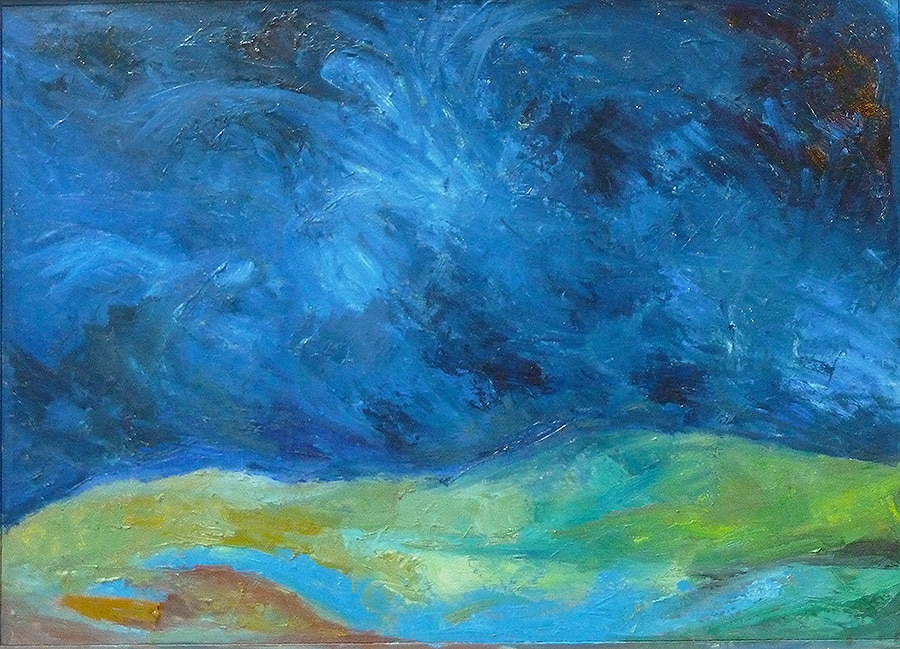
This striking contrast frequently appears in the work of Israeli artists. A peaceful field may sit beneath distant military positions. Children play beneath skies occasionally crossed by aircraft. Orchards continue producing fruit despite nearby security alerts. Such imagery reflects an enduring truth about northern Israel: beauty and vulnerability often coexist within the same landscape.
Ednah Schwartz and the Northern Landscape
Many of Ednah Schwartz’s paintings draw emotional strength from northern Israel and the communities that have shaped her life and artistic vision. Her work reflects more than historical events; it captures the atmosphere of places where memory, family, agriculture, and conflict intersect. Rather than presenting war in isolation, her paintings frequently emphasize the civilians who continue planting, teaching, raising children, caring for neighbors, and preserving community life even during periods of uncertainty.
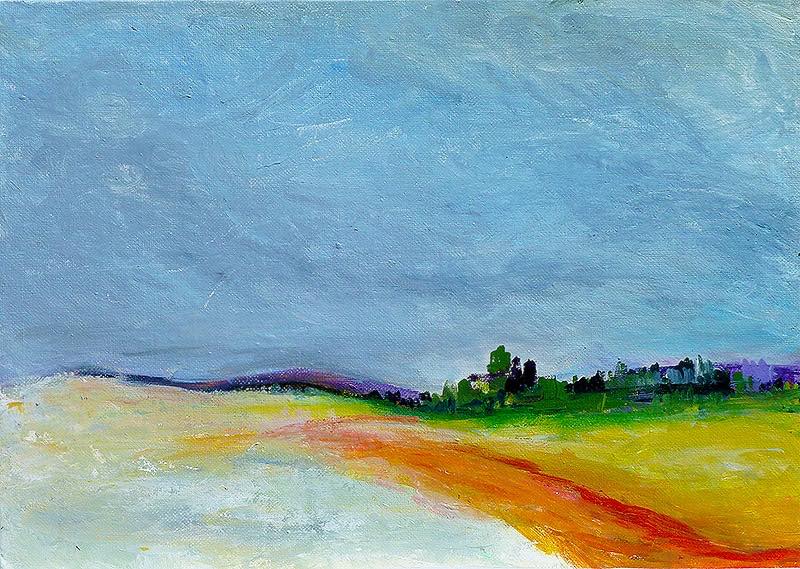
Seen through this perspective, the northern border becomes more than a geopolitical boundary. It becomes a place where resilience is practiced every day, where ordinary moments acquire extraordinary meaning, and where art serves as both remembrance and hope. The landscapes she paints are therefore not simply geographic locations but emotional maps of a society that has repeatedly chosen renewal over despair.
“Along Israel’s northern frontier, the landscape tells two stories at once—one of extraordinary beauty and one of enduring resilience. Artists have spent generations preserving both.”
Today, as northern communities continue rebuilding following recent conflicts, these landscapes carry new layers of memory while remaining enduring symbols of hope. They remind future generations that history is not experienced only through major military events, but through the everyday lives of families, farmers, teachers, children, and artists who continue to shape the identity of Israel’s northern frontier.
A Childhood Measured by Wars: Seven Generations of Israeli Children
Every nation remembers history differently. Some generations recall economic crises, technological revolutions, or political change. For many Israeli families, however, childhood memories are often connected to specific wars, military operations, terrorist attacks, or periods of national emergency. These events do not define an entire generation, nor do they erase the countless ordinary moments of joy, friendship, education, music, sports, and family life that characterize childhood. Yet they have undeniably become milestones by which many people remember different periods of their lives.
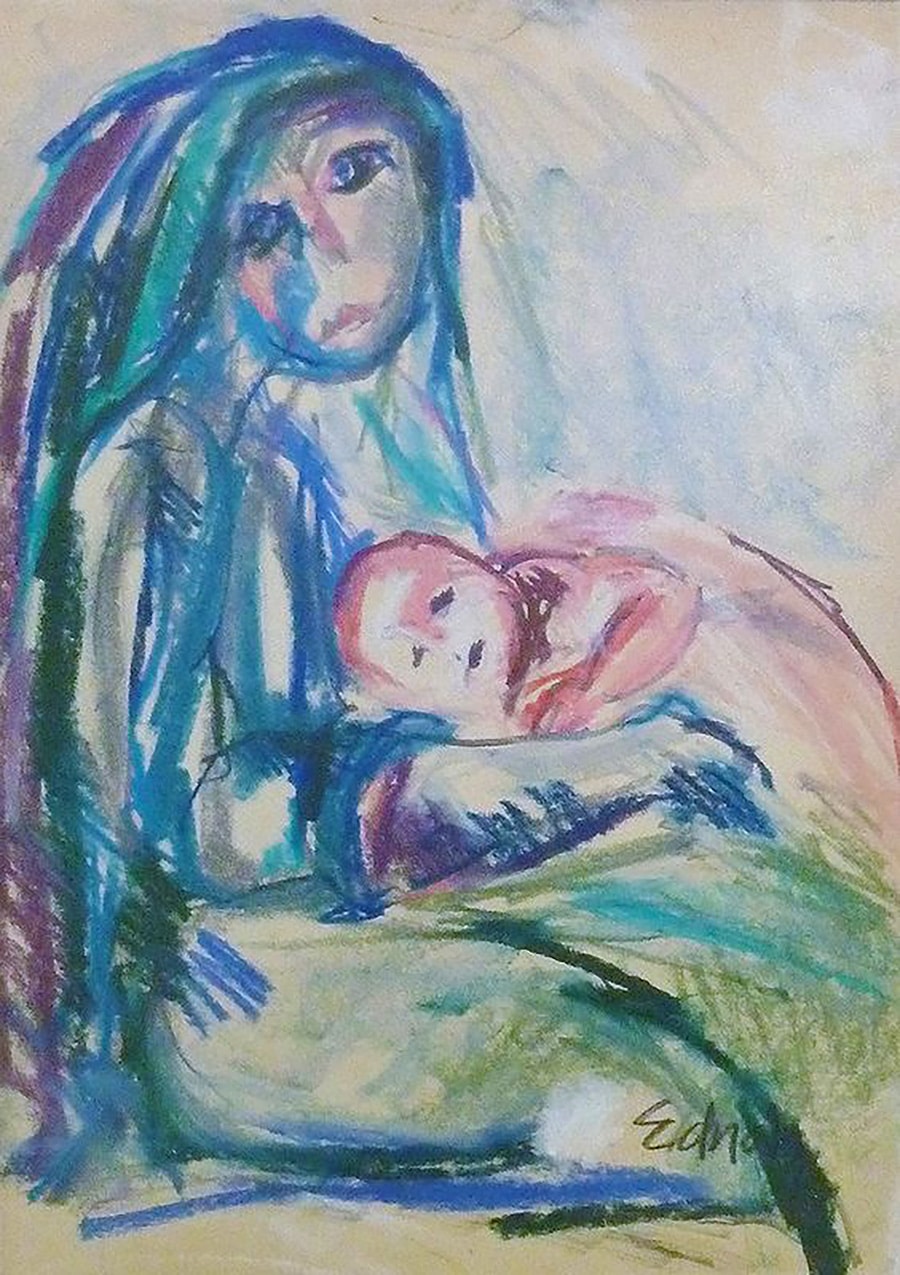
Parents frequently recall where they were when reserve duty orders arrived. Grandparents remember nights spent in communal bomb shelters. Children remember classrooms interrupted by air raid sirens or weeks when schools temporarily closed because of nearby fighting. Over nearly eight decades, these experiences have become woven into Israel’s collective memory, influencing literature, music, photography, film, and visual art.
The Generation That Built a Nation
Children who experienced Israel’s War of Independence in 1948 grew up alongside the birth of a new nation. Many families were recent immigrants, Holocaust survivors, or refugees arriving from Jewish communities throughout Europe, North Africa, and the Middle East. Communities were being established while conflict continued around them. For these children, rebuilding life often became inseparable from learning what it meant to belong to a newly independent country.
Artists from this generation frequently portrayed themes of rebuilding, agriculture, pioneering communities, family resilience, and the optimism that accompanied the creation of the State of Israel despite enormous hardship.
Growing Up During the Wars of the 1960s and 1970s
The next generation experienced childhood during periods that included the Six-Day War, the War of Attrition, and the Yom Kippur War. Military mobilization became familiar as fathers, brothers, neighbors, teachers, and relatives suddenly left home to serve in reserve units. Many children vividly remember waiting for news while communities gathered around radios and televisions for updates.
These years introduced a different emotional landscape into Israeli art. Paintings increasingly reflected uncertainty, remembrance, personal sacrifice, and the emotional cost of war alongside national resilience.
Many Israeli Generations Remember Childhood Through Events Like:
- The 1948 War of Independence.
- The Sinai Campaign.
- The Six-Day War.
- The Yom Kippur War.
- The Lebanon conflicts.
- The Gulf War and Scud missile attacks.
- The First and Second Intifadas.
- Years of rocket attacks from Gaza and Lebanon.
- The October 7 attacks and their aftermath.
Children of the Missile Age
Beginning in the late twentieth century, many Israeli children experienced a different type of warfare. Instead of conventional battles fought primarily between armies, civilians increasingly found themselves exposed to missile attacks, suicide bombings, and rocket fire directed toward towns and cities. Children learned emergency procedures, schools incorporated reinforced classrooms, and families became accustomed to responding rapidly whenever warning sirens sounded.
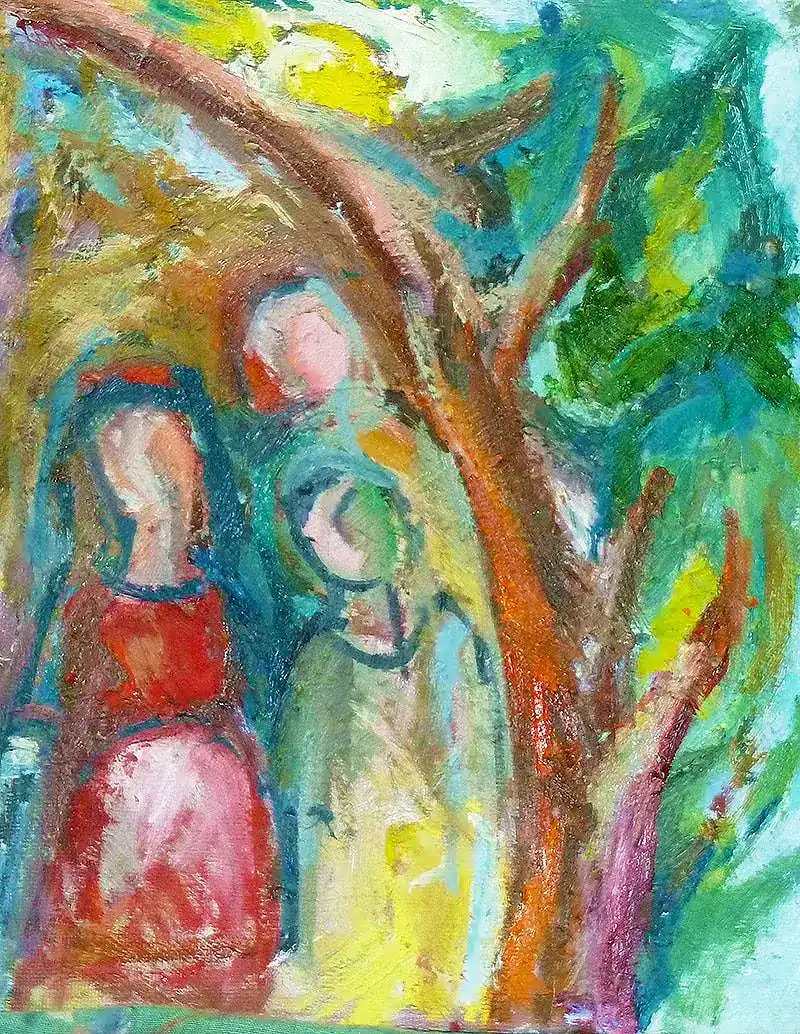
Despite these realities, life continued. Football matches resumed after alerts ended. Schools reopened. Community celebrations returned. Families continued taking children hiking, swimming, attending concerts, and celebrating holidays whenever circumstances allowed. These moments of normality often became powerful symbols of resilience within Israeli society.
The October 7 Generation
The attacks of October 7, 2023, created another defining chapter for Israeli children and families. Communities in southern Israel experienced unprecedented violence, while many residents of northern Israel were later evacuated because of escalating cross-border attacks from Lebanon. Thousands of children suddenly found themselves living away from home, separated from classmates, familiar routines, treasured possessions, and the communities in which they had grown up.
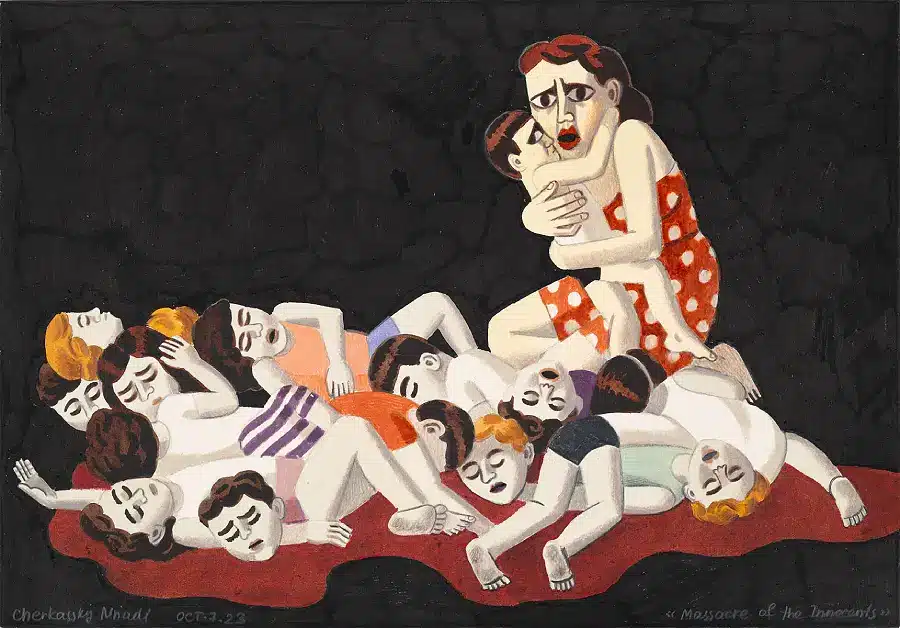
For many young people, these experiences will likely become lifelong memories that shape how they understand home, security, loss, and resilience. As with previous generations, artists have already begun documenting these events through paintings, sculpture, photography, murals, and community memorials. Their work preserves not only the historical facts but also the emotional experiences of those who lived through them.
From Memory to Canvas
Every generation leaves behind more than historical records. It leaves behind emotions, memories, family stories, photographs, songs, poems, and works of art. Israeli artists have long transformed these lived experiences into visual narratives that explore courage, grief, uncertainty, hope, and renewal. Their paintings remind viewers that history is not experienced only through battles or political decisions, but through the everyday lives of ordinary families striving to protect childhood even during difficult times.
Ednah Schwartz’s paintings belong to this continuing tradition. Her work reflects not only the visible consequences of conflict but also the quieter emotional moments that often define civilian life: parents comforting children, communities mourning together, wounded soldiers returning home, and landscapes that continue to bloom despite the scars left by war. These paintings become visual archives of memory, preserving the human experiences that official histories alone cannot fully capture.
“Every generation remembers different wars. Every generation also remembers the ordinary acts of courage that allowed childhood to continue despite them.”
Together, these generations form an unbroken story of resilience. While each conflict has presented different challenges, they have collectively shaped an artistic tradition that values remembrance without surrendering hope. Through paint, sculpture, photography, and drawing, Israeli artists continue to document not only the history of war, but also the enduring determination of families and communities to preserve life, identity, and humanity for future generations.
Creating Art During Conflict: When the Studio Becomes a Place of Survival
Throughout history, artists have continued creating during wars, even when surrounded by uncertainty, destruction, and personal loss. During the Holocaust, artists secretly sketched inside ghettos and concentration camps, preserving evidence that many believed might otherwise disappear forever. In modern Israel, artists have likewise continued painting during periods of military conflict, terrorist attacks, missile campaigns, and national mourning. While the historical circumstances differ profoundly, the creative impulse often serves a similar purpose: preserving memory, expressing emotion, and bearing witness.
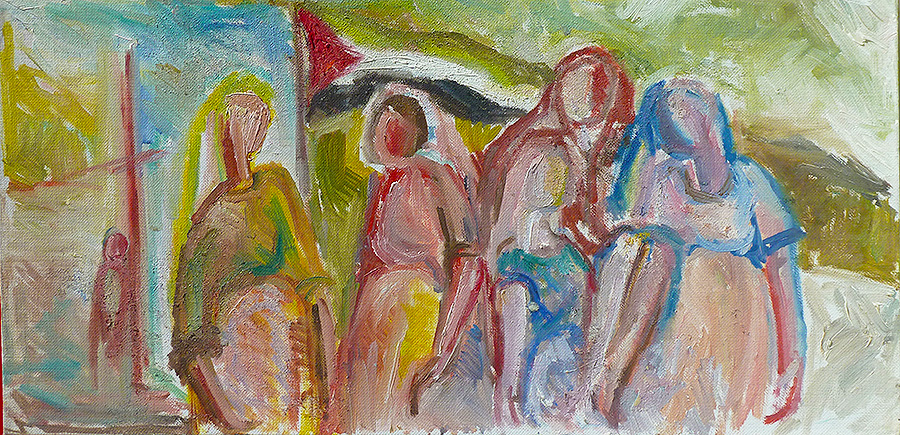
Unlike artists who document conflicts years after they have ended, many Israeli painters, sculptors, photographers, and illustrators create while events are still unfolding. News reports remain incomplete. Families wait for loved ones serving in the military. Communities face evacuation. Air raid sirens interrupt daily routines. The artwork therefore captures immediate emotional reality rather than distant historical reflection.
Painting Between Sirens
During periods of heightened conflict, artists sometimes work under extraordinary conditions. A painting may be interrupted by an air raid warning. A sketchbook may accompany an evacuation. Conversations with family members serving in reserve units may influence the direction of a work still in progress. Rather than separating art from everyday life, conflict often becomes inseparable from the creative process itself.
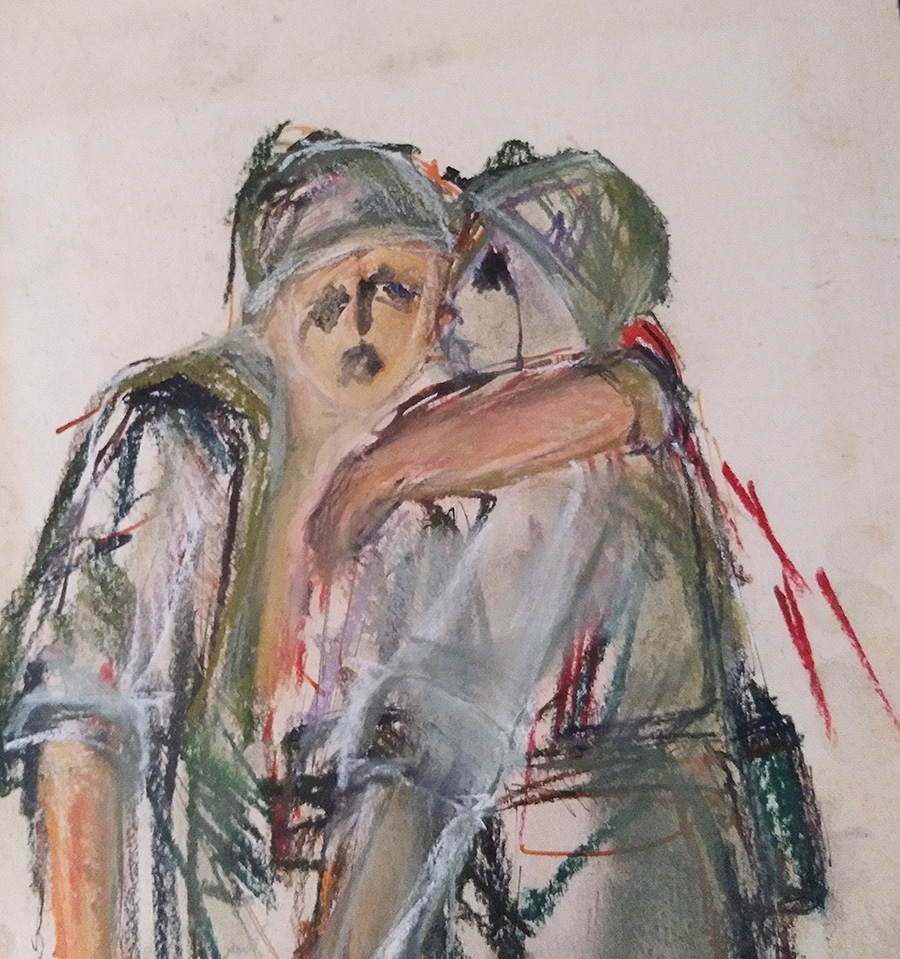
Many artists describe painting as a means of restoring order during moments that otherwise feel chaotic. A blank canvas offers structure when daily routines have been disrupted. Each brushstroke becomes an affirmation that creativity can continue despite uncertainty.
Why Artists Continue Creating During War
- To preserve memory while events are unfolding.
- To process grief, fear, and uncertainty.
- To honor victims and survivors.
- To create a lasting historical record.
- To provide hope during periods of national crisis.
- To remind future generations of the human stories behind history.
Art Beyond the Battlefield
Not every wartime painting depicts soldiers or military equipment. Many focus instead on quieter moments that define civilian experience: empty classrooms after evacuations, children’s toys left behind, families embracing, damaged homes, silent landscapes, memorial candles, or neighbors helping one another rebuild. These images often reveal the emotional consequences of conflict more effectively than dramatic scenes of combat.
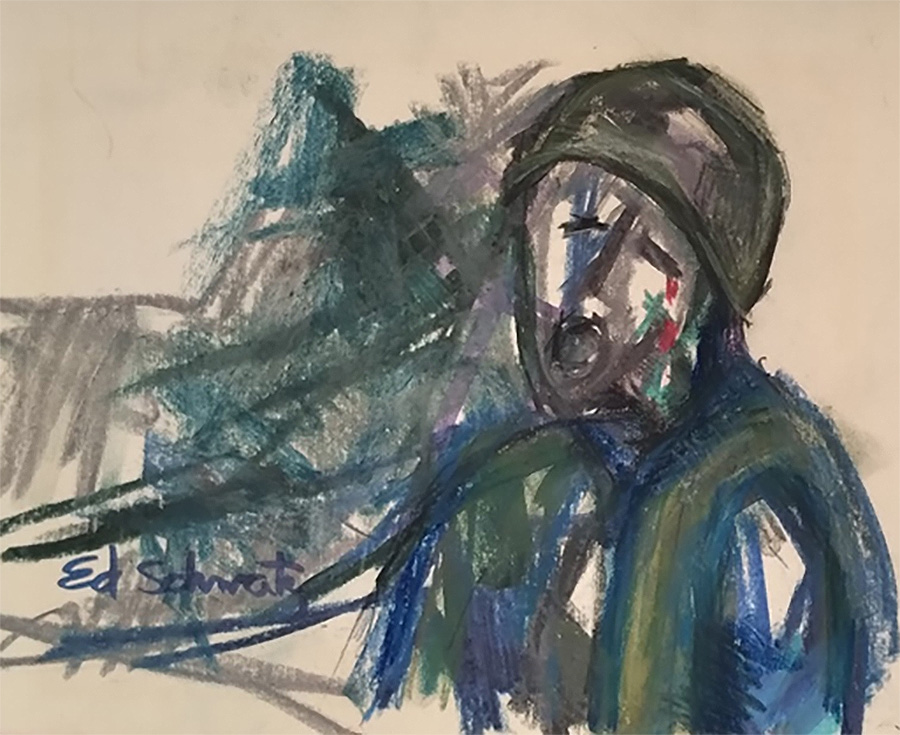
In the work of Ednah Schwartz, conflict frequently becomes a deeply human story rather than a military narrative. Mothers protect children. Wounded soldiers return home. Communities grieve together. Landscapes carry memories of those who lived there. Her paintings remind viewers that behind every headline are individuals whose lives continue long after the news cycle moves on.
“When history is still being written, artists often become its first witnesses.”
Years later, these works often become more than artistic expression. They become historical testimony, preserving emotions, relationships, and moments that official records alone cannot fully capture.
From Holocaust Survivors to October 7: Four Generations of Memory Through Art
Jewish history over the past century has been shaped by profoundly different historical events that should each be understood within their own context. The Holocaust was the systematic genocide of six million Jews carried out by Nazi Germany and its collaborators during the Second World War. Israel’s subsequent wars, terrorist attacks, and security conflicts belong to different historical circumstances, involving different causes, actors, and outcomes. Yet for many Jewish and Israeli families, these distinct events are connected through lived experience, family memory, and the enduring importance of resilience.
Many Israeli households include multiple generations whose lives have been shaped by different chapters of history. Grandparents may have survived the Holocaust or fled persecution elsewhere. Their children experienced the challenges of building a new country while living through Israel’s early wars. Their grandchildren grew up during rocket attacks, suicide bombings, or border conflicts. Today’s youngest generation carries memories of October 7, evacuation, and renewed regional instability.
Memory Passed Between Generations
Trauma is often remembered not only through historical documents but also through family conversations, photographs, traditions, commemorations, museums, and works of art. Stories told around kitchen tables become part of personal identity. Children inherit memories they never directly experienced, while also adding their own experiences to an expanding family history.
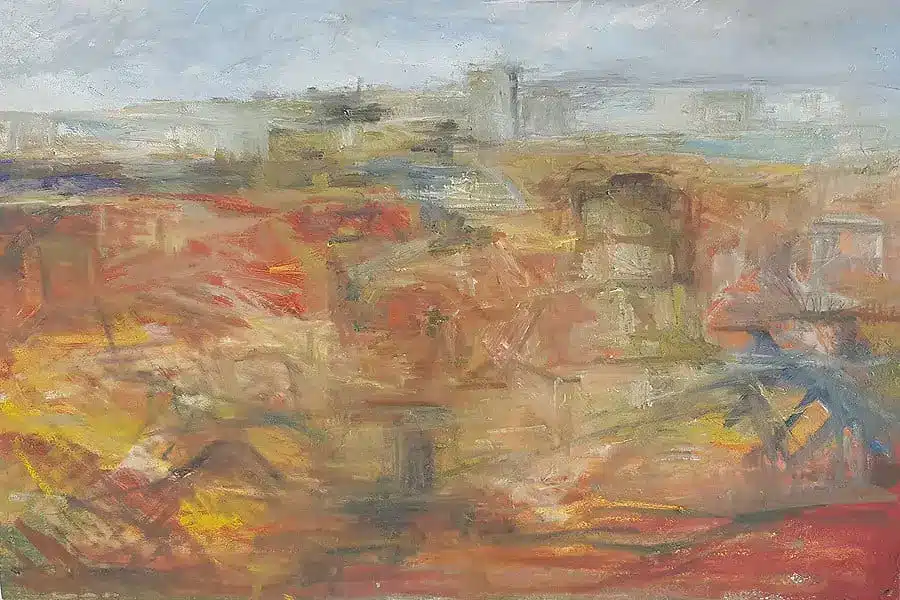
Artists frequently stand at the intersection of these memories. Their work reflects inherited stories alongside contemporary realities, allowing multiple generations to speak through a single painting. This layered perspective explains why themes such as remembrance, displacement, resilience, hope, family, and renewal continue appearing throughout Israeli art.
Four Generations of Shared Memory
- First Generation: Holocaust survivors rebuilding their lives.
- Second Generation: Children helping build the young State of Israel.
- Third Generation: Families experiencing decades of terrorism, wars, and border conflicts.
- Fourth Generation: Young Israelis growing up in the aftermath of October 7 while carrying the memories of those before them.
Art Preserves What History Cannot
Historical archives record dates, military campaigns, treaties, and political decisions. Art preserves something different. It remembers expressions, embraces, silence, grief, courage, ordinary family moments, and the emotional atmosphere surrounding historical events. A painting can communicate fear without showing violence, hope without showing victory, and resilience without requiring words.
This is one reason Holocaust art remains so significant today. It documents not only what happened but also how individuals experienced those events. Contemporary Israeli artists continue this broader tradition by recording their own generation’s emotions and memories, ensuring that future viewers understand both the historical facts and the human experience behind them.
Ednah Schwartz Within This Tradition
Ednah Schwartz’s paintings stand within a long lineage of Jewish artists who have used creativity to preserve memory and explore resilience. Her work spans Holocaust remembrance, Israel’s wars, border communities, family life, and the emotional realities experienced by civilians during conflict. Rather than focusing solely on destruction, her paintings frequently emphasize humanity, compassion, endurance, and hope.
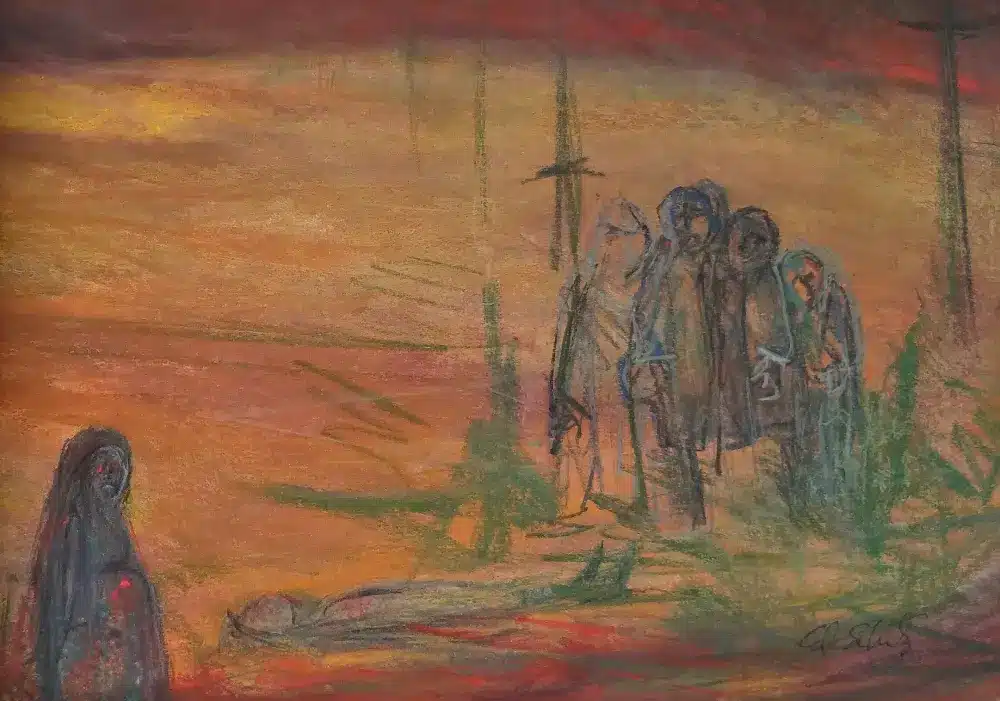
Viewed together, her collection becomes more than an artistic portfolio. It forms an evolving visual archive of Jewish and Israeli experience, connecting historical remembrance with contemporary life while reminding viewers that every generation inherits both memory and responsibility.
“History records what happened. Art remembers what it felt like.”
Across four generations, Jewish artists have demonstrated that creativity can endure through persecution, war, displacement, rebuilding, and renewal. Their work continues to ensure that memory remains alive—not only through facts and dates, but through the enduring human stories that connect one generation to the next.
| Historical Era & War Landmarks | Primary Thematic & Artistic Focus | Key Examples / Stylistic Shifts |
|---|---|---|
| Early Israeli Art & Statehood (1948–1960s) Includes 1948 War of Independence & 1956 Sinai Campaign | Establishing a unified, localized artistic identity. Merging global Holocaust trauma with rugged landscapes, pioneering work, and the defense of the newborn state. | Yosl Bergner’s metaphors of displaced household items; bold, pioneering abstract expressionism and regional landscapes. |
| The Post-War Reckoning (1967–1980s) Includes 1967 Six-Day War & 1973 Yom Kippur War | Transitioning from collective national optimism to profound psychological fracture, grief, and processing intense soldier PTSD following the systemic surprises of the Yom Kippur conflict. | Emergence of critical conceptual art; heavy, expressive paintings dealing with physical vulnerability, wounds, and broken military armor. |
| Border Conflicts & Abstract Anxiety (1982–2020s) Includes Lebanon Wars & Intifadas | Dismantling remaining domestic silences. Exploring the chronic anxiety of ongoing asymmetrical border conflicts, civilian exposure to terror attacks, and long-term generational inheritance of trauma. | Menashe Kadishman’s heavy iron installations; structural void memorials; expressive works capturing domestic security anxieties. |
| The Modern Wartime Era (2023–Present) Includes Oct 7 & The Israel-Hamas War | Processing acute modern military actions and mass civilian displacements through the directly inherited lens of historical vulnerability. Blending classical motifs of grief with immediate frontline combat realities. | Visceral wartime digital graphics; community memorial installations inside affected towns; abstract expressionist pieces tying survival to modern national resilience. |
Holocaust Memorial Art & Architecture: Global Masterpieces
Public monuments and environmental architecture across the globe serve as vital visual anchors for collective remembrance. These spatial artistic statements transform landscape into physical poetry, forcing visitors to actively confront the physical scales of loss.
- Berlin, Germany: Peter Eisenman’s Memorial to the Murdered Jews of Europe features 2,711 concrete steles of varying heights. Walking through this oppressive, uneven labyrinth creates a disorienting, isolating sensation, mimicking the systemic erasure of individual safety.
- Budapest, Hungary: Shoes on the Danube Bank by Can Togay and Gyula Pauer features sixty pairs of rusted, period-correct iron shoes fixed to the stone embankment, memorializing the victims shot directly into the freezing river by fascist militiamen.
- Jerusalem, Israel: Yad Vashem’s Children’s Memorial, designed by Moshe Safdie, is an underground chamber hollowed out from solid rock where a few candles are infinitely multiplied by mirrors, casting thousands of stars into a dark void to honor lost childhood.
- Miami Beach, USA: Kenneth Treister’s monumental sculpture features a giant, four-story bronze arm stretching toward heaven, wrapped in barbed wire and climbed by dozens of life-sized, anguished figures seeking rescue.
Preserving the Fragile Record: Conservation, Authentication, and Archives
The physical preservation of Holocaust art presents severe technical challenges. Because these pieces were frequently executed in hidden conditions using inferior materials—such as wrapping paper, scrap cardboard, soot, and diluted ink—they are extraordinarily fragile and prone to rapid degradation.
The Pillars of Artistic Archiving
- Conservation & Restoration: Laboratory experts employ meticulous chemical stabilization techniques to treat fragile materials without altering the original strokes of the artist. Controlling humidity, UV exposure, and environmental temperature is essential to stop paper decay.
- Digitization: High-resolution digital imaging ensures that if a physically compromised document or sketch eventually degrades, its exact visual information is preserved forever and accessible to global researchers, schools, and families.
- Authentication & Provenance: Verifying the authenticity of wartime art requires intense historical cross-examination. Archivists trace the origin, physical makeup of the mediums used, and historical journey of each piece to separate genuine first-hand testimonies from modern fabrications.
- Educational Outreach: Museums contextualize these pieces within broader historical curriculum, ensuring they are viewed not merely as artistic artifacts, but as moral warnings and educational pillars for future generations.
The Sanctuaries of Memory: Holocaust Art in Israeli Museums
Israel houses the world’s most comprehensive repositories of Holocaust art. Within these specialized institutions, the visual testaments of the victims are preserved, offering a geographical home to memory and serving as a bridge between historical loss and national identity.
Yad Vashem — The World Holocaust Remembrance Center (Jerusalem)
Yad Vashem features the world’s preeminent Museum of Holocaust Art. Holding tens of thousands of artifacts, drawings, and paintings created during the Shoah, it provides an unparalleled look into the human spirit under persecution. The curation emphasizes individual human stories, ensuring that the victim’s name, face, and creative agency remain central to historical memory.
The Ghetto Fighters’ House Museum (Lohamei HaGeta’ot)
Founded by Holocaust survivors and partisan fighters, this historic kibbutz museum contains an exceptional art collection that heavily underscores resistance. The exhibits detail the creative outputs of underground ghetto movements, tracking how visual arts, partisan music, and poetry served as psychological and physical weapons against Nazi oppression.
ANU — Museum of the Jewish People (Tel Aviv)
ANU places Holocaust art into a vast, multi-millennial perspective of global Jewish culture. It highlights how the tragic ruptures of the 1930s and 1940s permanently shifted the trajectory of Jewish creative expression, showing the progression from pre-war European artistic assimilation to post-war survival, memory, and cultural rebirth.
The Psychology Behind Holocaust Art: Trauma and Processing
Creating or confronting art tied to the Holocaust is a process deeply rooted in the psychological mechanics of trauma, survival, and memory. The visual medium bypasses the limits of spoken language, allowing the human mind to externalize internal experiences that are often too horrific for words.
- PTSD and Flashbacks: For survivors, painting can be an intentional externalization of intrusive memories and severe PTSD. By committing a terrifying mental image to canvas, the artist gives it physical boundaries, gaining a degree of cognitive control over the memory.
- Survivor’s Guilt: Many post-war creators struggled with the psychological burden of surviving while millions perished. Art becomes a vehicle for structural mourning—an attempt to fulfill an perceived moral debt to the dead by preserving their faces and memories.
- Inherited Trauma (Intergenerational Impact): Children of survivors frequently inherit an atmospheric, unarticulated grief. Second-generation creators use bold visual mediums to map these inherited, phantom memories, actively dismantling family silences to visually conceptualize ancestral trauma.
- Emotional Processing and Healing: While the creative act cannot erase historical horrors, it functions as an essential therapeutic modality for emotional processing. Turning paralyzing grief into physical testimony transforms the survivor from a passive victim into an active, vocal storyteller.
Timeline of Holocaust Art: Tracking Creative Shifts
This comprehensive chronological guide traces the major thematic and stylistic shifts in Jewish and Israeli art across a century of historical trauma, persecution, survival, and modern remembrance.
| Historical Era | Primary Thematic & Artistic Focus | Key Examples / Stylistic Shifts |
|---|---|---|
| Pre-WWII Era | Vibrant integration of European avant-garde styles, regional modernism, and traditional Jewish folklore or shtetl culture. | Early Marc Chagall works; flourishing Jewish cultural clubs across Warsaw, Paris, and Berlin. |
| Nazi Persecution (1933–1939) | Reflecting state-enforced exclusion, exile, confiscation of property, and the profiling of modern Jewish art as “Degenerate Art” (Entartete Kunst). | Artists forced into flight or hiding; Felix Nussbaum’s early surrealist expressions of isolation. |
| Ghettos & Camps (1939–1945) | Clandestine drawings and documentations created under the immediate threat of execution. Art serves as raw forensic evidence and psychological resistance. | Secret archives buried in milk cans; Terezín sketchbooks by Fritta and Haas; David Olère’s direct visual observations. |
| Liberation & DP Camps (1945–1948) | Capturing the jarring physical shock of liberation, severe emaciation, profound mourning, and the search for missing family members within Displaced Persons camps. | Raw pencil drawings by shell-shocked survivors; immediate documentation by military artists entering the camps. |
| Early Israeli Art (1948–1970s) | Establishing a localized artistic voice. Merging universal historical trauma with rugged local landscapes, border conflicts, and national rebuilding. | Yosl Bergner’s motifs of displaced household utensils; pioneering abstract landscape expressions. |
| Modern Era & 2nd/3rd Gen | Dismantling domestic silence. Moving beyond literal representation toward heavy conceptual abstraction, environmental monuments, and exploring inherited trauma. | Menashe Kadishman’s Shalechet installation; structural void art by Micha Ullman; expressive works by Ednah Sarah Schwartz. |
| The October 7 Generation | Processing modern terror through the lens of inherited historical vulnerability. An immediate creative output focusing on modern resilience and processing ongoing national grief. | Immediate, visceral wartime expressions; community memorial installations bridging past and present. |
❓ Comprehensive FAQ: Holocaust, War, and Artistic Identity
What exactly defines “Holocaust Art”?
Holocaust art encompasses works created by victims and survivors during the period of Nazi persecution (1933–1945) inside camps, ghettos, and hiding places, as well as post-war expressions by survivors and subsequent generations processing the historical trauma and memory of the genocide.
Why did artists risk their lives to create art inside concentration camps and ghettos?
For many artists, creation was an act of non-violent spiritual resistance. It was an urgent attempt to document Nazi atrocities, preserve individual identities, and assert their basic humanity, countering Nazi efforts to reduce them to anonymous statistics.
How did victims successfully hide their art from Nazi guards?
Artists utilized ingenious survival methods. They hid sketches inside clothing linings, beneath camp floorboards, deep within building walls, or buried them underground inside sealed metal milk cans and tin boxes, hoping future generations would uncover them.
Can Holocaust art be used as formal historical evidence?
Yes. Clandestine drawings have served as direct historical and forensic evidence. For example, wartime sketches drawn by artist Yehuda Bacon were submitted during the 1961 Adolf Eichmann trial to substantiate the physical dimensions and operation of the Auschwitz gas chambers.
What are the most common recurring symbols in Holocaust art?
Prominent motifs include barbed wire, empty shoes or suitcases (signifying total erasure), smoke and ash, skeletal or barren trees, windows or doors positioned just out of reach, butterflies (representing fleeting souls), broken religious artifacts, and isolated figures stripped of features.
How do conservationists preserve fragile sketches made during the war?
Specialized museum conservators use chemical stabilization methods to treat highly acidic paper and cheap ink. They carefully regulate environmental humidity, air temperature, and UV lighting to stop decay, alongside executing high-resolution digitization to preserve the visual data permanently.
Which global museums contain the largest collections of Holocaust art?
The single largest and most comprehensive archive is located at Yad Vashem in Jerusalem. Major historic collections are also preserved at the Ghetto Fighters’ House in northern Israel, the United States Holocaust Memorial Museum (USHMM) in Washington D.C., and the Jewish Historical Institute in Warsaw.
How did children in ghettos manage to produce artwork?
In places like the Terezín Ghetto, adult artists and educators secretly organized illicit art classes for children. They utilized discarded administrative forms and scrap paper to encourage children to paint their dreams, fears, and memories, offering a psychological refuge from the horrors around them.
How does contemporary Israeli art address the events of October 7 through a historical lens?
Modern Israeli and Jewish creators often process contemporary trauma by unconsciously or intentionally utilizing structural visual language inherited from Holocaust memory. The motifs of sudden vulnerability, missing loved ones, and community displacement are explored to express immediate grief while striving for collective modern resilience.